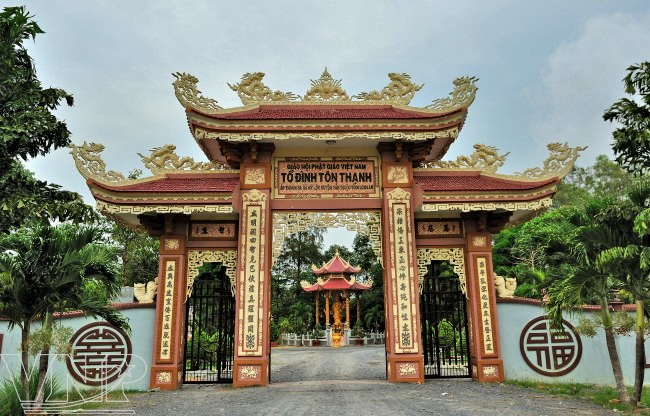
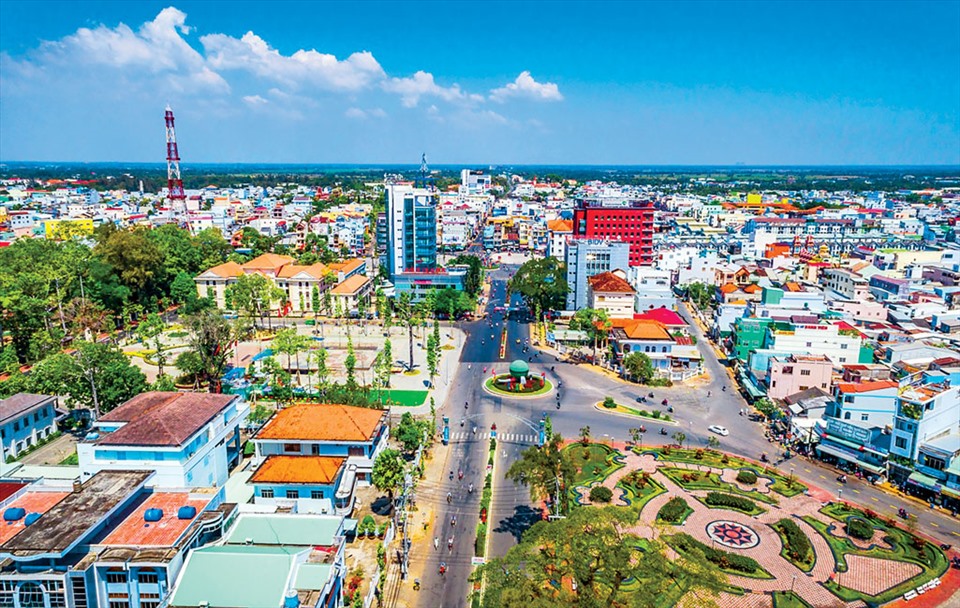
The Ấp Bắc Historical Site in Tân Phú Commune, Cai Lậy District – Tiền Giang, is about 10 km east of the district center. This historical site commemorates the Ấp Bắc Victory on January 2, 1963, which defeated the so-called “new and modern” tactics of the U.S. imperialists, including encirclement, spear-throw operations, helicopter assaults, and armored personnel carrier assaults.
Upon arriving at the site, visitors enter a large complex spanning approximately 2 hectares, divided into two functional zones. Zone 1 includes the monument, the tomb house of the three steel-willed soldiers, three large lotus ponds, an exhibition house displaying tanks and aircraft, and a park with many ornamental trees.
Leaving the monument area, visitors reach the tomb of the three steel-willed soldiers. The three graves lie side by side, with incense smoke constantly rising from visitors’ offerings. All three have been posthumously awarded the title of Hero of the Armed Forces. Next to the graves is a plaque detailing the achievements of the Ấp Bắc battle: 450 puppet Saigon troops killed and wounded, 3 American advisors killed and 4 others wounded, 8 helicopters shot down, 3 M113 amphibious vehicles destroyed, and 1 warship sunk.
Those Ấp Bắc, Củ Chi, Bến Cát,
These place names were praised by Uncle Hồ.
Songs and verses have resounded,
The whole country honors the heroes.
Zone 2 includes the artifact exhibition house; below it is a lotus pond, to the left is a square and park planted with ornamental trees, creating a very neat and beautiful landscape around the site. At the back are restored models recreating scenes such as militia carrying the wounded, cooking rice, camouflage positions, and secret tunnels. Far across the vast fields stand symbolic replicas of burning enemy aircraft and M113 vehicles.
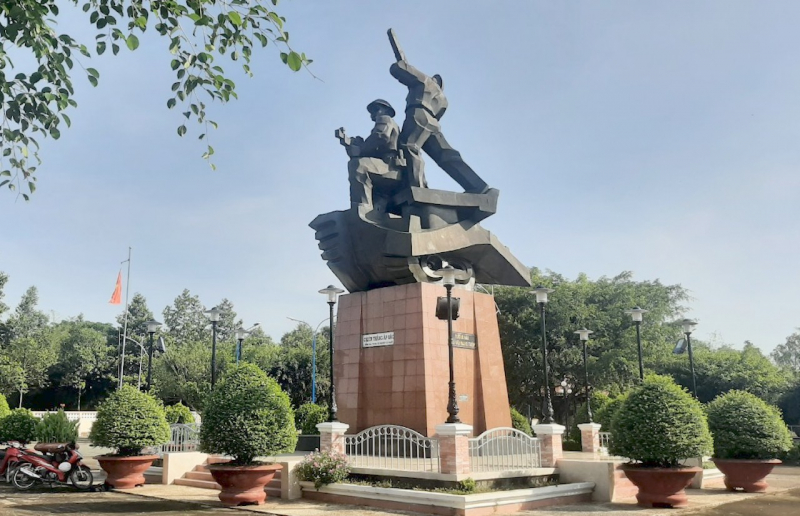
Perhaps the most impressive feature in this compound is the towering bronze statue of the three steel-willed soldiers, weighing 18 tons: one holding a rifle, another a bazooka, standing defiantly atop an enemy tank—evoking the image of fighters planting the national flag on top of De Castries’ bunker at Điện Biên Phủ years earlier. The majestic image of the heroes transports visitors back more than 40 years to the roaring guns and thundering bombs.
Since its inauguration, the historical site has welcomed thousands of domestic and international visitors for tours and study. It also serves as an educational venue for students in the province to learn about the unyielding fighting traditions of their ancestors in the cause of national defense. Leaving the site, one sees rice fields heavy with grain and melon patches laden with ripe fruit on both sides of the road. Scattered across the fields are cement models of downed aircraft and burning M113 vehicles. All of this bears witness to a new vitality on this heroic land.