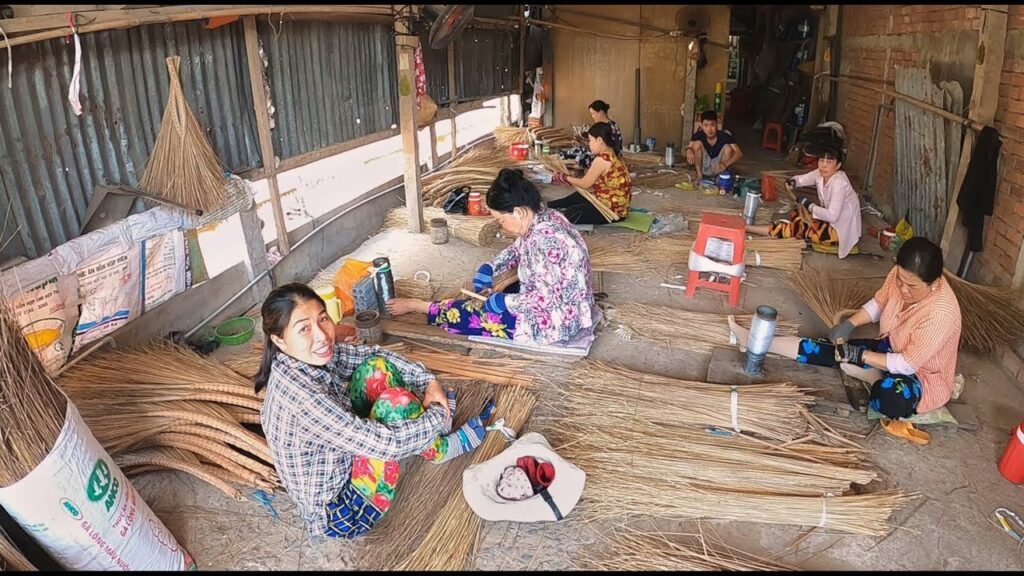
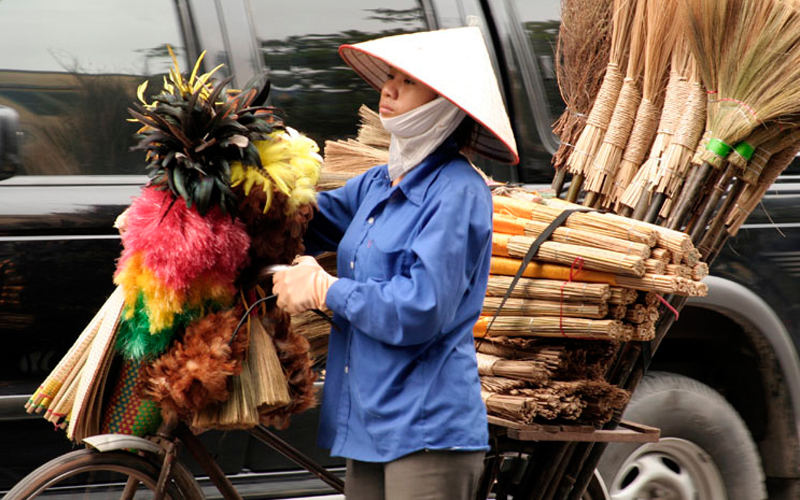
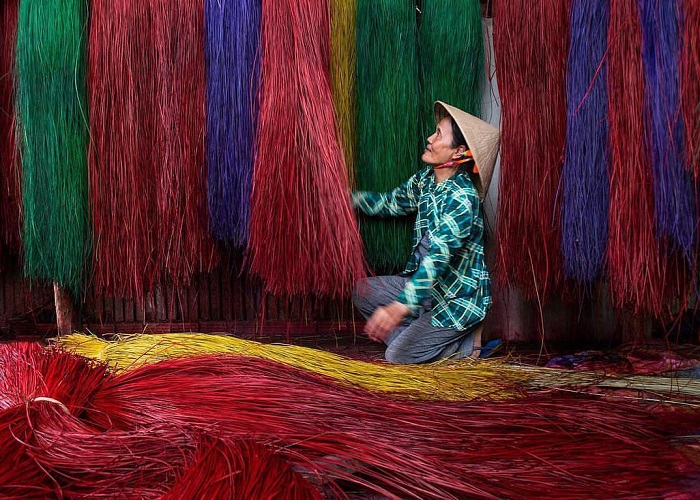
Tien GiangVĩnh Hựu Craft Village – once known as the old “Broom Hamlet” – has now truly become an established traditional craft village.
The Vĩnh Hựu broom-making village, located in Gò Công Tây District, Tiền Giang Province, stretches along the peaceful Vàm Giồng Canal,
shaded year-round by rows of coconut trees. This area has the largest coconut garden acreage in the district.
Vĩnh Hựu Craft Village – the traditional coconut-stick broom villageThe Story of the Broom
The craft of making coconut-stick brooms in Vĩnh Hựu has existed for a long time. In the early days, only a few dozen households practiced
the trade, but today it has grown significantly.
Initially, people used wild ferns growing along ditches, canals, and the Cửa Tiểu River. Sometimes they had to paddle boats all the way
to the coastal area of Tân Thành to collect the materials, dry them, and bind them with nipa palm fiber strings
(nipa palm fiber is made from the lower trunk of the nipa palm, split and sun-dried) to make household brooms.
Because ferns grow naturally in the wild, the raw materials gradually became scarce. Moreover, brooms made from this material were rather
coarse in shape, so people began replacing them with areca palm sheaths.
In the past, areca palm trees were fully utilized: besides using the sheaths to make brooms, old trunks were used to build houses and shelters.
Areca nuts were used for betel chewing and were indispensable at weddings and engagement ceremonies. Unused fresh areca nuts were dried for storage,
and dried areca nuts were also used in dyeing industries at that time.
Due to wartime devastation, Vĩnh Hựu became a heavily bombarded area, leaving areca palm gardens destroyed and raw materials depleted.
Unable to abandon their traditional craft, many people gradually switched to making brooms from coconut sticks.
The coconut-stick broom-making trade became popular after the early 1970s.
Coconut-stick broom making became widespread after the early 1970sThe Story of the Craft Village
The coconut-stick broom-making craft in Vĩnh Hựu has existed for a long time. According to local elders, the trade appeared in the area
around the 1940s. At first, only a few dozen households
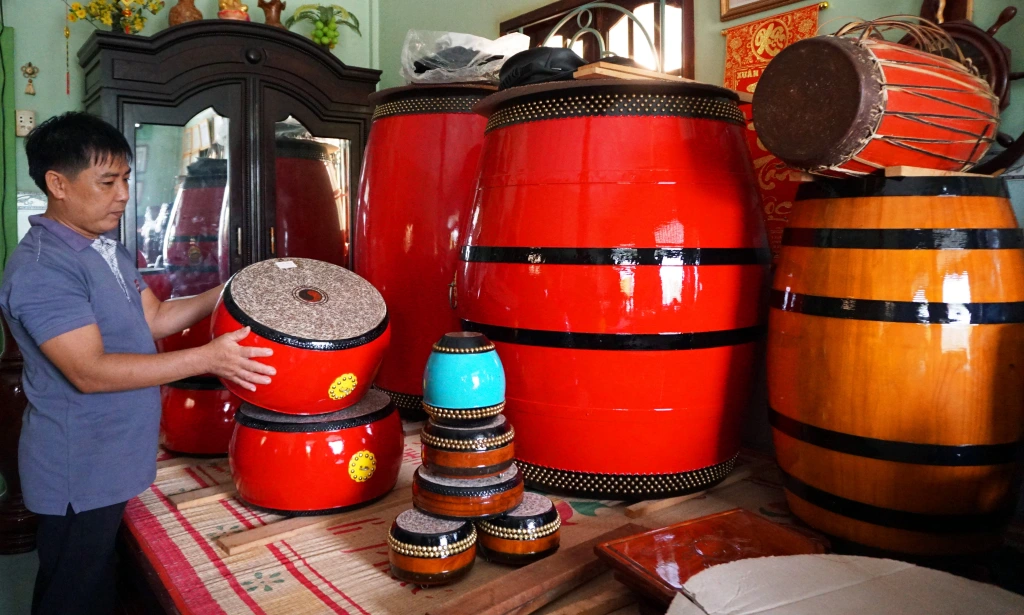
Bình An Drum Village is known as the only drum-making village in Southern Vietnam. Making a drum requires more than 20 stages, and the craft demands physical strength, carefulness, and meticulous attention to every detail. In Vietnam, drums can be found almost everywhere—from communal houses, pagodas, temples, and schools to traditional theater troupes and lion...
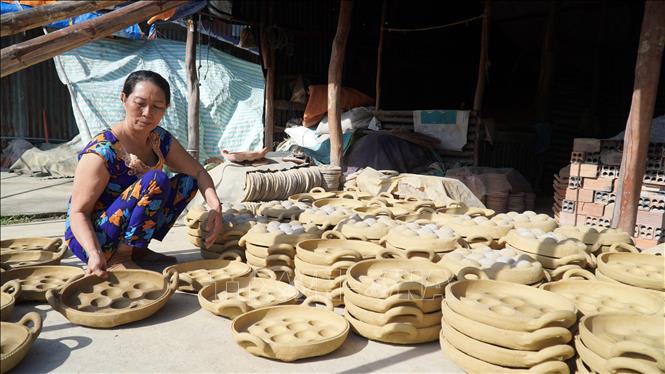
The highlight of the Tri Tôn pottery village is that they do not use a potter’s wheel or apply any technical means. It is purely done by hand with innate experiential skills. Visiting Tri Tôn in An Giang Province and seeing with your own eyes the An Thuận pottery village of the Khmer people—locally called...
The bustling atmosphere of the days leading up to Spring, combined with the unique natural scenery of the Cai Mon flower and ornamental plant village, will bring you unforgettable experiences. Coming here, you will fully embrace the “miet vuon” (orchard) cultural space with ancient traces of the “Six Provinces of Southern Vietnam” (Nam Ky Luc...
While many traditional craft villages are gradually fading away due to the replacement brought by technological advancements, the clay pot–shaping village in Hon Dat District, Kien Giang stands out as a particularly interesting exception. Located in the center of Hon Dat District, this traditional clay pot–shaping village has played an important role in preserving traditional...
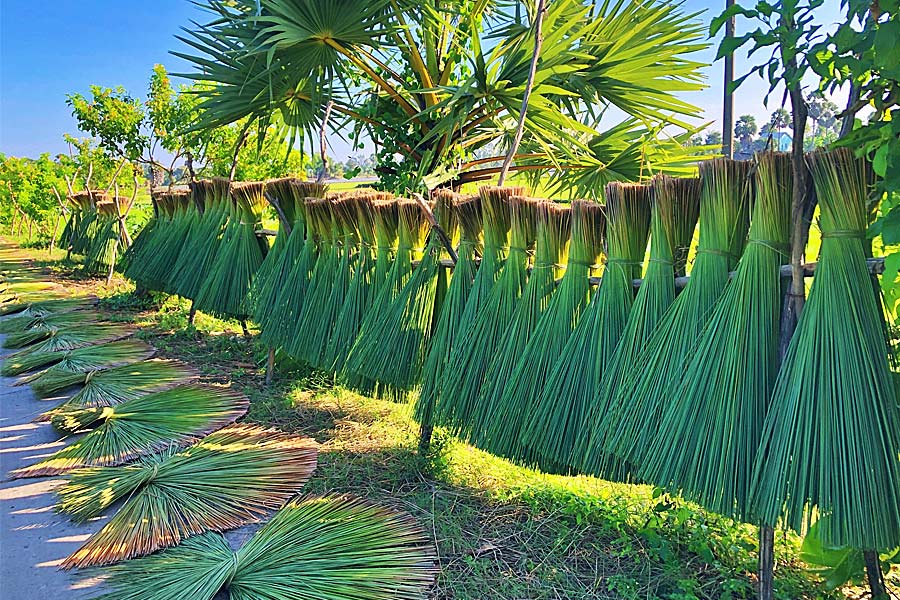
The craft of weaving sedge grass has existed in Tan Phuoc district for a very long time. Under the skillful hands of the artisans, many beautiful and valuable products such as mats, bags, hats, etc., have been created from sedge grass.
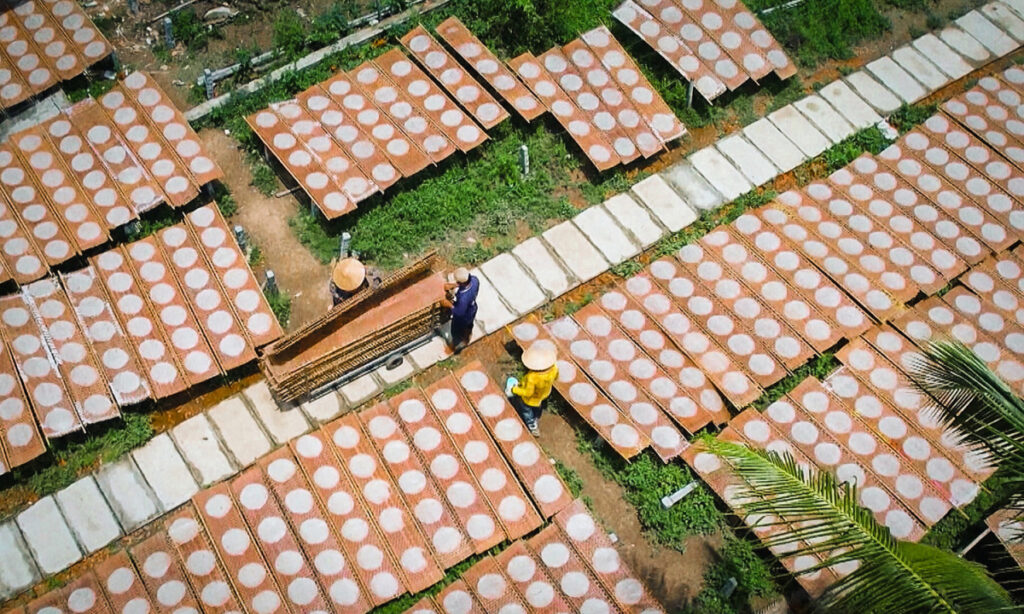
Thuận Hưng rice paper craft village (Thốt Nốt – Cần Thơ) has more than 300 kilns producing rice paper day and night, yet still cannot meet the orders placed by traders. Thuận Hưng rice paper is no longer confined to the Mekong Delta provinces but has also reached and become popular in the Cambodian market....
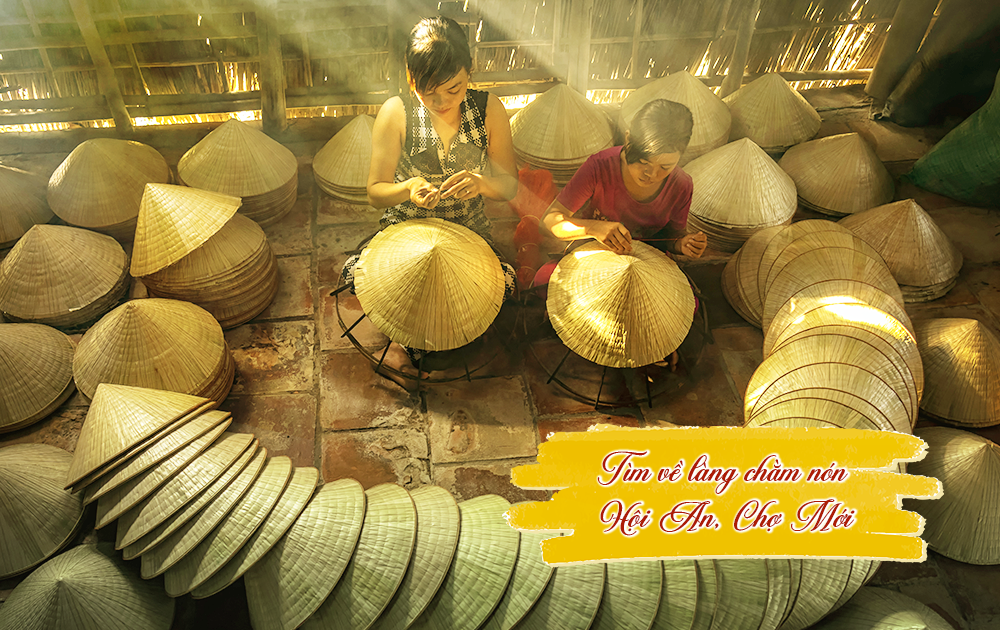
In Hoi An commune, Cho Moi district (An Giang), local people still diligently sew each conical leaf hat under simple roofs beside bamboo groves and canals. Neither noisy nor ostentatious, An Giang’s craft villages persist through the endurance of hands and memories. Each hat is the result of many stages and many households, crafted with...
Mats have always been closely associated with the lives of Vietnamese people, and Vietnam has many famous mat-weaving craft villages, with Cà Mau being one of the provinces that is home to many representative mat-weaving villages. Not only is Cà Mau the homeland of rice fields, orchards, and prosperous rural villages, it is also well...
When mentioning mats, people in southern Vietnam often think of the once-famous Cà Mau mats. However, there is a traditional craft village that has created a mat brand no less renowned than Cà Mau mats, namely the traditional mat-weaving village of Long Định Commune (Châu Thành District, Tiền Giang Province). For those who have ever...
Beyond the lush beauty bestowed by nature, Cần Thơ is also known for its rich diversity of traditional craft villages that have been passed down through many generations. One of these is the traditional conical hat–making village… The conical hat–making village in Thới Tân A Hamlet has no clear record of when it first appeared...
The chopping board plays an important role in creating delicious family meals, and to have such quality chopping boards, we must mention the village that produces them: Định An chopping board craft village in Đồng Tháp. The chopping board making profession in An Hòa Hamlet, Định An Commune, Lấp Vò District operates year-round. For over...