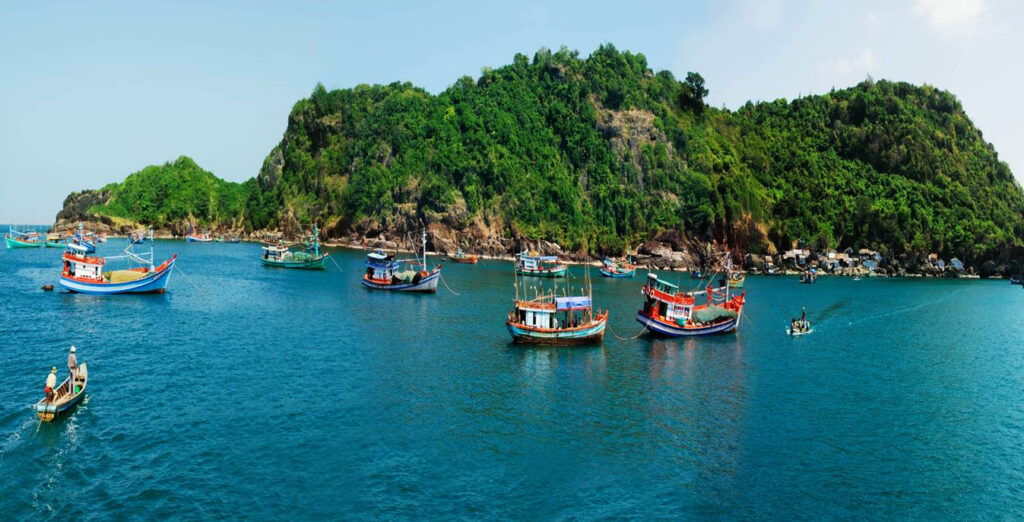
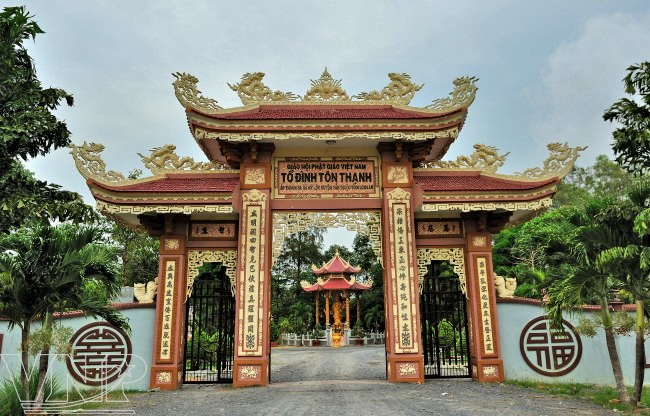
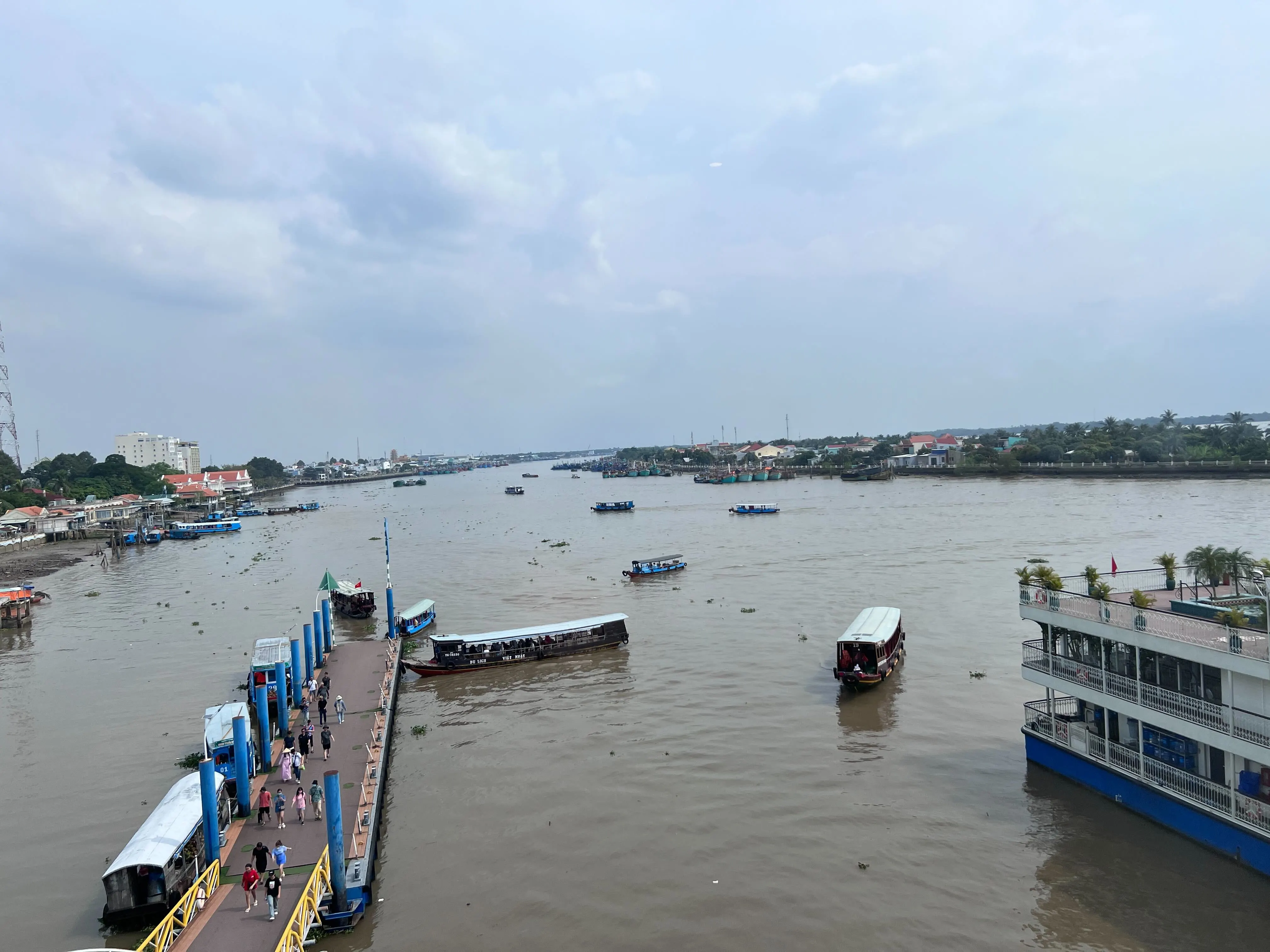
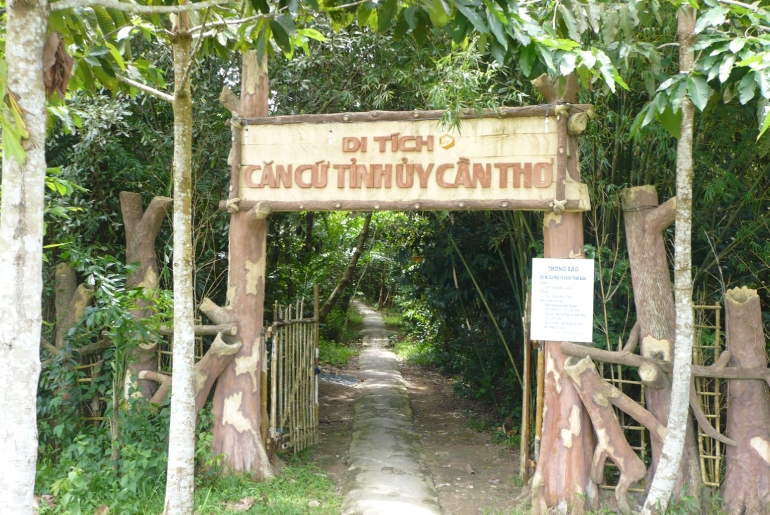
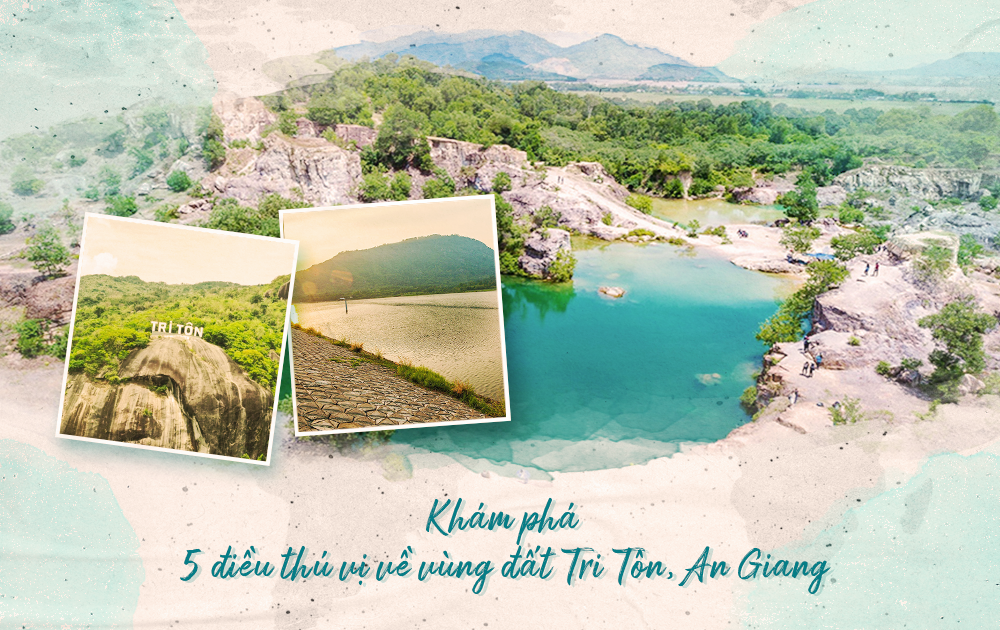
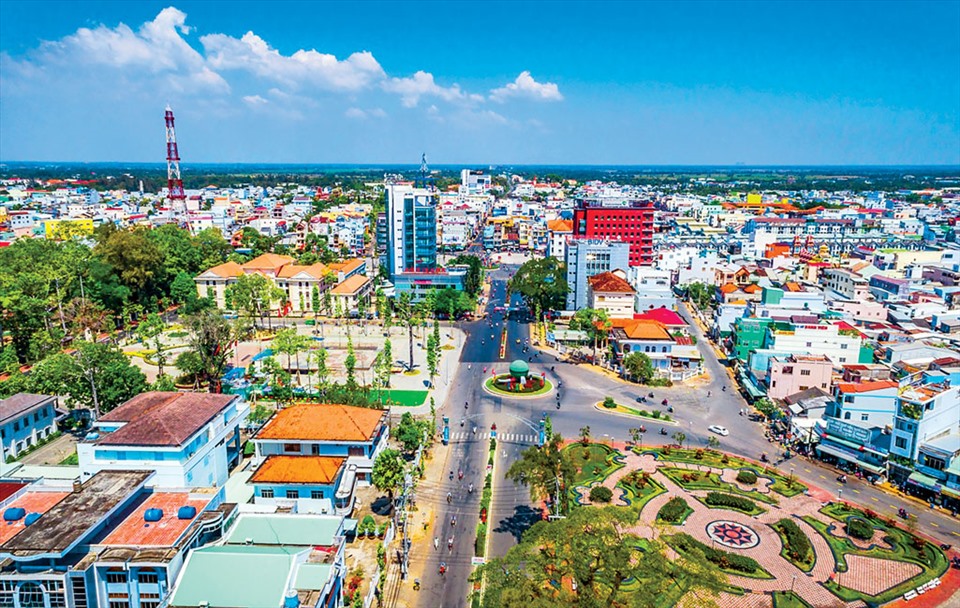
About 60km west of Long Xuyen City center via National Highway 91 lies Chau Doc Town, home to a mountain that many people know and long to visit: Sam Mountain. It is named Sam Mountain because, from a distance, its shape resembles a horseshoe crab (con Sam) clinging to a vast green field.
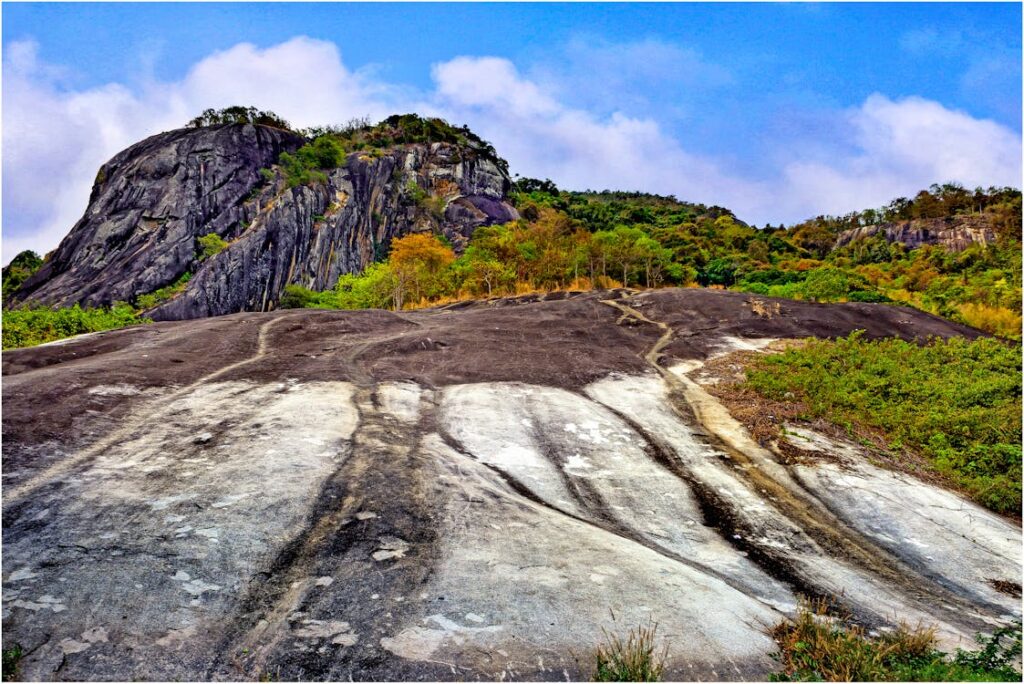
There is also a legend suggesting that in ancient times, this place was an island rising from the sea (when the ocean still covered the entire region). It was home to many horseshoe crabs, thus it was called “Hoc Lanh Son,” meaning Horseshoe Crab Mountain.
Sam Mountain covers an area of about 280 hectares with a moderate height of 241m. This is a young mountain characterized by shady trees; every summer, its slopes are brilliantly adorned with the red color of flamboyant flowers, making the landscape feel even fresher alongside its fascinating caves. Furthermore, a system of canals surrounds the area, which, together with the ancient temples and pagodas on the mountainside, creates a beautiful, poetic scenery amidst the fertile plains.
During the Nguyen Dynasty, Sam Mountain belonged to Vinh Te Village, Tuy Bien District, An Giang Province; today it is Vinh Te Ward, Chau Doc City, An Giang Province. With such scenery, Sam Mountain was described two centuries ago through the pen of Thoại Ngọc Hầu (in the “Vinh Te Son” stele) as being as beautiful as a landscape painting. The historical relics and sights of Sam Mountain have been recorded in history books ever since. For a long time, the image of Sam Mountain has been deeply ingrained in the souls of the people of An Giang in particular and the South in general. This is because it concentrates many architectural works and historical-cultural relics recognized by the Ministry of Culture, such as: Tay An Pagoda, Ba Chua Xu Temple, Thoai Ngoc Hau Tomb, Hang Pagoda… and many beautiful landscapes like Bach Van Hill and Tao Ngo Garden.
Sam Mountain also features many shrines, pagodas, and hermitages. Most notably, the Ba Chua Xu Temple is a very beautiful and solemn architectural work. Every year, following the Lunar New Year until the 4th lunar month, a large number of domestic and foreign tourists come here on pilgrimage to pray for blessings and to admire the site. Consequently, Sam Mountain has long been an important pilgrimage destination. The main festival, which is rich in national identity, is the “Ba Chua Xu Temple Festival – Sam Mountain,” held annually from the 23rd to the 27th of the 4th lunar month.
Legends Carved in the Rocks
Above the mouth of a cave, looking straight up the vertical cliff, there is a “skylight” hole with a diameter of nearly 1 square meter. Legend has it that this was the home of a giant eagle that kidnapped a princess and entered the cave through this hole. On the cave walls, there are white human-like silhouettes—one holding a creature shaped like an ogre’s head on his shoulder and the other hand supporting a princess—reminding people of the hero Thach Sanh.
The story goes that after Thach Sanh killed the eagle and rescued the princess, the villain Ly Thong wanted to steal the credit, so he ordered soldiers to block the cave entrance to kill Thach Sanh. Unable to leave through the main entrance, Thach Sanh searched for another way, eventually finding an exit to the sea where he met a being with a fish-like tail…
Next to the cave known as the eagle’s “royal domain,” a large passage leads to a second cave. At the mouth of this cave is an altar to the Sea God (Thuy Te), and inside are three small paths. At the bottom of the cave, there is a very strange type of rock that does not reflect light; when a flashlight is shone on it, the light is completely absorbed. Only oil lamps can provide light down here, but an oil lamp cannot burn without oxygen. To this day, this mysterious cave remains unexplored.
Over time, layers of calcium rock absorbed rainwater and expanded into very strange shapes. At a southern branch of the cave entrance, next to the famous Dai Hong Chuong (Great Bell) rock slab, is a rock formation shaped like a lion flying down from the sky. On the lion’s head is an image of the Buddha. According to the Lotus Sutra, the figure riding the lion is Manjushri Bodhisattva—the one with the gentle voice—symbolizing wisdom that shatters the darkness of ignorance.
It is said that this rock formation has existed since the grotto appeared and continues to grow larger over time.
Speaking of the Great Bell rock, upon close inspection, one can see detached rock blocks that produce a very clear, resonant sound when struck. However, many years have passed since the original bell striker was taken away by the Khmer people who first explored this land; locals have carved many replacements, but the “bell” no longer rings when struck!
And so, the stories go on… These legends coincide with extraordinary natural formations, making the narrations even more captivating. While listening, I accidentally touched a stalactite. During the rainy season, crystal-clear, cool water gushes from these stalactites. Some say drinking this water can cure illnesses.
The evening has grown late, swiftlets are calling their flocks back to their nests, and the last tourists have left the mountain. The temple bell echoes in the distance. Bidding farewell to Sam Mountain, I promise myself to return because there are still many legends left to discover…
Compiled by Bang Tam