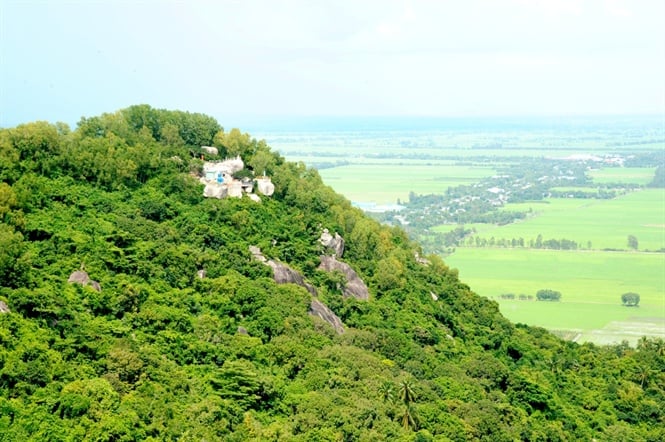
For a long time, the Seven Mountains area (That Son) in An Giang has attracted many visitors not only for its local specialties and beautiful landscapes, but also for a unique traditional festival—the Ox Racing Festival. This festival is held annually during the Dolta (Don-ta) Festival, a ceremony to worship grandparents and commemorate ancestors of the Southern Khmer people, from the 29th of the 8th lunar month to the 1st of the 9th lunar month (or from the 29th of the 8th to the 2nd of the 9th lunar month in a short lunar month).
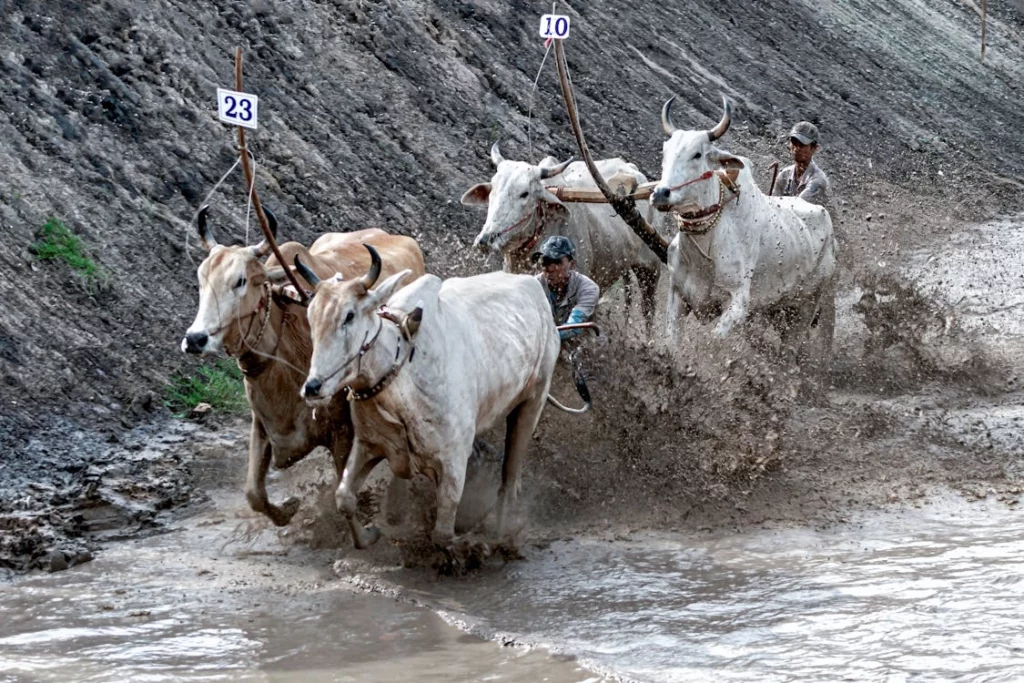
On February 27, 2020, the People’s Committee of An Giang Province issued a decision approving the project for preserving and promoting the value of the intangible cultural heritage of the Seven Mountains Ox Racing Festival (2020–2025). Photo: Van Long Bui
The Ox Racing Festival is one of the major traditional festivals of the Khmer people, rich in folk cultural elements, expressing gratitude and remembrance for ancestors and those who have passed away.
During the Dolta Festival, besides the custom of releasing boats after visiting pagodas to invite the spirits of ancestors to return and celebrate with their families, the Khmer people often make rafts from banana trunks to serve as boats. On these rafts, they place offerings that have been used for worship, each in small portions, and then release them into nearby rivers, ponds, canals, or waterways. On this occasion, visitors to phum and soc villages are warmly welcomed and generously hosted by the Khmer people, as they believe guests are messengers sent by ancestors to visit their families and descendants.
The Khmer people also organize the traditional ox racing festival. From 1990 to the present, the Dolta Festival and the Seven Mountains Ox Racing Festival in An Giang have been alternately held at Thamit Pagoda in Vinh Trung Commune, Tinh Bien District, and Ta Miet Pagoda in Tri Ton District.
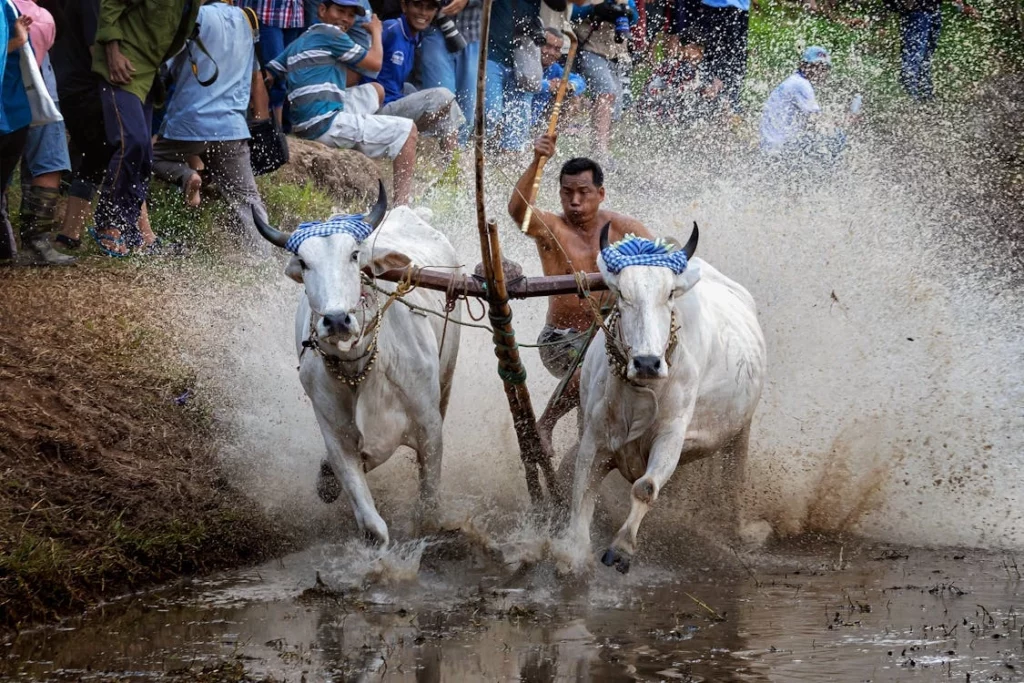
To prepare for the ox race, a flat rice field is selected, approximately 200 meters long and 100 meters wide, with shallow water. The field is repeatedly plowed to create a slippery muddy surface. Dikes surround all sides, and a clear stretch is arranged at the finish line to ensure safe stopping for the oxen. The main racing track is only about 120 meters long, running close to the embankment. At the starting point, two flags—one blue and one red—are planted five meters apart, and the same arrangement is used at the finish line. Each pair of oxen starts and finishes according to the color of its designated flag. Before the race begins, pairs of oxen are matched or chosen by drawing lots, and necessary rules are agreed upon, such as which pair goes first or second. Usually, the pair racing behind has a slight advantage. If, during the race, a pair of oxen veers off the track, it is disqualified. If the rear pair steps on the harrow of the front pair, it is declared the winner. The driver must stand firmly on the harrow; if he falls or is thrown off, he is considered to have lost.
Some oxen are decorated with shiny golden bells that create cheerful and lively sounds. The ox drivers, known locally as “cam vam,” control the oxen during the race. Each pair of oxen must pull a wooden harrow, and the driver stands on it to steer them.
According to the “rules,” if a pair of oxen runs off the track or the driver falls off the harrow, the team loses even if the oxen reach the finish line first. Photo: Van Long Bui
Each pair of oxen is harnessed to a special harrow. The harrow frame serves as a footboard made of a wooden plank about 30 cm wide and 90 cm long, with harrow teeth underneath. The driver holds a rattan whip or a round wooden stick about 3 cm in diameter, with a sharp nail attached at the tip, called a xa-lul. At the referee’s starting signal, the driver firmly pricks the xa-lul into the ox’s hindquarters, causing the oxen to surge forward. It is crucial to strike both oxen evenly so that the pair moves at a powerful and exciting speed. This differs from horse racing, where each rider rides a single horse and the one who finishes first wins. The driver of the winning ox pair is honored by the community as the most “courageous” ox driver in the region. Watching the race does not require elaborate arrangements like football matches, horse racing, or other sports. Spectators simply need to stand on slightly elevated ground near the track or climb onto the embankment. From the beginning to the end of the race, the atmosphere is always vibrant and enthusiastic, filled with applause, cheers, and lively encouragement for skillful drivers and thrilling, close finishes. Visiting this region, tourists not only enjoy the Seven Mountains ox racing festival in An Giang but also admire the riverine scenery of Chau Doc, visit Tay An Pagoda and Ba Chua Xu Temple, as well as the tomb of Thoai Ngoc Hau, who made great contributions to reclaiming An Giang’s land and digging the Vinh Te Canal.
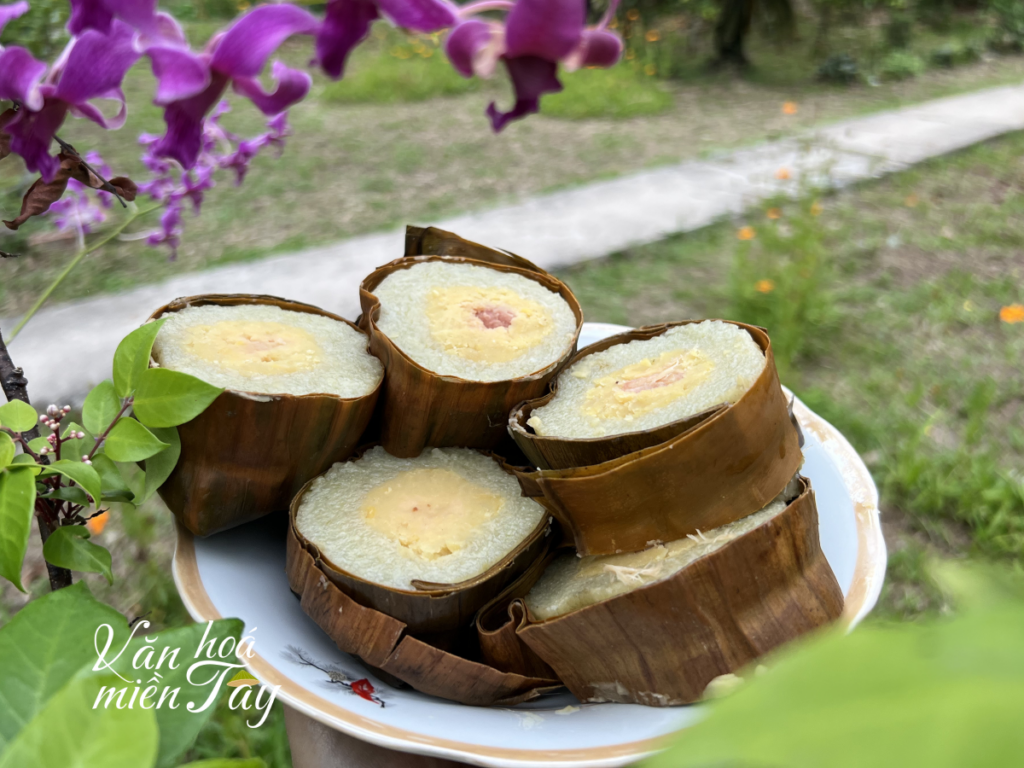
Western Vietnamese Bánh Tét is one of the traditional dishes that embodies the rich cultural identity of Southern Vietnam. It is not only enjoyed during the Lunar New Year (Tết) but is also closely associated with death anniversary ceremonies, ancestor worship, and family gatherings. For the people of the Mekong Delta, each bánh tét is...
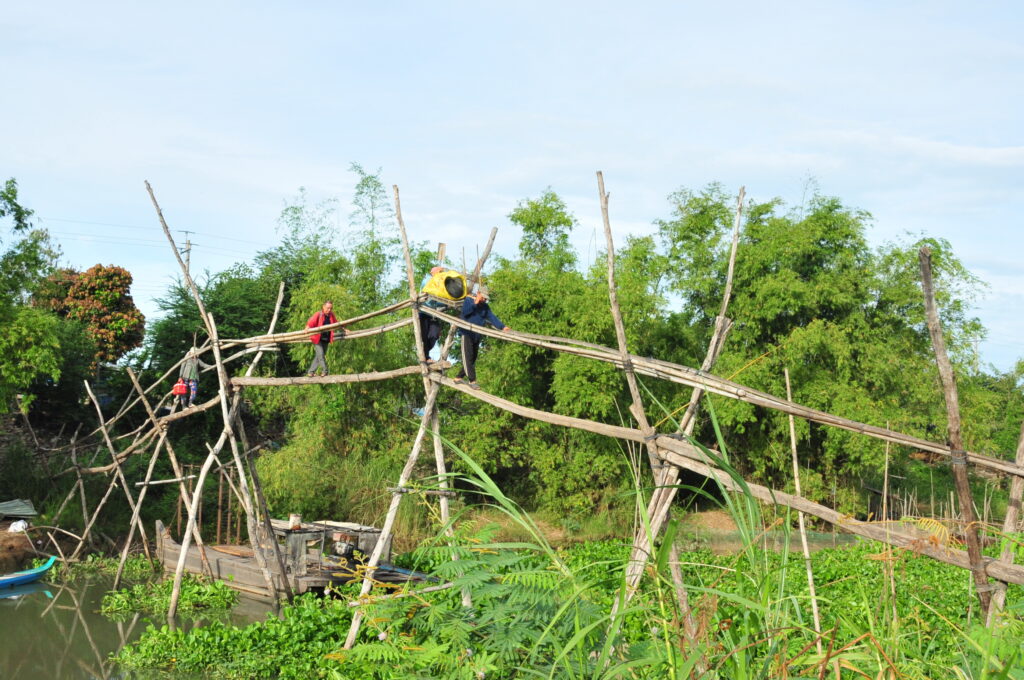
The bamboo bridge in the orchards of the Mekong Delta remains deeply etched in the memories of the people of the Southwestern region of Vietnam as a cultural feature of the riverine landscape. This bamboo bridge, or "monkey bridge," spanning the intricate network of rivers, canals, and ditches, is a unique and beautiful aspect of the scenery and daily life of the people in the Mekong Delta.
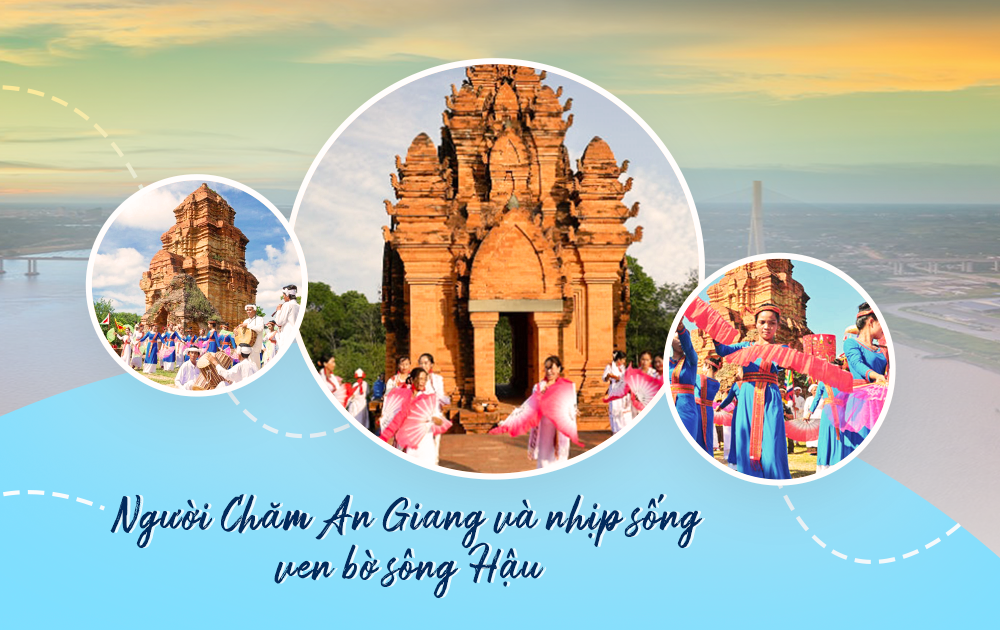
Along the gentle stretch of the Hau River lie nameless small hamlets, where the Cham people of An Giang have quietly lived their lives for generations. Without noise or promotion, they preserve their traditions through what may seem like ordinary things: a stilt house, a prayer session in the mosque, a neatly wrapped Matra scarf...
Through many eras, the áo bà ba remains widely worn by everyone, especially those of middle age and older. It is a thousand-year cultural beauty that leaves an unforgettable impression on the Vietnamese people—a nation with a tradition of creativity and innovation, adapting through time and space to endure… Going back in history, returning to...
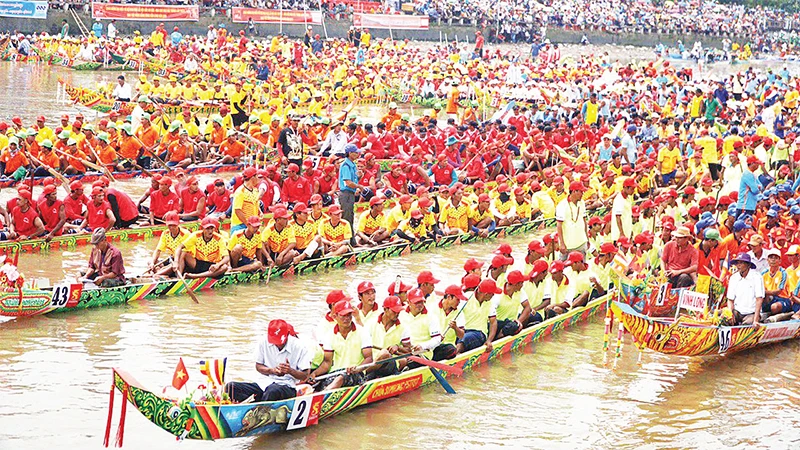
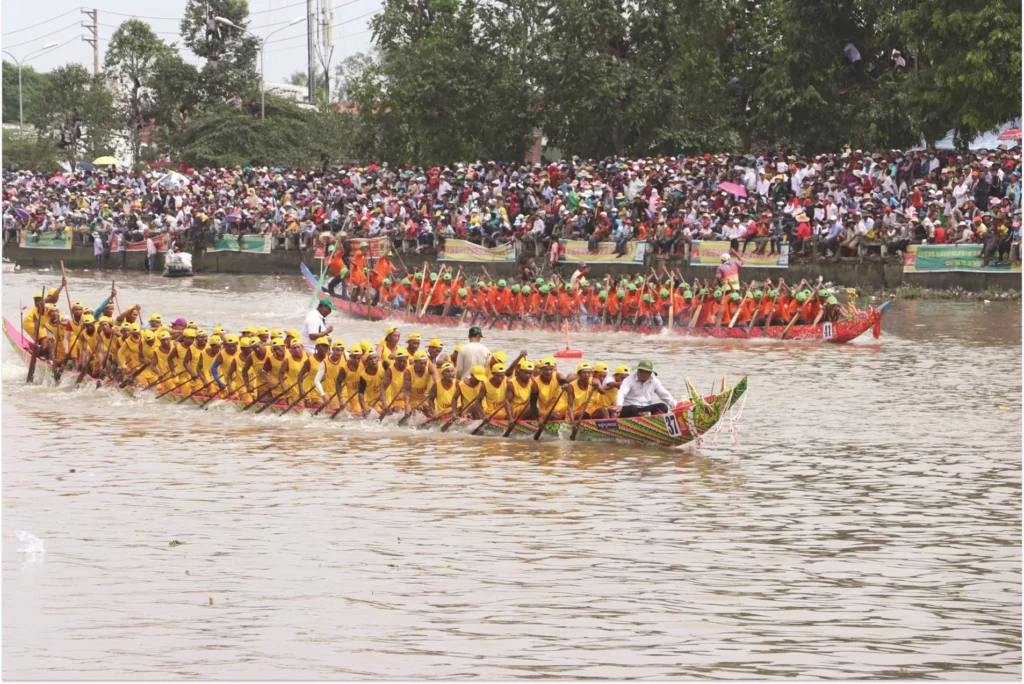
The Oc Om Boc festival, or traditional Khmer boat race, is one of the major festivals with profound humanistic significance, demonstrating the community bonds of the Southern Khmer people and the spirit of solidarity and loyalty of the three brotherly ethnic groups Kinh, Khmer, and Hoa in the Mekong Delta region.
The Ok Om Bok Festival, also known as Phochia Praschanh som paes khee, is the Moon Worship Festival. This celebration takes place in almost every province where Khmer communities live in the Mekong Delta, but it is grandest and most well-known in Sóc Trăng City (Sóc Trăng Province). In recent years, the festival has also...
For many generations, the primary means of transportation and livelihood for the people of the Mekong Delta has been boats, with the “xuồng ba lá” (three-plank canoe) standing out as a unique cultural icon. Living in this riverine region, even the poorest household owns at least one. This is considered a symbol of riverine civilization...
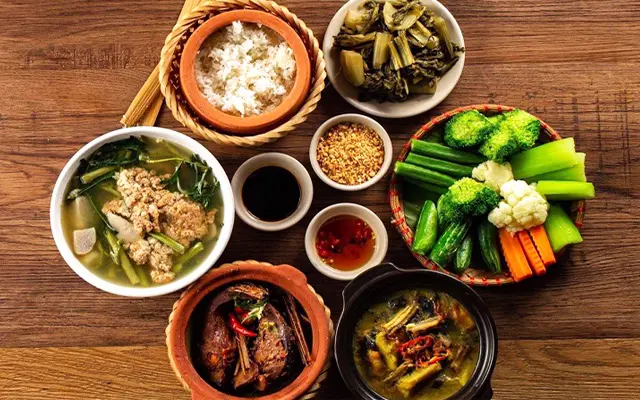
Due to its geographical features and economic activities, Western Vietnamese (Mekong Delta) cuisine has been shaped by a riverine civilization, where the main food sources are rice, fish, and vegetables. The West is a land of honest, rustic, and simple people. Perhaps it is the open and harmonious nature of the locals that has brought...
The worship of Thông Thiên (Heaven-Communicating) is a widespread folk belief in venerating Heaven in the South of our country. According to folk beliefs, Heaven ranks above Buddha among the objects of worship, in the order “Heaven – Buddha – Saints – Gods.” Therefore, worshipping Heaven is the very first act of devotion for every...
Every year on the 24th day of the 4th lunar month, pilgrims from all over flock to Sam Mountain to attend the Ba Chua Xu Festival, creating a bustling and festive atmosphere. Notably, in 2010, the 10th anniversary of the festival was marked by its elevation to a National Level Festival. Sam Mountain is located...
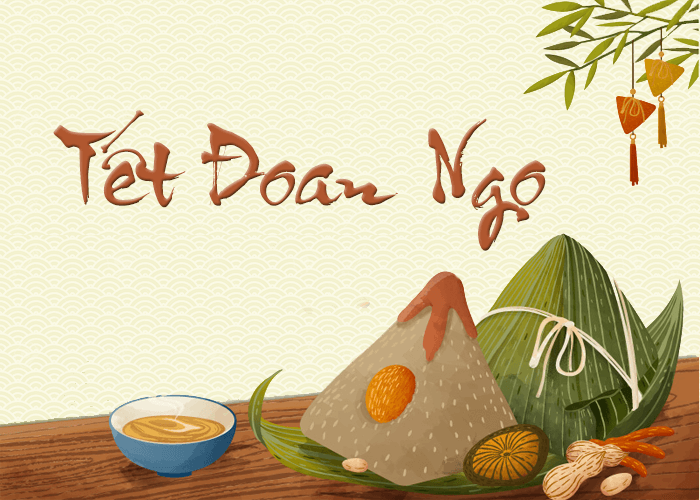
“Tháng tư đong đậu nấu chè Ăn Tết Đoan ngọ trở về tháng năm” (ca dao). Though not as boisterous and bustling as the traditional Lunar New Year, the Đoan Ngọ Festival is still preserved and holds a certain place in the hearts of the Vietnamese people. Đoan Ngọ Festival – The Pest-Killing Festival This...
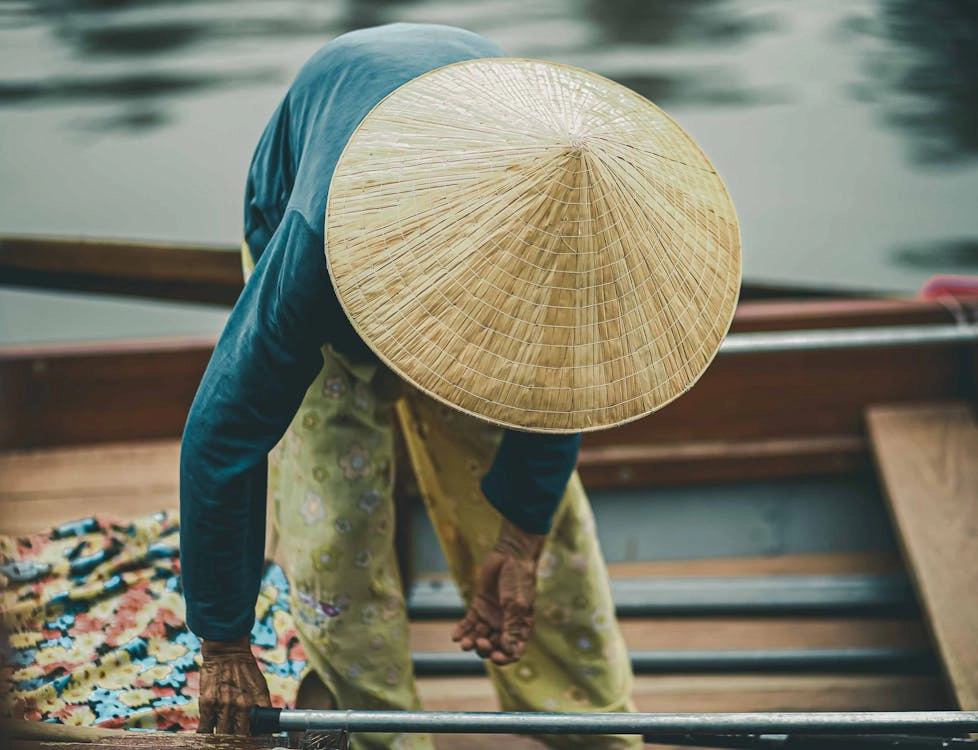
The conical hat is a symbol of gentleness and simplicity, representing Vietnamese women and the land and people of Vietnam. Across the S-shaped land of Vietnam, the image of the conical hat can be found everywhere. Depending on each region, there are different methods of making conical hats to suit local conditions, yet all creativity...