Through many eras, the áo bà ba remains widely worn by everyone, especially those of middle age and older. It is a thousand-year cultural beauty that leaves an unforgettable impression on the Vietnamese people—a nation with a tradition of creativity and innovation, adapting through time and space to endure…
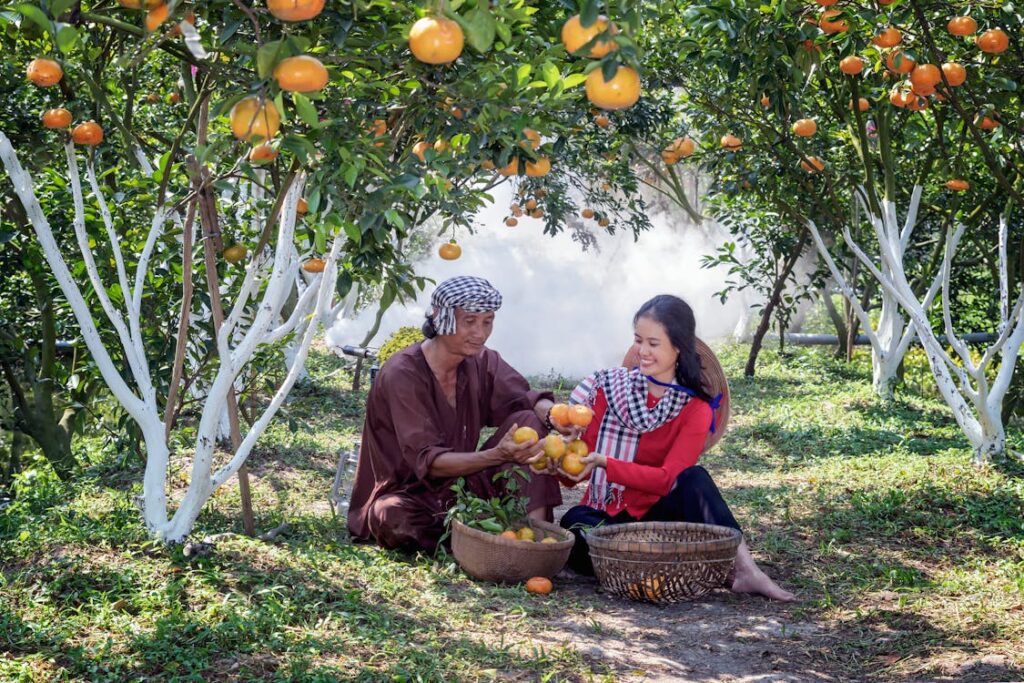
Going back in history, returning to the early days of the Southern region, we also trace the origins of the áo bà ba. At that time, it was impossible to perform hard labor in the traditional áo dài, the formal dress of the era. Our ancestors “adapted” and created the simple, compact, lightweight, and practical áo bà ba—perfect for strenuous work while still retaining a soft, gentle elegance.
However, some believe the Southern áo bà ba was influenced by neighboring countries through cultural exchange. More specifically, it may have been inspired by the clothing of the “Baba” people—a group of Chinese living on Penang Island (now in Malaysia)—which scholar Trương Vĩnh Ký later modified to suit the simple, down-to-earth character of our people.
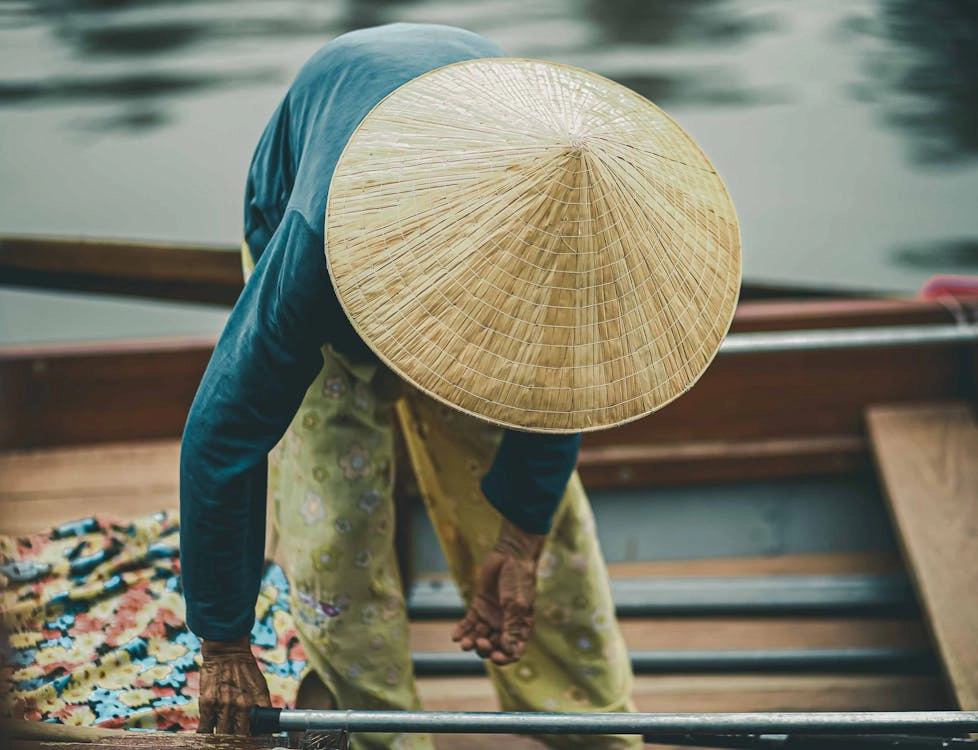
Regardless of its exact origin, one thing remains certain: the black áo bà ba, the checkered khăn rằn (scarf), and the nón lá (conical hat) together have become a distinctive symbol of the soulful beauty and cultural identity of Southern Vietnamese women in particular, and Vietnamese women in general.
The áo bà ba is traditionally collarless. The neckline is usually round, though some designs feature a heart-shaped (betel-leaf) or square collar according to personal taste. The back of the blouse is made from a single piece of fabric, while the front consists of two pieces with a row of buttons running down the center. The blouse is cinched at the waist and has moderate side slits. Its length reaches just past the hips, gently hugging the wearer’s figure. Pockets can be large or small—men’s áo bà ba often have larger pockets, women’s have smaller ones—but they must be proportionate to the blouse’s overall shape and body proportions for harmony.
Paired with long black pants that reach the ankles or heels, the áo bà ba enhances the wearer’s soft, graceful silhouette, accentuating the gentle curves and slim waist that captivate the heart.
The áo bà ba is forever linked to the image of the warm-hearted, strong, and loyal Southern Vietnamese woman during two wars of national resistance. The khăn rằn, nón lá, and áo bà ba accompanied mothers and sisters as they charged into uprisings and revolutions. Countless indigo and brown áo bà ba were soaked in sweat and blood, worn by the heroic women of the South who fought and sacrificed for the nation. Yet even then, these women in their áo bà ba remained beautiful—eternally radiant, pure, and heroic—woven into the glorious history of our people.
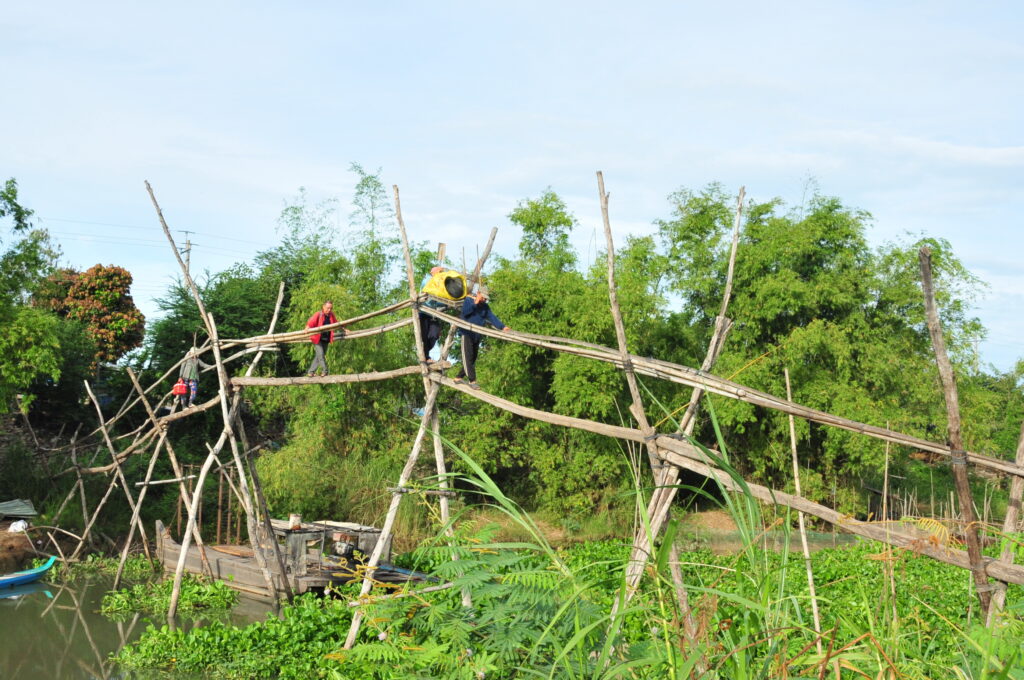
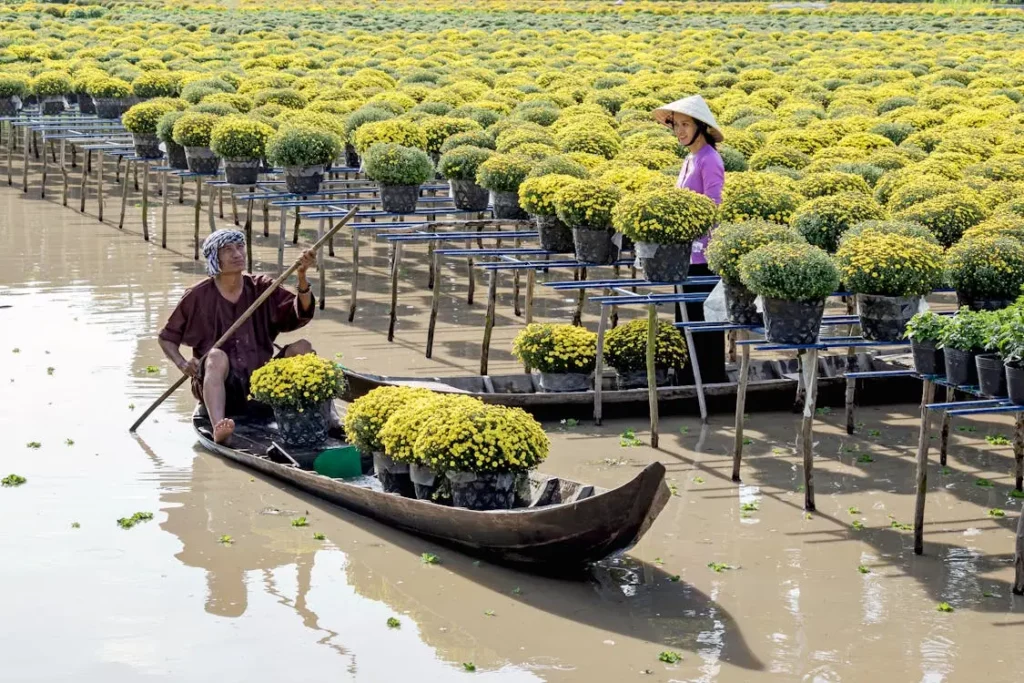
Today, amid the hustle and bustle of modern life, the áo bà ba still retains its gentle, serene charm and graceful elegance. The áo bà ba appears among rows of green coconut palms, carries the scent of kitchen smoke, stands strong and capable in crowded markets, or graces young women shyly rowing boats on the river. The áo bà ba flutters lightly on swaying footbridges over streams. Wherever it is, whenever it appears, people are easily captivated by its rustic, graceful beauty, and the image of the woman in that elegant áo bà ba lingers in the heart…
The hot, humid Southern climate with its year-round rain and sun demands soft, breathable fabrics for the áo bà ba, keeping the wearer cool and comfortable even on the hottest days. In the past, natural dyes from bàng leaves, đà bark, or starfruit tree bark gave the áo its characteristic brown hue. Today, a wide range of colors, patterns, and prints have been added, making the áo bà ba even more beautiful and charming. Perhaps that is why the áo bà ba remains forever a symbol of the simple, graceful beauty of women in the beloved Southern land.
Over time, the áo bà ba has evolved—becoming more flowing, elegant, and refined. Women’s versions now feature a cinched waist, pleated back, and a flared lower half that accentuates a rounded, feminine figure.
The áo bà ba brings a serene, gentle grace to the wearer, evoking the rustic, peaceful beauty of the river-and-garden life in the Mekong Delta South.
Compared to other traditional garments in Vietnam and around the world, the Southern áo bà ba is perhaps the simplest. This modesty perfectly reflects the Vietnamese values of humility and refinement. Yet even in its simplicity, it weaves a gentle, timeless melody connecting past and present, touching the hearts of travelers who pass through.
Though life has become faster and noisier, though time has changed many values, along the long road of history, our mothers, sisters, and daughters still wear that áo bà ba—like a lingering soul of the homeland, quietly calling us back to the place of memory…
It is no coincidence that Professor Trần Văn Khê, when speaking of Southern Vietnam’s cultural space, always mentioned the áo bà ba as a unique and beautiful feature. He often reminded us never to let this beauty fade from the lives of Vietnamese people today and in the future.
According to Báo An Giang