Shoots of the choại fern can be considered a dish deeply imbued with the pioneering spirit of our ancestors during the early days of land reclamation. This clean vegetable has a distinctive aroma, a mild natural sweetness, and a slightly mucilaginous texture.
/
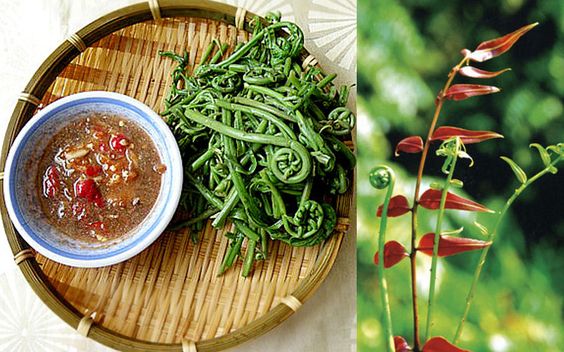
Hearing the two words “đọt choại” (also called chại or chạy), memories suddenly come flooding back. It can be said that the choại plant is closely tied to my childhood memories. Choại is a climbing vine that usually grows wild in marshy wetlands, most commonly found in Ca Mau, Hau Giang, Rach Gia, and surrounding areas. Its stems are very long (up to about 20 meters), with many roots clinging tightly to the trunks of other trees (especially cajuput trees) to survive. The compound leaves are feather-shaped and nearly a meter long. Young leaves are brown mixed with pale green, and their tips curl inward, resembling a millipede coiled upon itself.
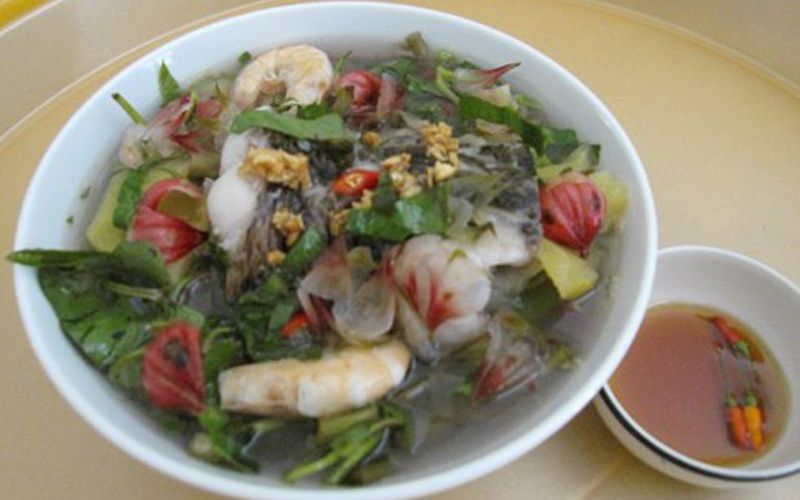
This is a clean vegetable with a distinctive aroma, mild sweetness, and a slightly slippery texture, skillfully prepared by countryside housewives into delicious dishes such as: choại shoots cooked in sour soup with climbing perch, sour eel soup with sesbania flowers, added to hot pot, stir-fried with tiny shrimp, or eaten raw (or boiled) dipped in fried fish sauce—absolutely delightful!…
Young choại shoots are not only favored for cooking, but mature choại vines are also highly useful. I still remember vividly—before the floods swept across the fields—when preparing fishing gear, my father would go into the forest to cut mature choại vines, bundle and dry them, then weave fish traps, fences, and roofing materials, and make ropes to tie house pillars and beams to withstand storms. Choại vines become extremely tough and flexible when soaked in water. Later on, mature choại vines were also used for handicrafts.
During the years of war, my hometown lay in a temporarily occupied zone. My parents decided to stay and refused to evacuate. At that time, life was extremely difficult, and going out to the fields to look for food was frightening due to the danger of bombs and gunfire. As a result, we relied mainly on vegetables and roots grown around the house. One dish my mother prepared frequently for family meals was boiled choại shoots dipped in thick caramelized fish sauce (or fish sauce with garlic and chili), or fresh choại shoots eaten with small braised fish in caramelized sauce.
Although the meals were simple, the rice pot was always scraped clean. The scorched rice left at the bottom of the pot was pried off with wooden chopsticks and shared among us siblings, each getting a piece to eat with caramelized fish sauce or blocks of palm sugar (yellow cane sugar molded into rectangular shapes), considered a special “snack” for dessert.
Today, I sit in a cozy, elegant restaurant with a close friend, enjoying rustic dishes that have been somewhat refined. The plate of boiled choại shoots looks crisp and vibrantly green (though there are a few tough stalks—perhaps the owner was reluctant to waste such rare ingredients). It looks quite appealing, unlike the plate of choại shoots back home, dull green like withered grass and mushy from overboiling. The chef must have used a trick—adding a little salt to the boiling water before cooking, then coating the shoots with a thin layer of oil to give them a glossy finish.
The plate of crispy rice is also very enticing, uniformly golden, cut into crescent shapes, crunchy, fragrant, and rich from being fried in fat—so different from the burnt, dry, slightly bitter scorched rice of the past. The caramelized fish sauce is made from premium Phu Quoc fish sauce, aromatic and amber-colored, thick and glossy, unlike the intensely salty rural fish sauce once made from fermented gourami, climbing perch, or juvenile river fish combined with coarse local salt. Moreover, the restaurant adds a decorative touch with sugar, pork cracklings, scallions, and a ripe red horn chili.
Breaking off a piece of crispy rice, dipping it lightly into the caramelized fish sauce, chewing its crunchiness, then adding a stalk of boiled choại shoot with its gentle aroma and slippery texture to balance the sweet and salty flavors—all of it blends together, spreading across the palate and down the throat. A wave of emotion arises, bringing back deep memories of a poor countryside, where my parents and hardworking farmers lived their humble, diligent lives…
According to Ap Bac