Besides the famous radish cake, bánh tằm bì is a dish that visitors should not miss when coming to the land of the “Prince of Bạc Liêu.”
Start a day of exploring Bạc Liêu with the unique and intriguing bánh tằm bì of the local people. This is a rustic dish, so you can enjoy it from street vendors, sidewalk eateries, or at almost any local market. Although it is a popular dish, hardly anyone knows exactly when it first appeared or why it has that name. According to local anecdotes, it is called bánh tằm bì because the noodle strands resemble silkworms, and when eaten with shredded pork skin (bì), it became known as bánh tằm bì.
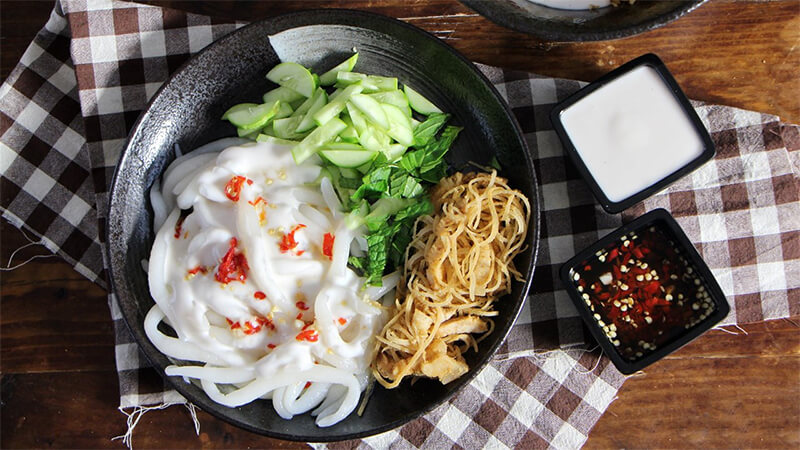
Even though its exact origin and name are unclear, this dish—with rice-flour noodles served with shredded pork skin, vegetables, and coconut milk—has a perfectly balanced sweet-and-savory flavor that captivates many visitors at first bite. Though it is a humble dish with simple ingredients, making a fragrant and rich plate of bánh tằm bì requires considerable effort from the vendor.
The noodle strands are the most important component of the dish. A good plate of bánh tằm bì should have noodles that are pure white, soft, chewy, and unbroken. To achieve this, the kneading step is crucial. Rice flour is mixed with tapioca starch in a specific ratio and kneaded with boiling water until the dough becomes smooth, elastic, and non-sticky. The dough is then divided into small portions and hand-rolled into long, round strands. Nowadays, many places roll the dough into thin sheets and cut them into strands like bánh canh noodles. This method is faster, but the noodles are not as beautiful or as chewy.
After shaping, the noodles are boiled until cooked, then rinsed several times with cold water and drained well. Next, they are mixed with a little cooking oil so the strands do not stick together. Besides the noodles, the shredded pork skin and coconut milk sauce are equally important. The pork skin is sliced into even, thin strands and mixed with shredded lean pork and toasted rice powder, creating a crunchy and nutty texture.
The coconut milk sauce of this dish is especially distinctive. The vendor must carefully balance the seasoning so that it is both sweet and savory, rich but not cloying. The coconut milk is cooked over very low heat, making sure it does not boil vigorously—just a gentle simmer is enough. Then, a little tapioca starch (or cornstarch) dissolved in water is added, and the sauce is seasoned to taste.
In addition, bánh tằm bì is served with blanched bean sprouts, scallion oil, cucumber, and finely chopped fresh herbs. Some places also add pickled shredded carrots and daikon. The bánh tằm bì is arranged on a plate, topped with the pork skin, followed by the vegetables, then generously drizzled with coconut milk sauce before being served. When eating, diners mix all the components together; if the flavor is not yet to their liking, they can add a little sweet fish sauce prepared by the vendor.
Though it is simply a rustic breakfast dish of the locals, a plate of bánh tằm bì—with its harmonious blend of savory and slightly sweet flavors—will surely be a delightful and surprising experience for first-time diners.
Source: VnExpress