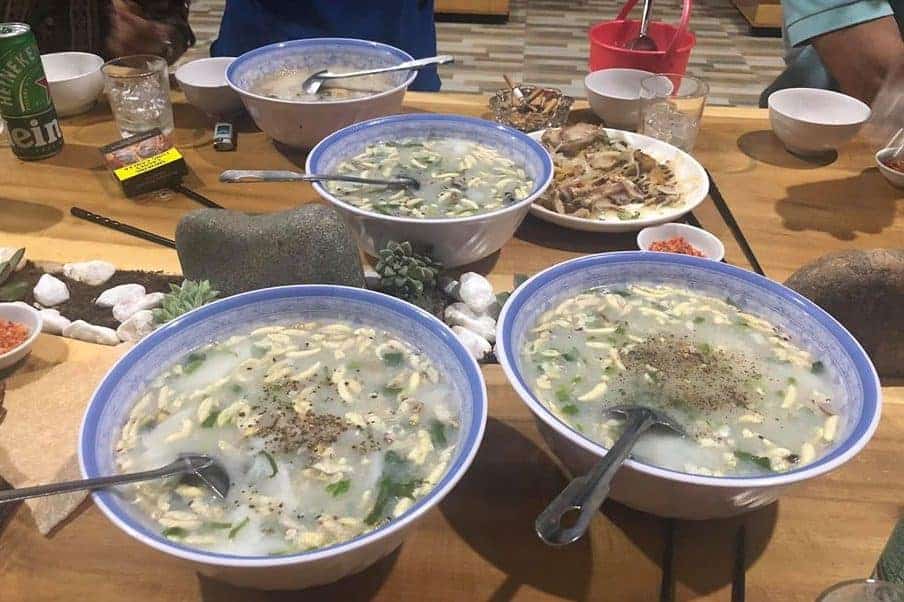
Wasp larvae porridge cooked with coconut milk is considered the most delicious. The creamy sweetness of the wasp larvae combined with the rich, velvety coconut milk creates a flavor unmatched by any other dish in the world—sometimes, no amount of money can buy it.
Anyone who grew up in the countryside and once encountered a paper wasp nest surely remembers their mischievous childhood antics. Children’s playful yet thrilling urge to poke at a wasp nest, or following their father to burn one down and bring it home to cook midnight porridge. And surely more than a few got painfully stung, leaving lifelong memories of childhood. As adults, no matter where life takes them, they always long for their homeland—remembering the painfully stinging wasps, and the sweetly irresistible pot of wasp larvae porridge late at night.
In the orchards or forests, there are many types of bees and wasps like golden bees and hornets… but when it comes to paper wasps (ong vò vẽ), many people feel quite intimidated because this species is aggressive and quite venomous. Nevertheless, the larvae of paper wasps are incredibly delicious and nutritious—especially when turned into wasp larvae porridge.
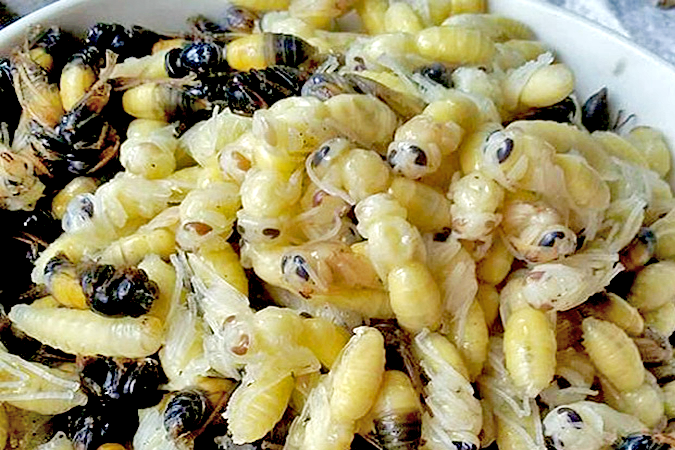
Wasp larvae resemble silkworm pupae but are smaller, usually milky white in color. This dish only appears from around April to August, the season when wasps build their nests.
Upon spotting a paper wasp nest, people observe its size to estimate how many layers of larvae it contains, deciding the best time to harvest.
The harvester prepares a long pole made of fresh bamboo or rattan, angled to avoid falling wasps landing on their head. The tip is tightly wrapped with dry rags soaked in kerosene or gasoline, as burning the nest can take 5–7 minutes. They burn until the worker wasps’ wings are singed and they fall or fly away, then remove the nest and extract the larvae.
Back home, the nest is broken apart layer by layer to collect the larvae and young wasps. The larvae are often covered with a fairly tough membrane. Peeling it away is the most exciting moment—revealing how abundant the larvae are. The plump, round, fat, and creamy ones make for absolutely delicious porridge.
There are four types of wasp larvae: very young ones, mature ones, those with legs formed but still white, and those ivory-yellow in color. All four are edible, but the very young ones have a black intestine segment inside; they must be blanched in boiling water to firm up the inner milk, then the tail is pinched and the black intestine pulled out.
Beyond its delicious taste, this porridge is special for another reason: the joyful family togetherness. It’s usually cooked at night, with everyone pitching in happily—one harvests the larvae, one cooks the porridge, one grates the coconut.
The first thick coconut milk is set aside and added only after the porridge is done. The thinner milk is cooked together with the rice until the porridge is very soft. The cleaned larvae are sautéed with fragrant shallots until lightly golden, seasoned with a bit of MSG and good fish sauce, then added to the pot. Only then is the thick coconut milk poured in, along with pepper, finely chopped green onions, and final seasoning.
To make the wasp larvae porridge even more enjoyable, some larvae are reserved to stir-fry with green onion roots. Eaten alongside the porridge, this lets you fully appreciate the authentic, original flavor of the paper wasp larvae.
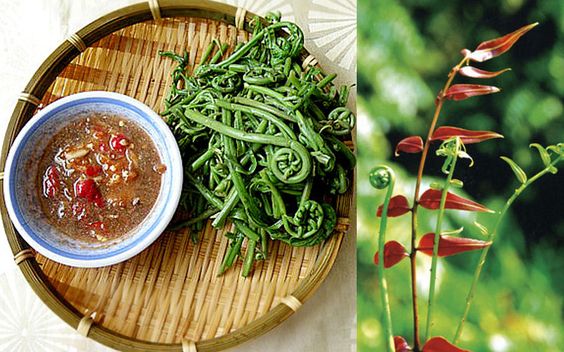
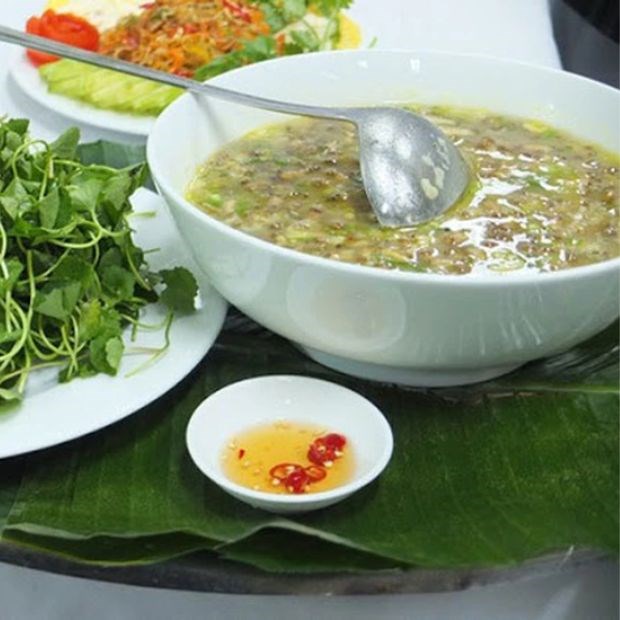
Wasp larvae porridge cooked with coconut milk is considered the best and loved by everyone. It’s enjoyed with garden greens like wild mustard or pennywort picked fresh from the yard, plus a small bowl of young fish sauce pounded with chili. After the exhausting effort of burning the nest, the harvesters savor the hot, creamy bowls—truly refreshing. The sweet creaminess of the larvae combined with the rich coconut milk creates a distinctive flavor found nowhere else in the world. This nourishing, unique wasp larvae porridge is truly a rural specialty, a dish from our ancestors’ pioneering days—sometimes even money can’t buy it.