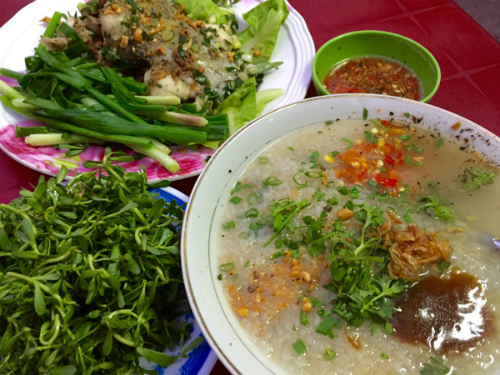
When traveling far, one misses the poor homeland, Missing bún nước lèo, missing Ba Xuyên fish sauce.
Bún nước lèo was originally a humble dish of the local Khmer people. Over time, its flavor has become a culinary cultural identity of the region and a specialty of Sóc Trăng, carrying a distinctive taste that harmoniously blends the cultures of the three ethnic communities: Kinh, Hoa, and Khmer.
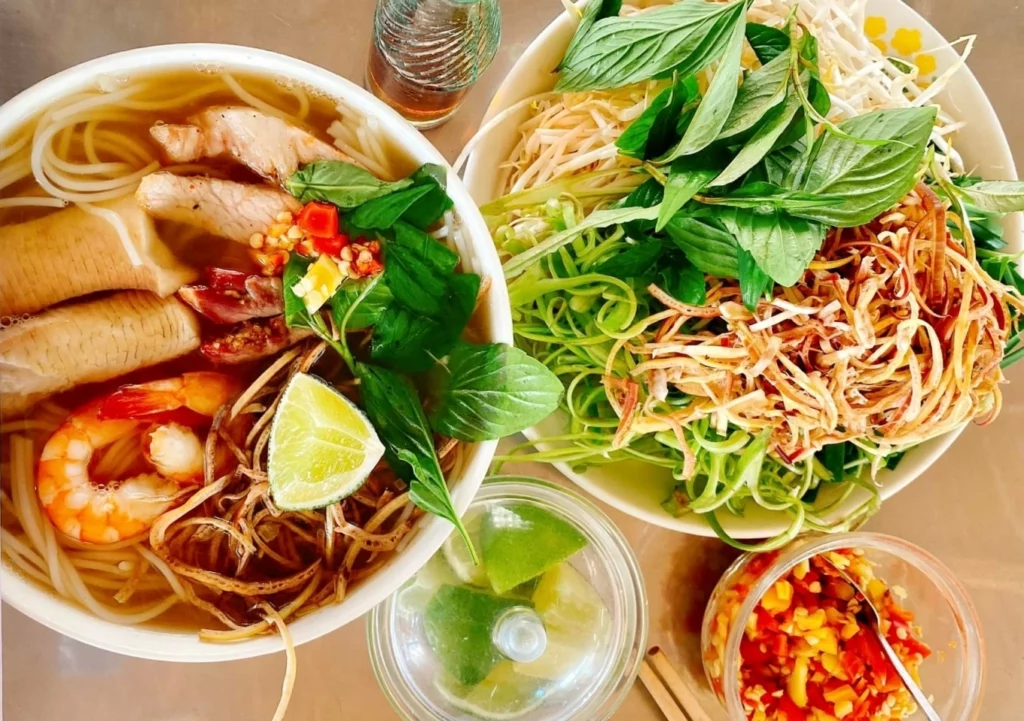
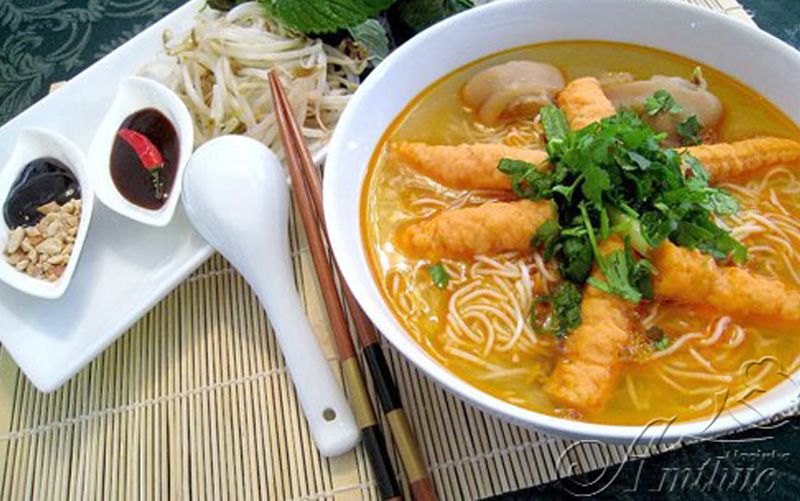
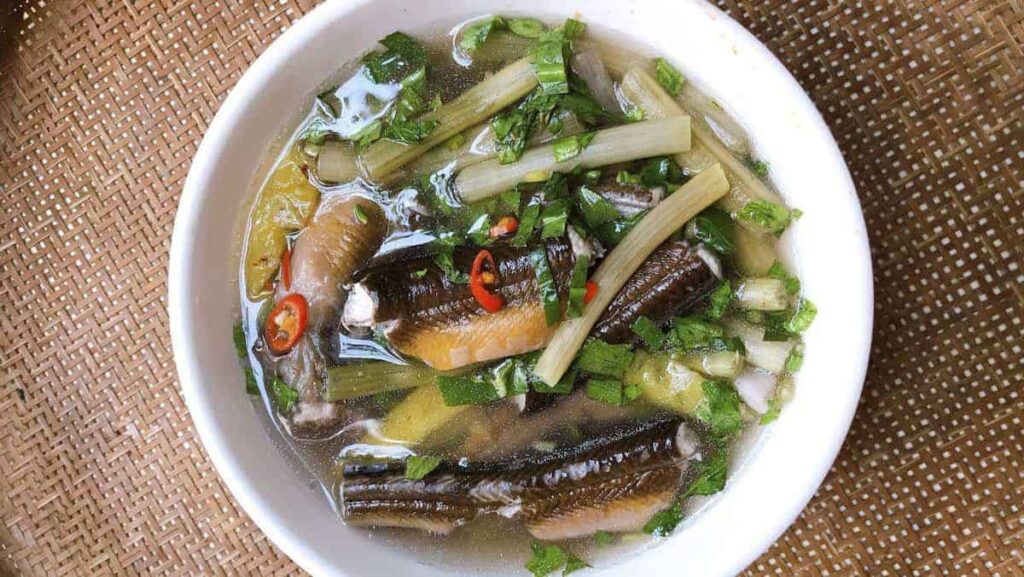
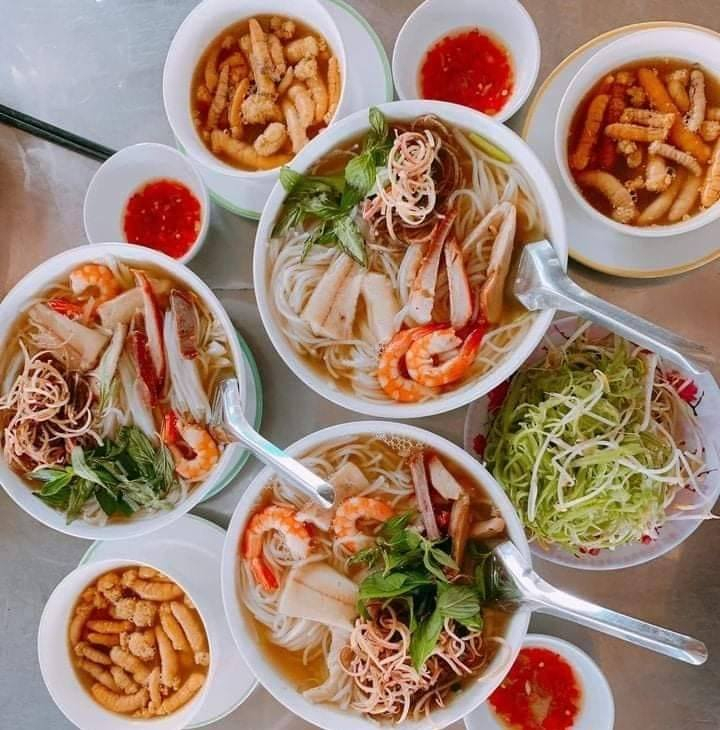
Bún nước lèo of Sóc Trăng differs in several ways from similar dishes in neighboring localities. A lavish bowl may include snakehead fish, silver shrimp, roasted pork, and more, while a simpler version requires only a decent-sized snakehead fish to create a flavorful broth.
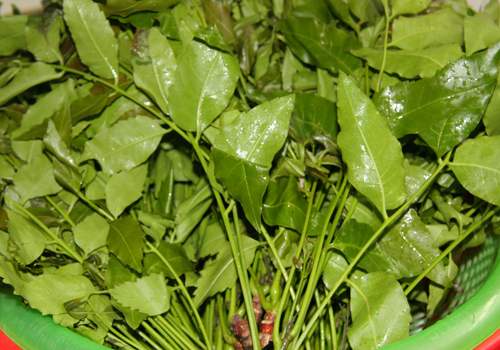
However, two ingredients are indispensable: *ngải bún* (fingerroot) and *mắm bò hóc* (Khmer fermented fish paste). In the past, *ngải bún* grew wild, but it is now commonly cultivated in home gardens for use as a spice. It helps neutralize the strong odor of fermented fish paste. *Mắm bò hóc* is made by the Khmer people from freshwater fish mixed with salt and cooked rice.
To make a delicious pot of broth, one must use a wild snakehead fish weighing at least 0.5 kg. A fish with roe is even more appealing, as the broth will develop a beautiful golden layer of fish eggs. The fish is cleaned and cut into two parts—the head attached to the innards being the most flavorful portion.
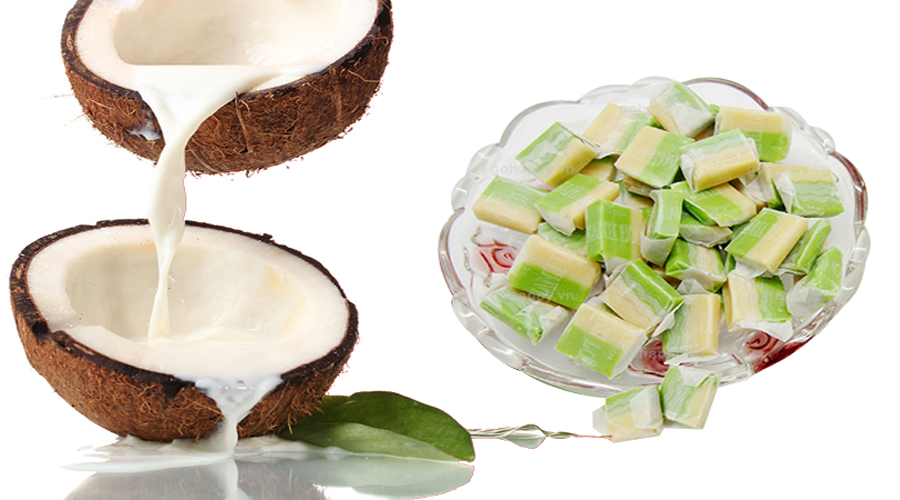
Silver shrimp or white shrimp are boiled and peeled. Adding slices of roasted pork, fish cakes made from featherback fish, or vinh carp makes the bowl even more appetizing. Fresh coconut water can be used to cook the broth for added sweetness, and *mắm bò hóc* is added once the broth is boiling.
*Ngải bún* is lightly grilled over charcoal, and crushed lemongrass roots are added to continue simmering. Skim thoroughly until the broth becomes clear, then add the cleaned fish.
Bún nước lèo is served with shredded water spinach, fresh bean sprouts, finely sliced banana blossom, young banana stems, and herbs such as basil and Vietnamese mint. Ripe red horn chilies are thinly sliced, and a splash of Lai Sơn fish sauce or Phú Quốc fish sauce completes the authentic flavor. This dish beautifully represents the cultural exchange and culinary creativity among the ethnic communities of the region.
Today, this dish has gone beyond Vietnam’s borders and its flavor has spread to become a recognized Asian specialty.
Nowadays, bún nước lèo Sóc Trăng is no longer just a humble local dish. Its flavor has reached international audiences, contributing to the promotion of Vietnamese cuisine, culture, and people to friends around the world.
After a selection process (from 2012 to 2023), 10 nominations were officially recognized by the Asia Book of Records under the Asian Culinary and Specialty Criteria, raising the total number of Vietnamese culinary and specialty gifts holding Asian records to 60 items, including 38 specialty dishes and 22 natural specialties and regional gift products.
In the fourth announcement period (2023–2024), Sóc Trăng Province was honored with bún nước lèo being recognized as an Asian Record according to the Asian culinary value criteria, based on the nomination by the Vietnam Book of Records (VietKings). This recognition contributes to promoting Vietnamese cuisine in general and local specialties in particular to both domestic and international visitors through the global network of record organizations.
How to Cook Sóc Trăng Bún Nước Lèo