Wild rice, also known as sky rice, thrives and multiplies strongly during the flood season. The people of the Thap Muoi region consider it a precious gift of nature in this harsh flooded land.
As a naturally growing wild rice variety that requires no cultivation, people call it “sky rice.” Locals say wild rice is quite mysterious: when it ripens, it seems to fear the sun. Once fully ripe, if it is not harvested, the grains will naturally fall when exposed to sunlight, hence the name “wild rice” (according to folklore, ghosts fear the sun).
When the rainy season begins, wild rice grows densely among thick grasses in areas such as Go Trau, Go Tre, Go Lao Voi… making it difficult for those unfamiliar with the terrain to distinguish rice from grass. Around August, when floodwaters rise, wild rice—with its remarkable vitality—surpasses other common grasses and emerges above the water. No matter how high the water rises, the rice continues to grow upward to form stalks and flower. By December, when the floods recede, the life cycle of wild rice comes to an end.
The rice stalks are sturdy, with large leaves that grow steadily thanks to dew, wind, and rain. The panicles are long and harder than usual, and when ripe, they do not bend like tamarind pods but stand upright along the stalk. The grains of wild rice are also one and a half times longer than ordinary rice.
Wild rice ripens only a few grains at a time, and around 8–9 a.m., the grains fall back into the water. Therefore, harvesting wild rice can only take place before sunrise.
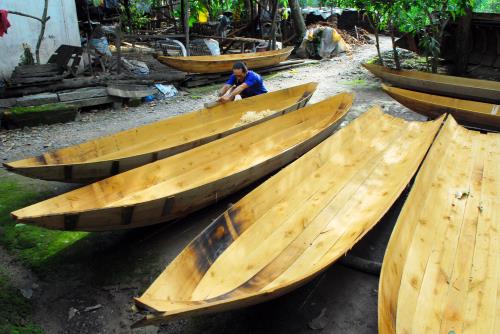
Harvesting wild rice does not involve reaping or cutting but requires beating the stalks with poles. Because the rice grows amid gloomy grasslands and ripens during the flood season, harvesting must be done by boat. Two people are needed on the boat to harvest wild rice. The harvesting tools are specially designed: one person holds a pole to maneuver the boat, while the other rhythmically operates a foot lever so that the ripe grains fall into a woven bamboo mat placed on the boat. From the first crow of the rooster until the sun begins to rise, the boat becomes filled with fallen rice.
The grains of wild rice are slightly ivory-colored but are considered among the finest rice in the world. The grains are firm and take a long time to cook. A pot of wild rice takes three times longer to cook than ordinary rice. In return, the rice is wonderfully fragrant, rich, and has an unusually sweet taste.
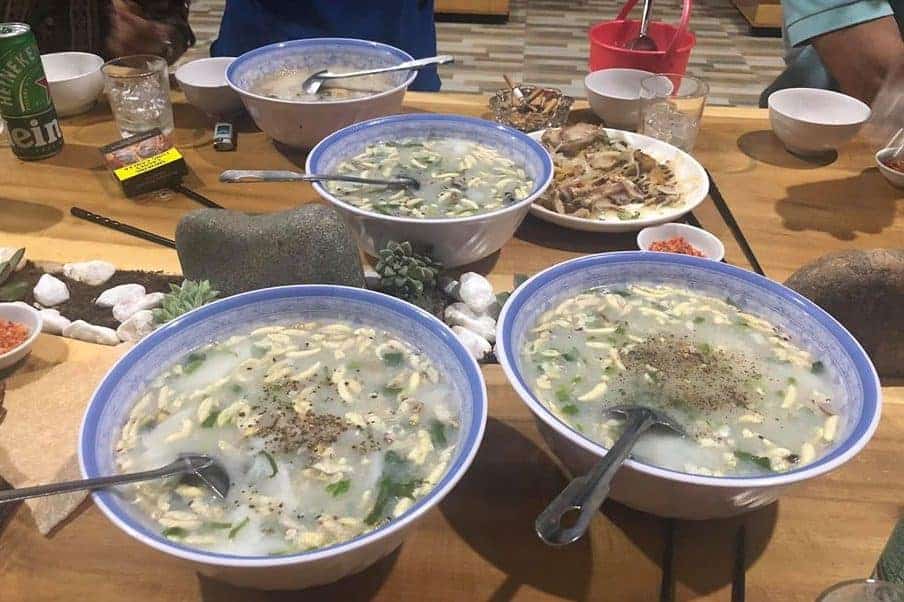
Sky rice is also commonly used by local people to cook thick porridge, stirred vigorously with a large wooden chopstick until smooth, then poured onto a large tray, resembling a giant steamed rice cake. When eating, it is cut into pieces and served with caramelized sugar syrup, creating a very delicious flavor.
That was the story of the past. Today, wild rice has become extremely rare—so rare that even the wealthy cannot buy it. It was once an important natural resource that helped the people of the Thap Muoi region survive periods of food shortage while waiting for the main harvest season. It was also a valuable food reserve that helped Vietnamese soldiers endure hunger during the years of resistance.
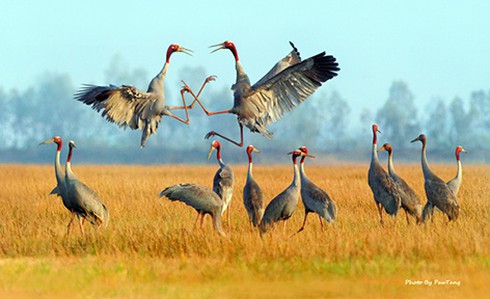
It can be said that wild rice has now become a legend. Today, it exists only in places rarely visited by humans. Across the entire Thap Muoi region, traces of this legendary rice can now be found only in Tram Chim National Park.
Nowadays, the AS 996 rice variety is a combination of the superior resilience of wild rice under the harshest living conditions with high-yield rice varieties.
As weather conditions become increasingly unfavorable, the success of this “strong” rice variety has opened up new prospects for rice cultivation—thanks largely to the mysterious wild rice hidden in the lowlands of Thap Muoi.
Compiled by Bang Tam