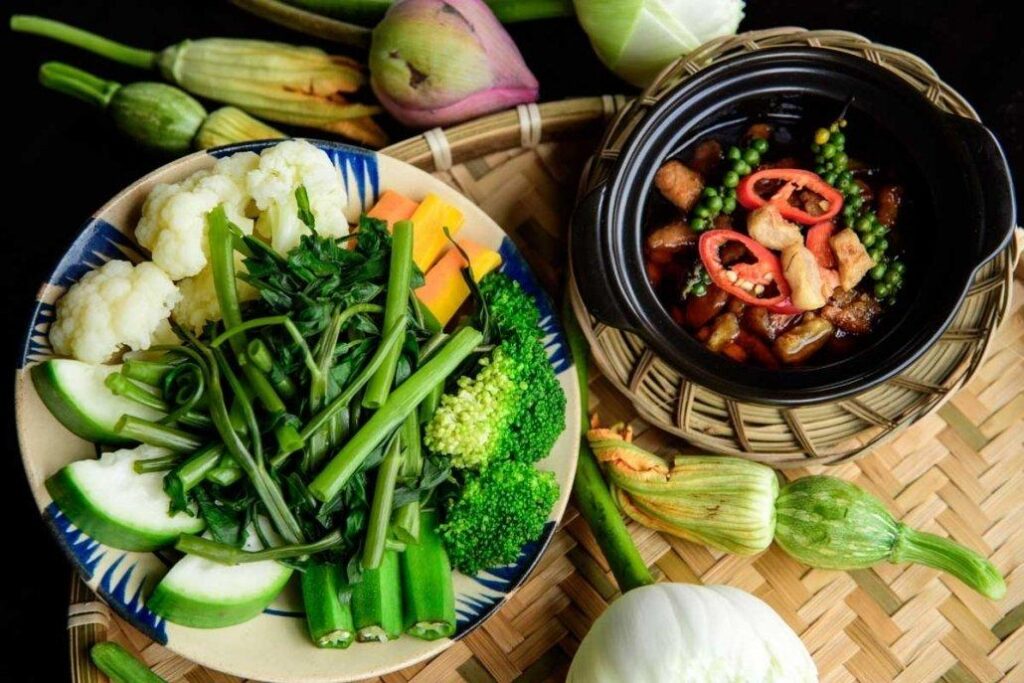
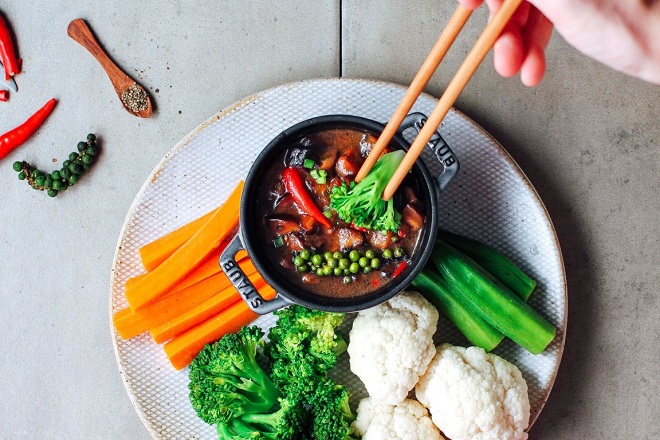
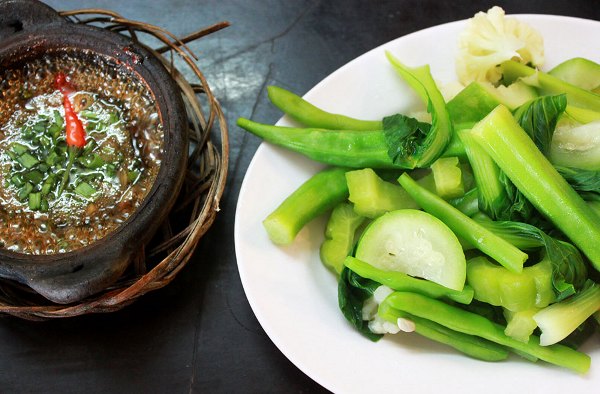
There are rustic dishes that once seemed to exist only in rural villages and rice fields, yet today have found their way onto restaurant tables, becoming appealing delicacies enjoyed by many. Boiled vegetables with kho quẹt dipping sauce is one such dish.Boiled Vegetables with Kho Quẹt
Just a simple plate of boiled vegetables paired with a spicy, aromatic kho quẹt sauce—yet it captivates so many people: rural folk, city dwellers, and even Western diners.
Boiled vegetables with kho quẹt has a distinctive, fragrant, and surprisingly unique flavor. The dish evokes memories of a time of hardship and simplicity. From the day it appeared, it was closely associated with “poverty,” as rural people often ate it when there was no meat or fish at home, cooking a small pot of kho quẹt just to get through the meal.
Today, as living standards improve and many grow weary of rich meat dishes, people return to rustic foods for something lighter and more wholesome. As a result, boiled vegetables with kho quẹt now proudly appears on the menus of upscale restaurants under various names such as: boiled vegetables with kho quẹt dip, boiled vegetables and kho quẹt, or mixed vegetables with kho quẹt dip.
Boiled vegetables with kho quẹt dip, boiled vegetables and kho quẹt, or mixed vegetables with kho quẹt dip.
Traditional kho quẹt served with boiled vegetables is very easy to prepare, using simple and readily available ingredients: just a clay pot, a little fish sauce, monosodium glutamate, sugar, garlic, chili… or a bit of pork cracklings. It is enjoyed alongside a plate of boiled vegetables freshly picked from the garden.
To make the dish even more flavorful, modern versions of kho quẹt often include pork belly and dried shrimp, while still using the traditional method of cooking in a clay pot. A piece of vibrant green boiled vegetable dipped into the thick, steaming sauce releases an unmistakable aroma—the saltiness of fish sauce, the richness of pork cracklings and pork belly, and the spicy warmth of chili and pepper. Paired with hot rice, it is simply irresistible.
Boiled vegetables with kho quẹt dip, boiled vegetables and kho quẹt, or mixed vegetables with kho quẹt dip.
The plate of boiled vegetables has also evolved. Instead of using purely garden-grown greens such as sweet potato leaves, wild mustard, rau chai, pumpkin shoots, rau choại, or elephant-ear stems, restaurant versions may include sweet potato leaves, bitter melon, broccoli, young gourd, okra, or carrots. In fact, it simply depends on what vegetables are available in the kitchen at the time.
We must admit that the once-humble boiled vegetables with kho quẹt has changed somewhat to suit modern times—becoming a little more “luxurious” and a little less “poor.”
Anyone who once had a childhood in the riverine countryside surely cannot forget this dish, rich with the warmth of homeland affection. At dusk, the whole family gathered around a simple meal: a small, blackened clay pot of kho quẹt and a plate of green vegetables.
The light of the oil lamp flickered on and off.
The buzzing of mosquitoes filled the air.
The cheerful “quẹt quẹt” sound of bamboo chopsticks scraping the bottom of the clay pot.
Lips tingled from the heat of the chili.
Near the end of the meal, siblings would sometimes compete for the chance to mix rice directly into the clay pot and eat straight from it.
That was childhood—truly full of “storms,” yet incredibly memorable and delightful.
[adsres]
How proud it feels to see this once humble, inexpensive dish now featured on restaurant menus and air-conditioned dining rooms, praised by many Western guests and regarded as a distinctive Vietnamese specialty.
Many people who move to Saigon to make a living, busy with daily worries, may unexpectedly encounter this childhood dish at a gathering—and find themselves overwhelmed by nostalgia mixed with quiet joy.
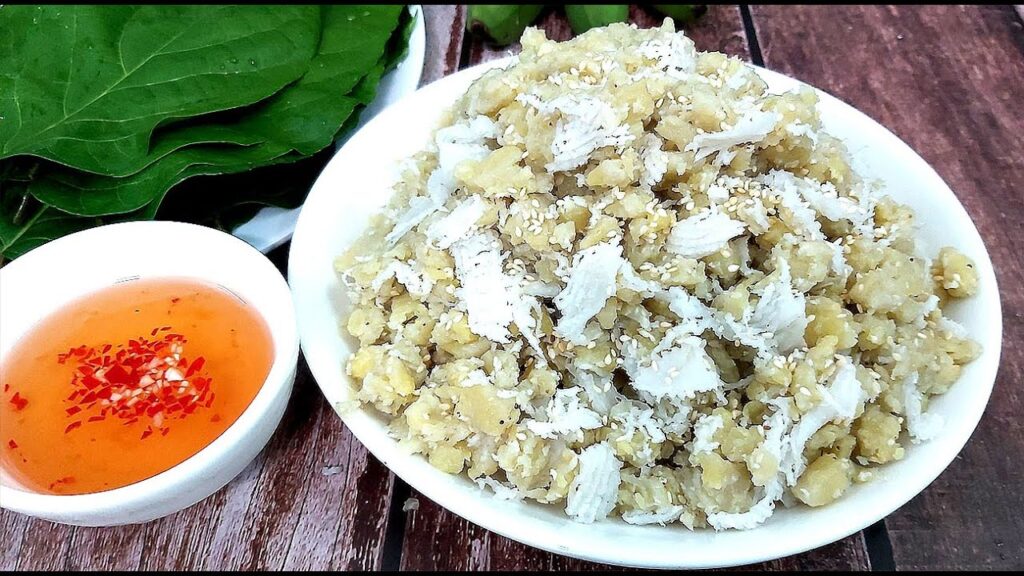
Nếu bây giờ, ai đó chưa từng ăn, chưa từng nghe qua thì sẽ cảm thấy lạ với cái tên này, vì cái tên nghe sao lạ lạ, ngộ ngộ. Thực ra, cái tên gọi cũng chính là cách làm món ăn này đấy, “chuối quết dừa” chỉ là chuối đem đi quết với dừa, nghe mà sao thân quen quá.
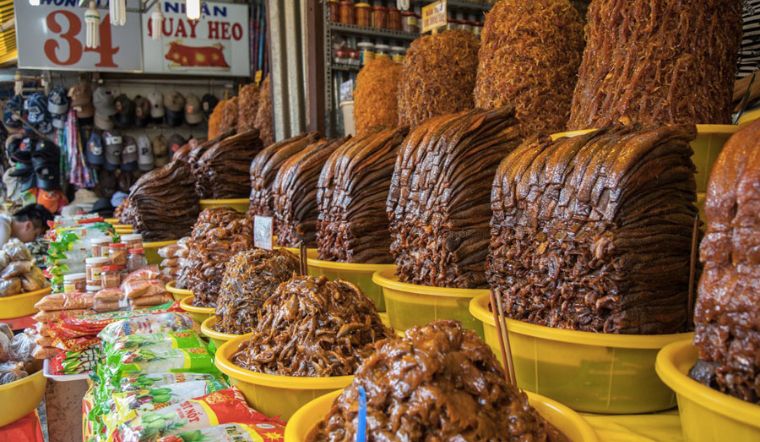
Vietnam is not only famous for its abundance of fish species, but its various types of fermented fish paste also contribute to the distinctive flavor of our cuisine. Each region has its own type of fermented fish paste, such as shrimp paste, fish paste, crab paste, and prawn paste, etc. Remember to try them as you travel through these regions!
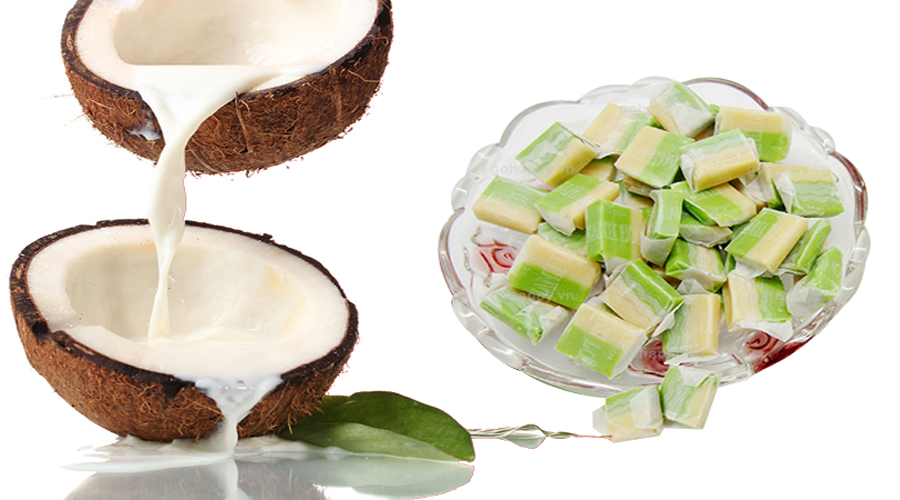
In the past, coconut candy was considered a gift for neighbors during memorial days and traditional holidays. Later, thanks to its mild sweetness, rich flavor, and distinctive creamy aroma, in 1999 this Mỏ Cày coconut candy was officially branded as “Bến Tre Coconut Candy” and exported to many countries around the world. Today, international visitors...
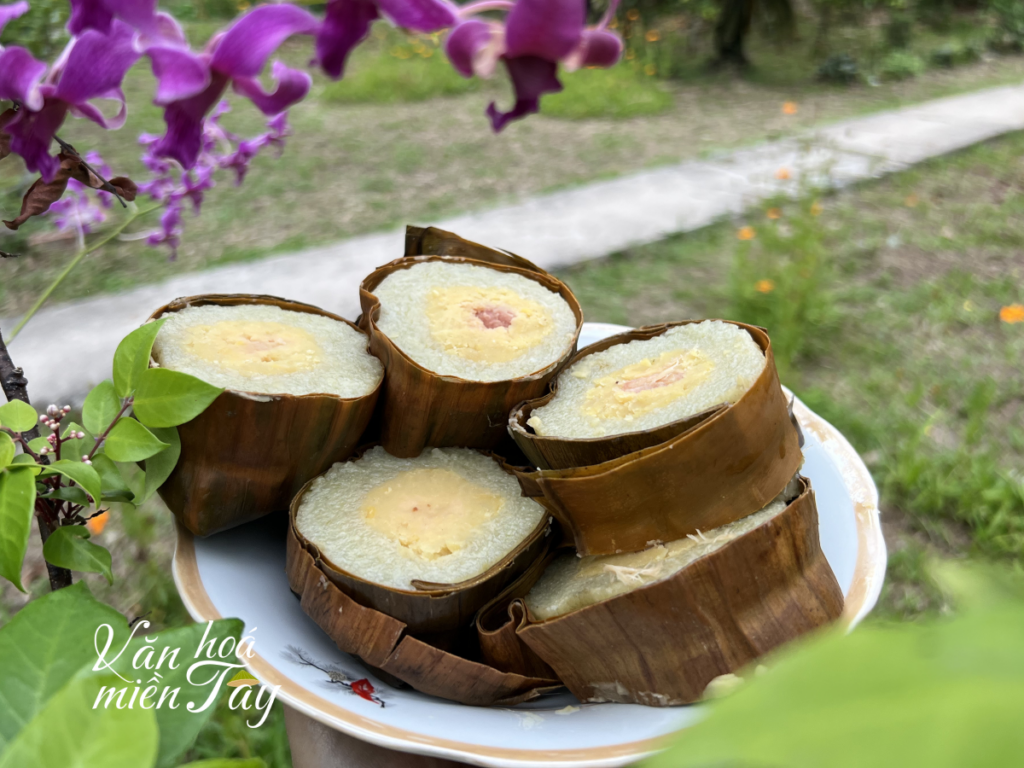
Western Vietnamese Bánh Tét is one of the traditional dishes that embodies the rich cultural identity of Southern Vietnam. It is not only enjoyed during the Lunar New Year (Tết) but is also closely associated with death anniversary ceremonies, ancestor worship, and family gatherings. For the people of the Mekong Delta, each bánh tét is...
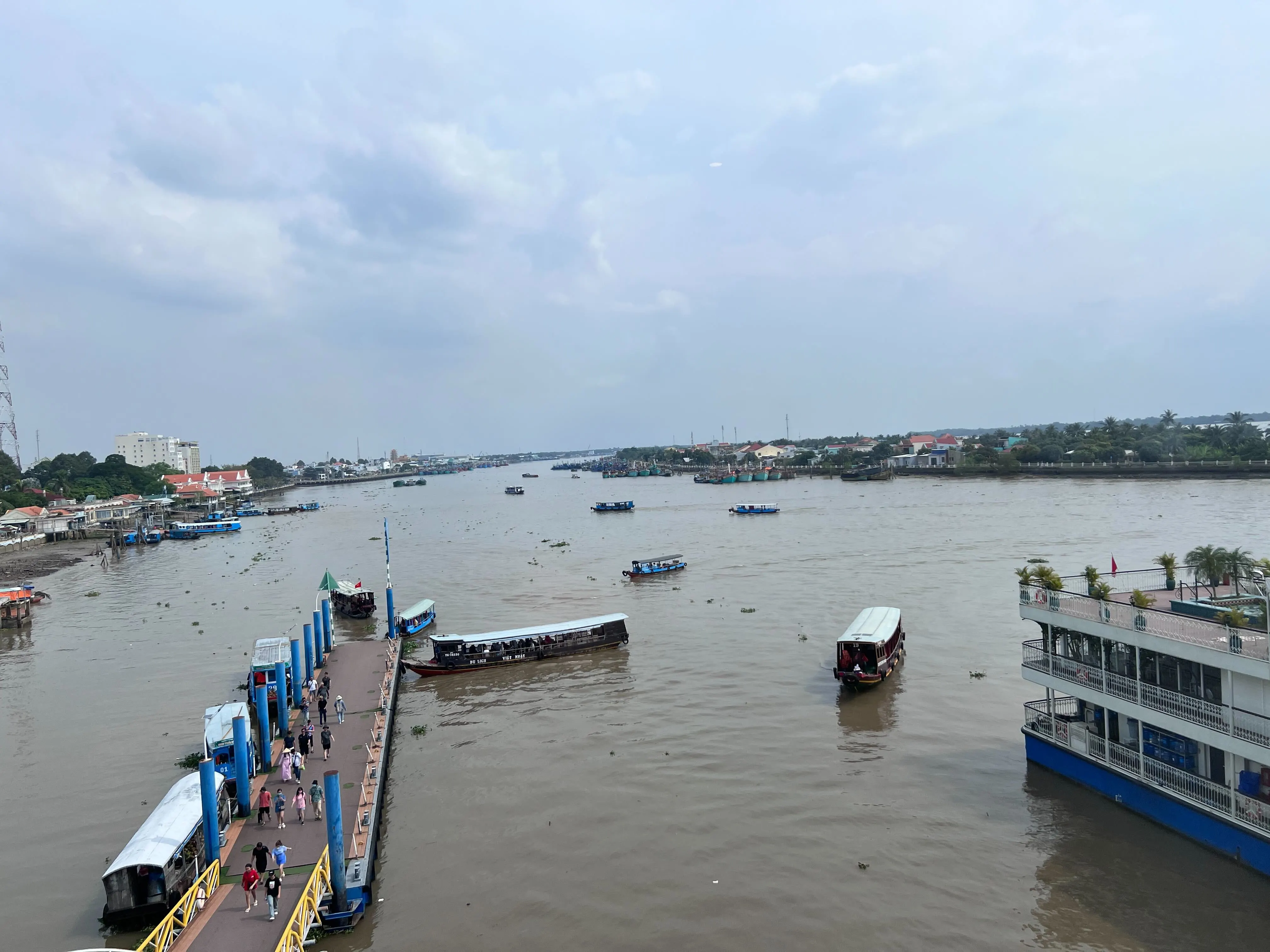
Every year, when the chướng wind whispers back to the riverbanks of the Mekong Delta, that’s when the sesbania flowers bloom golden across the water surface. And sour soup with sesbania flowers and wild climbing perch is a simple yet uniquely delicious dish that you simply can’t miss. The Mekong Delta has an intricate network...
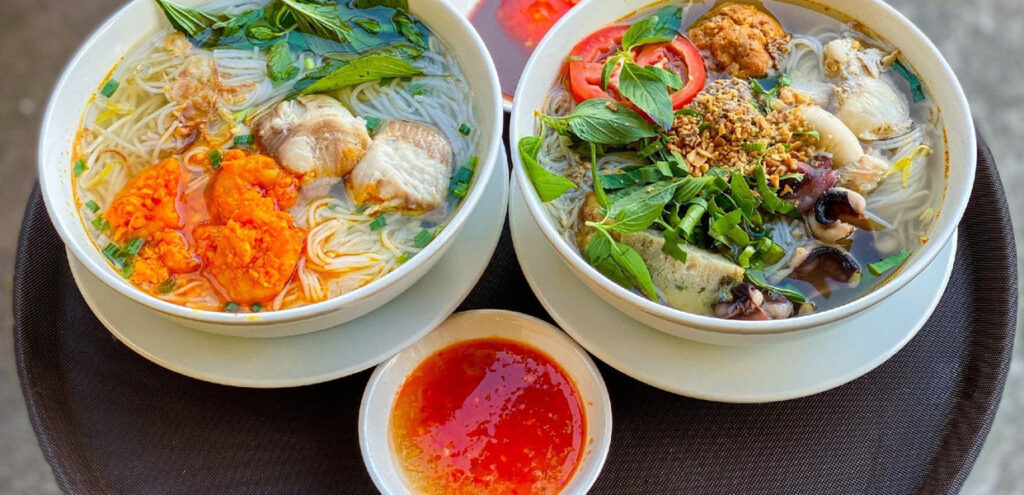
Kien Giang is not only famous for its landmark known as the "pearl of the East Sea," but when you visit Kien Giang, don't forget to enjoy its local specialties. Kien Giang fish noodle soup is one of the dishes that has contributed to the region's reputation.
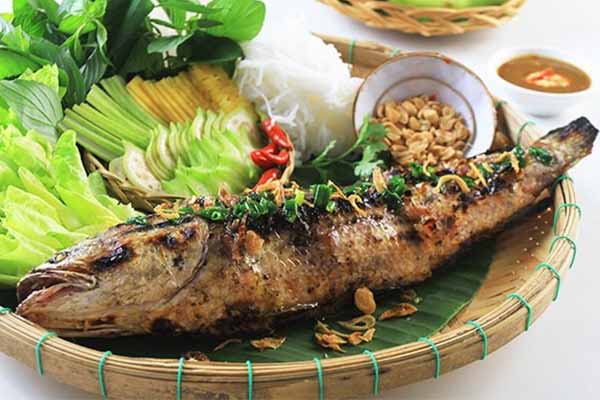
Từ một món ăn dân dã, cá lóc nướng trui đã trở thành món đặc sản mà người dân Nam Bộ đãi khách phương xa hay dùng trong cả những dịp lễ tết. Cá lóc ngon nhất là vào đầu mùa mưa, bụng đầy trứng; hoặc ra giêng cá trưởng thành, béo.
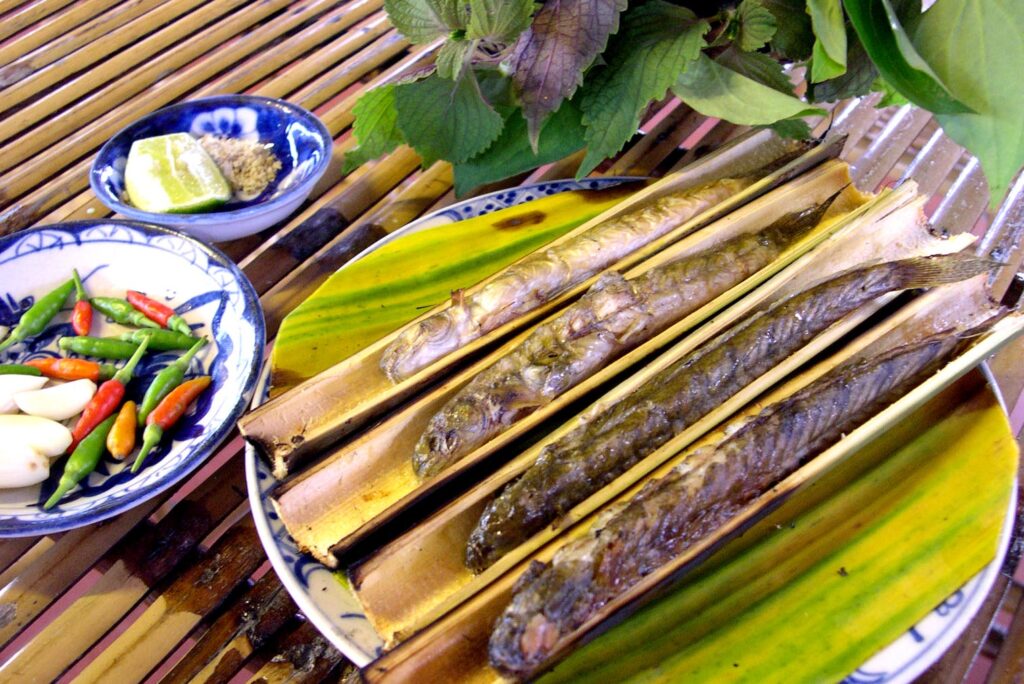
Grilled snakehead fish in bamboo tubes is very popular in Vietnam due to its unique flavor, white flesh, and high nutritional value, especially the gallbladder which leaves an unforgettable taste.
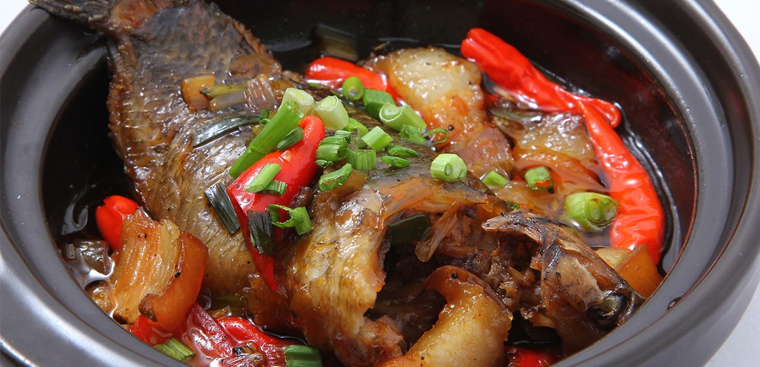
Despite having quite a few bones, snakehead fish is famous for its rich, fragrant, firm, and delicious flavor. If you have the chance, you should try braised snakehead fish in a clay pot, a dish considered a unique specialty of the Southwestern region of Vietnam.
Grilled mudskipper fish in reed tubes is highly favored in Vietnam for its distinctive flavor, firm white flesh, and high nutritional value—especially the bile, which leaves an unforgettable taste. Mudskipper fish, also known as goby mudskippers, live in brackish, alluvial environments. They are commonly found in the Mekong Delta, particularly in ponds, lakes, and brackish...
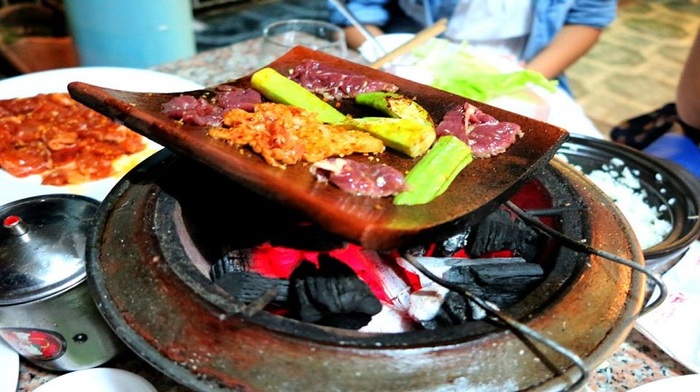
Originally, people used curved terracotta roof tiles to grill beef. Later, the tile was replaced by a thick stainless steel sheet resembling a shovel for digging soil, which is why some people still call this dish “bò nướng xẻng” (shovel-grilled beef). For a long time, locals here have raised cattle for plowing and beef has...
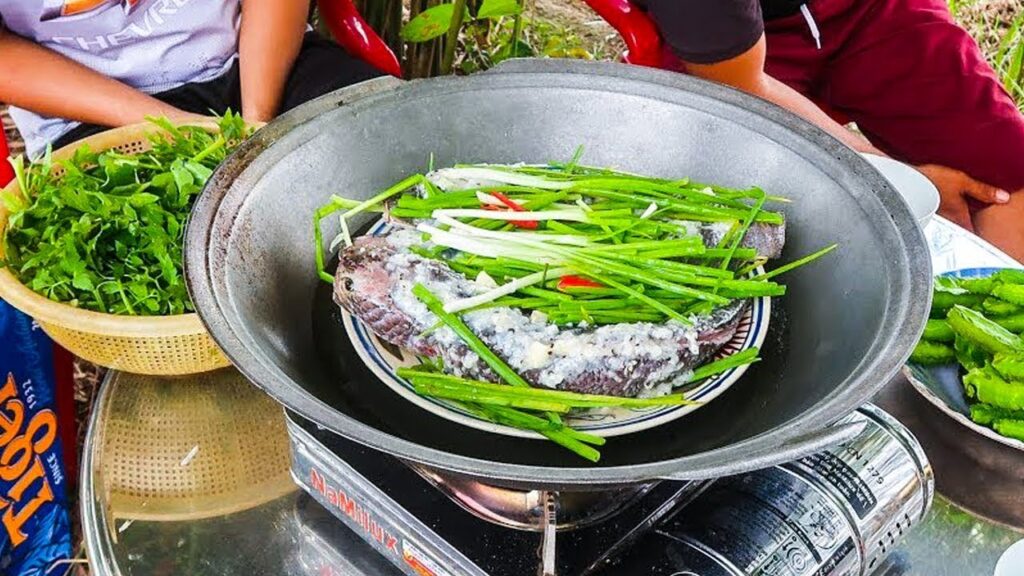
The Mekong Delta is a rich “reservoir” of freshwater fish. Among the freshwater species found in the Mekong Delta, snakehead fish is considered the most iconic local specialty. Steamed snakehead fish with fermented rice is a traditional dish of Can Tho—simple and rustic, yet irresistibly appealing. Ingredients: Fermented rice Shallots Scallions Served with: Boiled tiny...