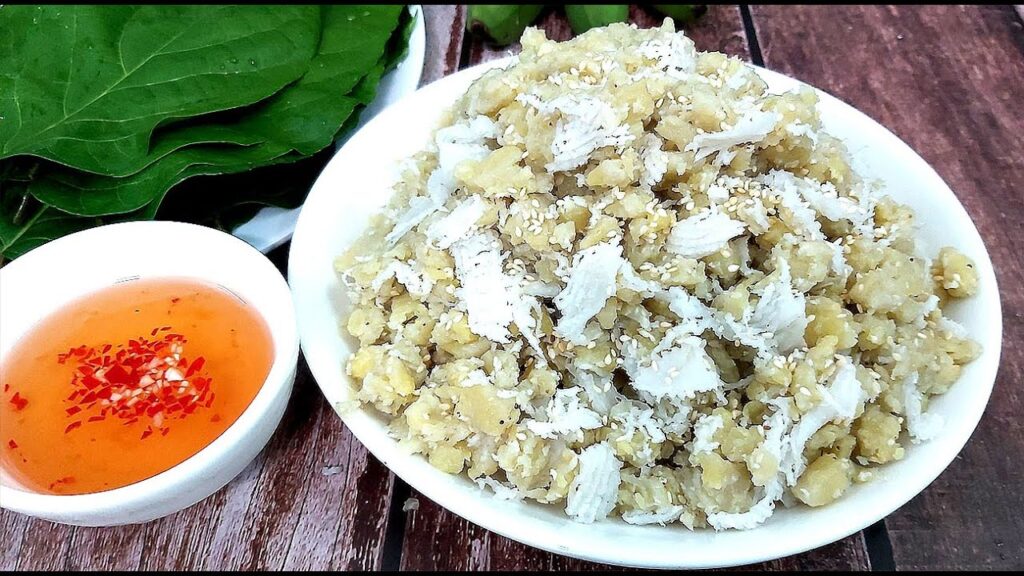
If someone today has never eaten or even heard of it, they might find the name quite strange and quirky. In reality, the name perfectly describes how the dish is made—“chuối quết dừa” simply means bananas mashed together with coconut. It sounds so familiar and comforting.
While children in Saigon from the 8x and 9x generations grew up with snacks like chocolate, candy, or biscuits… rural kids like me had snacks made from sweet potatoes, cassava, or bananas… Among them, one dish I really loved was chuối quết dừa made by my mother herself.
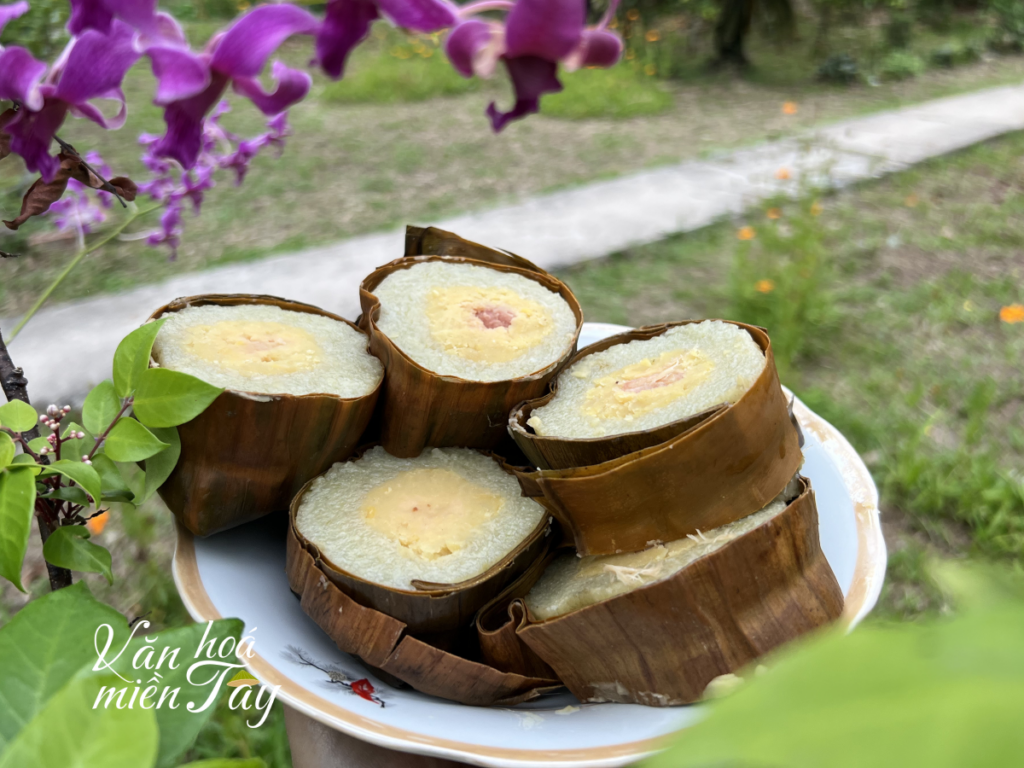
Chuối quết dừa looks a bit like flattened green rice (“cốm dẹp”) from the outside. When you eat it, you get the chewy texture of banana combined with the rich creaminess of coconut, plus a gentle sweet-salty balance. It’s a rustic, simple, and very familiar dish for us 8x kids.
Living in the countryside, our backyard occasionally had banana bunches. Whenever Mom wasn’t working in the fields, the whole family would gather to make this treat. It’s delicious and costs almost nothing!
To make it really tasty, the bananas must be “chuối già” (also called green bananas in some places—chuối già is our local name). They need to be fully mature, plump, without prominent ridges, and with smooth skin. After cutting down the bunch, Mom would separate the fruits, trim both ends, and soak them in water for a few hours before cooking. She said soaking helps remove excess latex and makes the bananas more fragrant and delicious. Cooking is simple—just arrange the bananas neatly in a pot, add water to cover, sprinkle in a little salt, and boil until the skins split open and the flesh turns slightly ivory-yellow.
Once cooked, take them out and immediately rinse with cold water. This step helps the banana flesh curl up a bit, increasing the chewiness.
For the best result, choose really good coconuts—ones that are just starting to brown on the outside, with soft, rich, but not overly oily flesh. Grate the coconut into long strands.
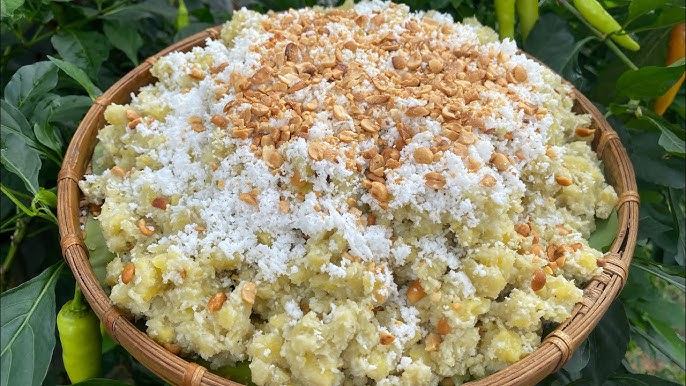
Peel the bananas, place them in a large basin, and mash them together with the grated coconut. Add a bit of sugar and a pinch of salt to create that perfect harmonious sweet-salty-rich flavor.
Whenever Mom was mashing the bananas, I loved sitting next to her, handing over each banana into the basin. You don’t need to mash it too finely, or it loses its charm. The “kịch kịch” sound of the pestle hitting the basin was so satisfying. Sometimes a piece would fly out, and I’d quickly snatch and eat it, grinning from ear to ear.
After mashing, we kids would line up for Mom to divide the portions. She usually shaped each one into nice round, chewy balls, and we’d carry them around the house to enjoy. Sometimes, being a bit greedy, I asked for a really big portion—and then I’d skip dinner that evening!
Nowadays, people serve it on a plate for a nicer presentation, sprinkle with crushed roasted peanuts, and enjoy it with fresh herbs, rau ghém (mixed greens), or rice paper dipped in sweet & sour fish sauce. When you eat it this way, you can taste the rich, nutty banana and coconut, the sweet-tangy dipping sauce, and the fresh garden herb aroma—all coming together into a truly irresistible dish.
No matter how much time changes the way we eat it, the signature flavor of the old-fashioned chuối quết dừa remains the same. Still rich, comforting, and full of love—just like the dishes made by Mom’s hands.