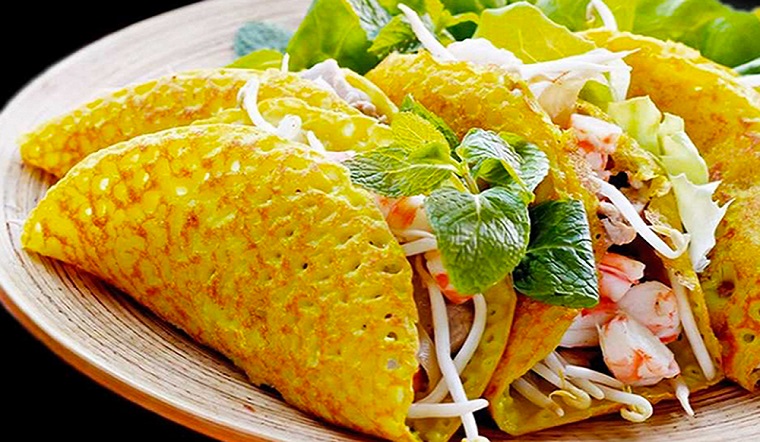
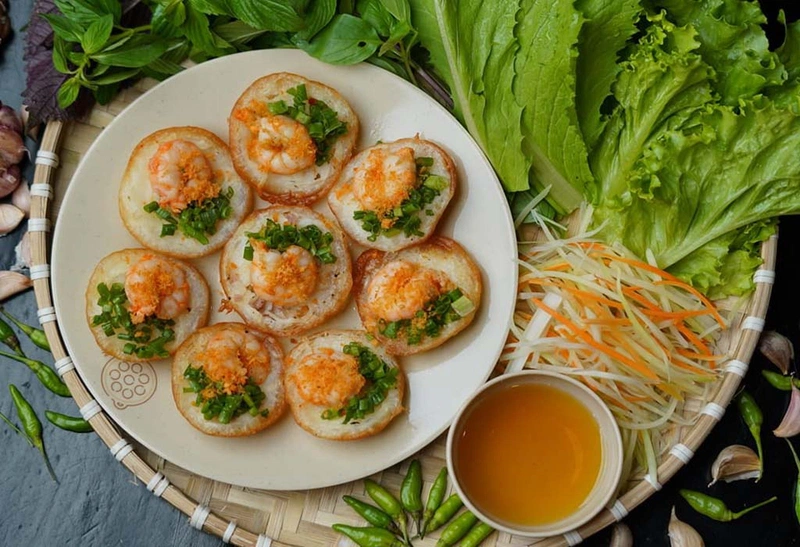
Bánh khọt is a popular rice flour pancake in the Mekong Delta, a delicious and attractive dish loved by many.

Bánh khọt is a long-standing dish found throughout the country; however, each region has its own way of making it, imbuing the cake with distinct local flavors.
Bánh khọt is round, similar to “bánh bèo,” but it is cooked by frying in a mold with oil, much like “bánh xèo.” The flour-mixing stage is extremely important: too much water makes the batter break easily during frying, while too little water makes the cake hard and lose its chewiness.
Here is the Can Tho style of making Bánh khọt, rich in Mekong Delta flavors:
Ingredients:
– Rice flour: 1kg
– Turmeric powder: 100g
– Ground lean pork: 400g
– Fresh shrimp: 300g
– Duck eggs: 3 eggs
– Grated coconut: 500g
– Steamed mung beans: 300g
– Carrots, white radishes: 1 each
– Green onions, onions, shallots
– Pepper, sugar, salt, MSG
– Lime, chili, fish sauce
– Fresh vegetables: Mustard greens, lettuce, herbs, fish mint.
How to make standard Mekong Delta Bánh khọt:
* Preparation:
+ If the Bánh khọt mold is newly purchased, it should be seasoned: place the mold on the stove until hot, then rub cooking oil all over the mold continuously for 5-10 minutes. This ensures the batter won’t stick when pouring. Use a small piece of muslin cloth wrapped around a chopstick to apply oil each time you pour a new batch.
+ Squeeze the 500g of grated coconut to get 500ml of coconut milk (use 1/5 for the filling mixture and the remaining 4/5 for the batter). Clean the fresh shrimp and dice them or leave them in small rounds.
Shred the carrots and white radishes, massage them with a little salt, rinse, and squeeze dry (to make pickles). You can use peeled or unpeeled mung beans as preferred, boiling them until just tender. Dice the onions. Thinly slice the shallots. Chop the green onions into 0.5cm pieces.
* Execution Steps:
Step 1:
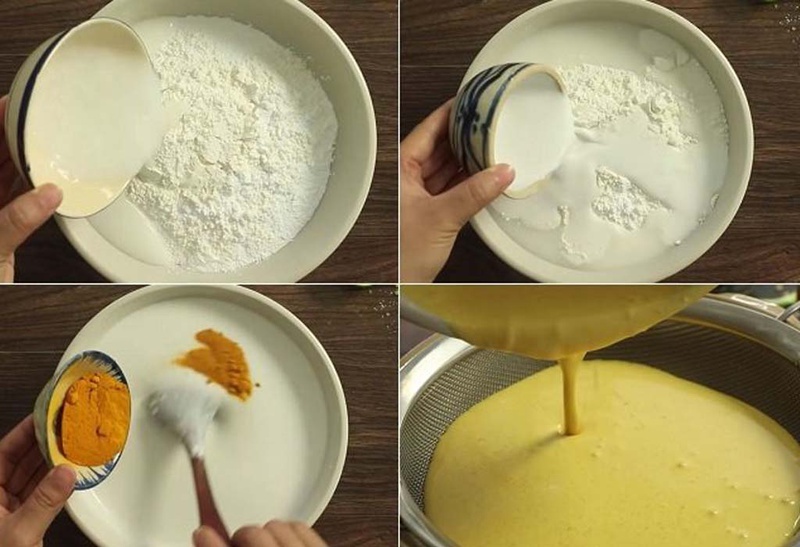
Mix the rice flour, green onions, eggs, and 400ml of coconut milk into warm water. Stir well to prevent lumps and let the batter rest for about 15 minutes.
Step 2:
Place a pan on the stove, heat the cooking oil, and sauté the shallots until fragrant. Then add the lean pork, fresh shrimp, steamed mung beans, and onions. Stir-fry briefly, season to taste, then add the remaining coconut milk and mix well.
Step 3:
Place the mold on the stove, coat each hole with oil, then pour the batter in. Place the filling in the center and cover with a lid.
When the cake turns golden, the filling looks reddish-brown, and the green onions in the oil create a vibrant yellow-green color, the cake is cooked. Quickly remove the cakes from the mold.

Step 4:
Bánh khọt cannot be complete without accompaniments and dipping sauce. The side dishes vary by locality: some use pickled cucumbers, while others use herbs and lettuce…
The dipping sauce is one of the key factors determining the flavor. This depends on the person preparing it and often creates the unique signature for each eatery.
To make the dipping sauce, crush the garlic and chili, then add sugar to water and stir until fully dissolved. Add lime juice, fish sauce, garlic, and chili, then stir well.
A good Bánh khọt must be both crispy and chewy. The peeled shrimp and green onions add extra flavor and nutrition to the dish.
Biting into a golden Bánh khọt, you can feel the taste of pure rice flour, the richness of the oil soaking into the crust, the aroma of green onions, and the savory taste of the shrimp.
There is nothing better than enjoying Bánh khọt on a gentle afternoon breeze, carrying the rustic essence of the Mekong Delta.