Sour snakehead fish soup is a dish that has made the culinary hallmark of the Southern Vietnamese people thanks to its distinctive characteristics. It can be said that a proper Southern-style sour snakehead fish soup must feature both the sourness of pineapple and tamarind as well as the natural sweetness of snakehead fish. It should be sour but not overly so, sweet but not cloying; the sour taste must be dominant, with sweetness kept at a moderate level.
Sour snakehead fish soup is commonly served by Southern families as the main soup in daily meals, creating a refreshing and appetite-stimulating sensation. Although every region of Vietnam—North, Central, and South—has its own version of sour soup, Southern-style sour soup remains especially popular thanks to the harmonious combination of snakehead fish and various vegetables, along with the distinctive sweet-and-sour seasoning style of Southern people, which gives this dish its unique identity.
Perhaps Southern sour soup was created to meet the physical needs of people living in a riverine, wild, muddy environment with six months of scorching sunshine and six months of flooding rains. Under the blazing tropical sun, after hours of hard labor, a bowl of rich sour soup with a hint of saltiness, sweetness, and spiciness—featuring a large chunk of fish and a variety of vegetables—helps both restore energy and cool the body.
From this need, the culinary skills of housewives were inspired to refine and improve this specialty sour soup for their families. From the time early settlers arrived to make a living until today, more than 300 years have passed—a long enough period to perfect this unique sour soup.
It is believed that the earliest version of Vietnamese settlers’ sour soup was made with shad fish cooked with ripe bần fruit. In the early days, settlers lived clustered around river mouths and coastal areas, where bần trees grew abundantly. Beneath these trees lived a fish species that reproduced quickly, had sweet flesh, and fed on fallen ripe bần fruit—making it a perfect match with bần in a bowl of sour soup.
Over time, the sour soup menu expanded beyond the original two ingredients. There came sour snakehead fish soup cooked with tamarind, sour basa fish soup with pickled bamboo shoots or banana blossom… All fruits and wild leaves used come from nature, yet each offers a different type and level of sourness, creating flavors that are truly distinctive and unmistakable.
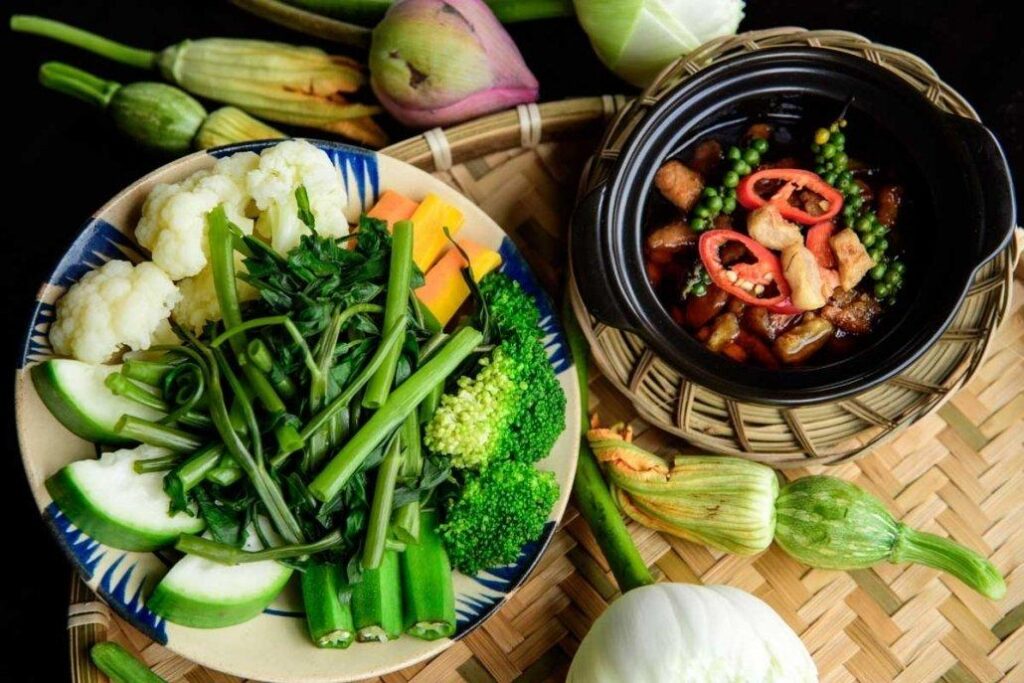
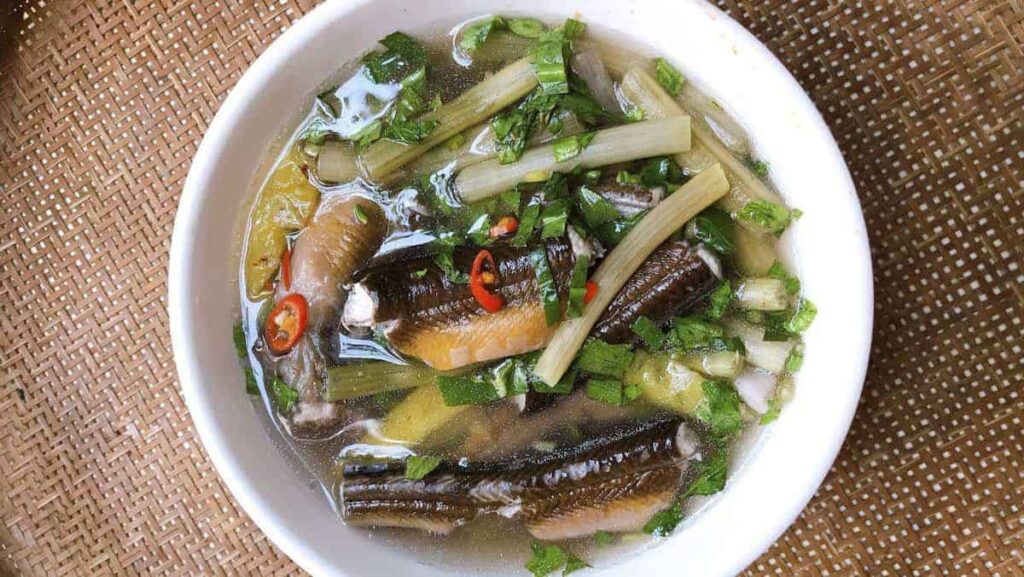
Speaking of sour soup without mentioning the role of aromatic herbs would be truly unfair. No matter how delicious the fish is or how skillful the cook may be, without rice paddy herb, Cuban oregano, sawtooth coriander, basil, and the like, the pot of soup loses its essence. Beyond their fragrance and ability to stimulate the appetite, these herbs also help cool the body, detoxify, aid digestion, promote urination, and fight bacteria. Simply looking at a well-prepared pot of sour soup—beautifully balanced with five colors (black, red, green, white, yellow) and five tastes (salty, rich, sour, spicy, sweet)—is enough to delight all the senses even before the first bite.
The fish and vegetables must be cooked just right—not overdone or mushy. The broth should be distinctly sour, gently sweet, slightly spicy, and seasoned a bit boldly with fish sauce and salt. When ladled into a bowl, the soup looks truly appealing: firm, white fish flesh, rosy tomatoes, bright red chilies, green okra and vegetables, pure white bean sprouts… with steam rising and spreading a fragrant aroma. A bowl of sour soup reflects the abundance of the orchard-filled river regions and the generosity of the Southern people.
There are many, many variations of sour soup, but after enduring the test of more than 300 years, sour soup made with snakehead fish or bông lau fish cooked with tamarind is still considered the gold standard, topping the list of Southern Vietnamese sour soups.
Compiled by Bang Tam