The idiom “Công tử Bạc Liêu” dates back to the colonial and feudal era, referring to the sons of wealthy landowners who went to Saigon to attend French schools, spent money extravagantly for pleasure, and showed off a lifestyle beyond compare.
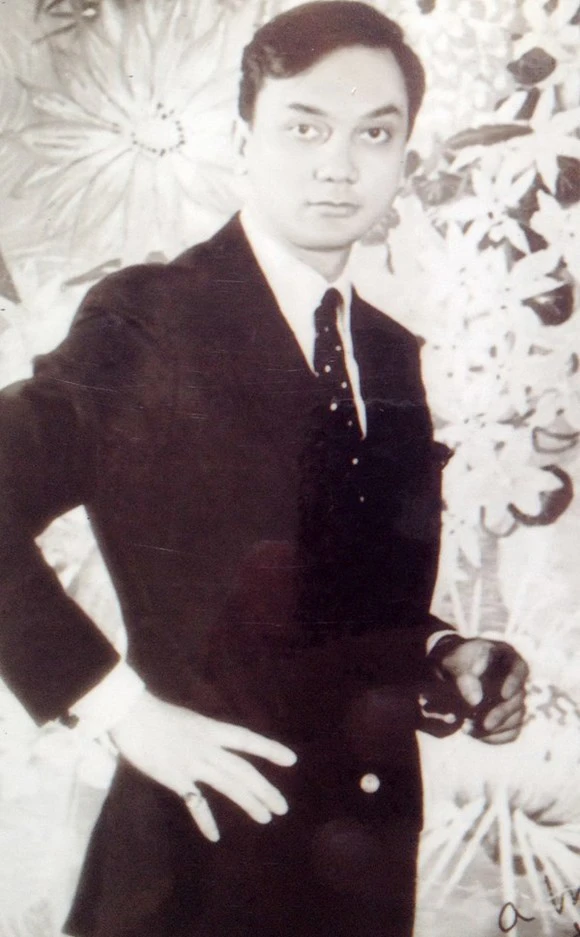
For a long time, the idiom “Công tử Bạc Liêu” has been passed down orally among the people to describe the luxurious and indulgent lifestyle of young masters and young ladies born into aristocratic and extremely wealthy landlord families in Southern Vietnam during the colonial and feudal periods.
To this day, many people are familiar with the saying, but perhaps few know that the person who embodied the very spirit of “Công tử Bạc Liêu” was Trần Trinh Huy (real name Trần Trinh Quy), born on June 22, 1900 in Vĩnh Hưng Village, Vĩnh Lợi District, Bạc Liêu Province, and who passed away at his private residence on January 13, 1974 in Saigon.
At that time, the French colonial administration had stabilized its organizational control over Cochinchina. The redistribution of farmland led to the emergence of many large landowners in the region. Folk tradition gave rise to the saying “First Sỹ, second Phương, third Xường, fourth Trạch,” referring to the four wealthiest landowners in Cochinchina.
Following the trend of the time, wealthy landlords and aristocrats throughout Cochinchina often sent their children to Saigon to study at French schools, or even to study abroad in France. However, most of these affluent young men, influenced by the splendor of urban life and backed by abundant wealth, tended to become flamboyant playboys eager to show off their status. Among them, none could spend money like the young masters of Bạc Liêu.
The idiom “Công tử Bạc Liêu” originated during that period. Later, it came to refer exclusively to Trần Trinh Huy, as no other young master could match him in terms of wealth and extravagance. From then on, “Công tử Bạc Liêu” became the unique title of Ba Huy, uncontested by anyone else.
In addition, Trần Trinh Huy was known by many other names such as Ba Huy, Hội đồng Ba (as called by tenant farmers), and the Black Prince (Hắc công tử)—due to his dark complexion and to distinguish him from the White Prince of Mỹ Tho (Tiền Giang). He was born into one of the wealthiest landlord families in Southern Vietnam in the early 20th century.
The father of the Công tử Bạc Liêu was Trần Trinh Trạch (also known as Hội đồng Trạch), the owner of 74 estates with 110,000 hectares of rice fields, nearly 100,000 hectares of salt fields, dozens of multi-story townhouses in Bạc Liêu, and numerous luxurious villas in Cần Thơ, Saigon, Vũng Tàu, and Đà Lạt.
The Real Life of Trần Trinh Huy
After three years of studying in France, Trần Trinh Huy returned without earning any academic degrees or titles for the Trần Trinh family. His luggage upon returning home consisted of experience in ballroom dancing, driving cars, and a heart full of longing for his French wife and the child he had left behind in the City of Light, Paris.
Upon returning to Vietnam, Ba Huy had several Vietnamese wives and countless lovers. His first wife in Bạc Liêu was Ngô Thị Đen, with whom he had a daughter named Hai Lưỡng. Later, Hai Lưỡng went to live in France. From 1945 onward, Ba Huy settled permanently in Saigon, where he married Nguyễn Thị Mẹo in Mỹ Tho and had four children named Hiếu, Thảo, Nhơn, and Đức. His last wife was a “barefoot beauty” named Bùi Thị Ba, who made a living carrying water for hire. She was very beautiful and 40 years younger than Ba Huy.
Around 1968, Ba Huy lived in a house on Nguyễn Du Street in Saigon. Every morning, looking down from the upper floor, he noticed a beautiful young woman carrying water back and forth and soon developed feelings for her. Upon inquiry, he learned that she was the daughter of a bicycle repairman. Ba Huy immediately approached the family and proposed exchanging his house for the young woman.
From then on, the hired water carrier became the wife of the Black Prince, remaining faithful to him until his death. Together, they had two sons and two daughters named Hoàn, Toàn, and Trinh, Nữ. In addition to the “official” wives mentioned above, the number of mistresses and lovers he had was beyond counting.
Alongside his extravagant and flamboyant lifestyle within a wealthy family, Ba Huy was also a kind-hearted man who lived with compassion and generosity, always ready to help the poor in times of hardship. Tenant farmers never saw him demand debts; for those in extreme poverty, he would even reduce the rent. As a result, few tenant farmers harbored resentment toward him.
In social relationships, Ba Huy did not live cautiously or calculatingly. In the eyes of underworld figures of the time, he was considered the most admirable man in Southern Vietnam—not because of his outward elegance, but because of his open-minded and indulgent way of life. In the eyes of the French, Ba Huy was respected for marrying a French woman and employing French workers.
Anecdotes About the Công tử Bạc Liêu
Trần Trinh Trạch entrusted Ba Huy with overseeing the family estates. When collecting debts in the provinces, Ba Huy used a Ford Vedette, while for leisure he owned a Peugeot sports car manufactured in 1922. At that time, only two such cars existed in Southern Vietnam—the other belonged to Emperor Bảo Đại.
Ba Huy also hired a Frenchman named Henri Espérinas, his brother-in-law and husband of Tư Nhớt. He served as the estate manager, overseeing the family assets under Ba Huy’s authority. According to the contract, the manager received 10% of the total annual profits. That was why Henri left his homeland to work for his wife’s family, returning to France only after April 1975.
One sensational event at the time was Ba Huy inspecting his rice fields by airplane. At that time, there were only two airplanes in Vietnam—one owned by the Công tử Bạc Liêu and the other by Emperor Bảo Đại. On one flight to inspect land in Rạch Giá, Ba Huy whimsically decided to fly out to the sea near Hà Tiên. He continued flying until the fuel gauge hit empty, forcing an emergency landing. Upon landing, Ba Huy was shocked to discover he had flown all the way into Thailand.
Trần Trinh Huy was arrested by Thai authorities and fined 200,000 bushels of rice. Hội đồng Trạch had to send a long convoy of boats loaded with rice to Thailand to ransom his beloved son. Ba Huy was the first Vietnamese to own a private airplane and a private airstrip.
Ba Huy lived an extremely luxurious and lavish lifestyle. Whenever he went out, he wore expensive tailored suits. His daily habit was to have a Western-style breakfast, Chinese lunch, and Western dinner. Every trip from Bạc Liêu to Saigon was made in a luxurious car with a chauffeur. In Saigon, he rarely stayed at his family villa, preferring instead to stay at one of the city’s most luxurious hotels. On leisurely outings, he would sometimes hire dozens of rickshaws—sitting in one himself, while the others carried items such as hats and canes.
One legendary anecdote dates back to 1929, when the White Prince established two cải lương (traditional opera) troupes named Phước Cương and Huỳnh Kỳ, inviting famous actresses Năm Phỉ and Bảy Phùng Há to star as leading performers. On one occasion, when the Huỳnh Kỳ troupe came to perform in Bạc Liêu, the White Prince invited the Black Prince to attend.
During the performance, the White Prince accidentally dropped a five-đồng banknote. He nudged the Black Prince with his foot to help search for it. The Black Prince asked, “What are you looking for?” “A five-đồng note,” replied the White Prince. Smiling, the Black Prince said, “Let me light a torch so you can look for it.” He then took out a 100-đồng bill and set it on fire to illuminate the search—at a time when a bushel of rice cost only 8–9 cents.
After suffering such a humiliating blow, the White Prince remarked after the show, “You really hit me hard.” He then challenged the Black Prince: “If you’re truly that good, let’s each burn a kilogram of mung beans with money—whoever boils theirs first wins.” The Black Prince accepted without hesitation. The following evening, he laid out a red carpet from the gate to the steps of his house (now the Bạc Liêu Provincial Museum), placing a servant holding a torch every meter to welcome the White Prince’s entourage.
Two pots of mung beans were placed on the stove, and both princes burned money to heat them. That night, the White Prince’s pot boiled first. Ba Huy was also an avid gambler; at times, he wagered 30,000 đồng on a single card game, while rice cost only 1.7 đồng per bushel and the monthly salary of the Governor of Cochinchina was less than 3,000 đồng.
According to Dân Việt