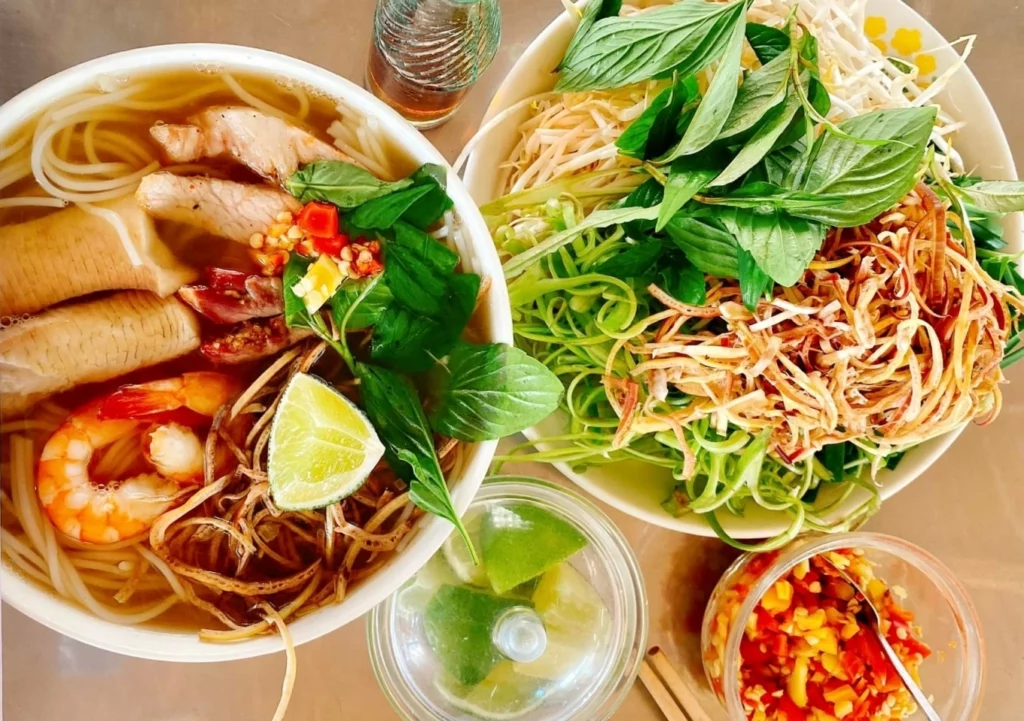
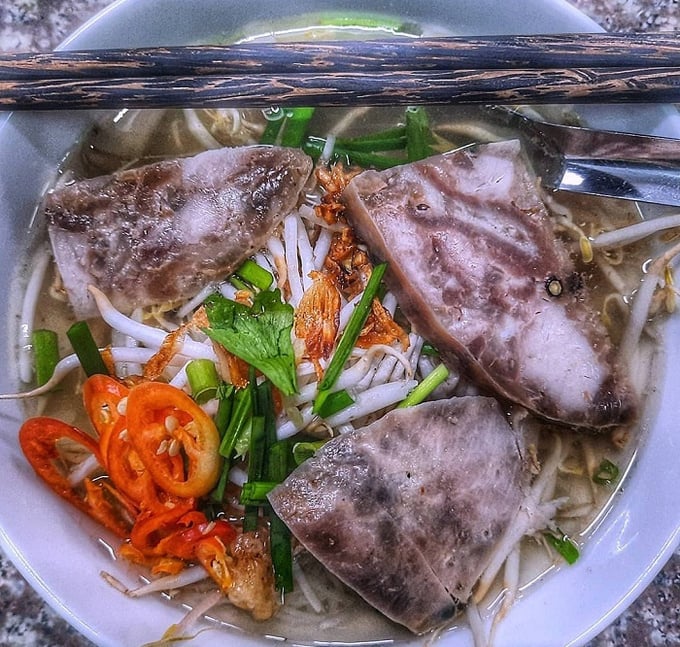
Hủ tiếu pate is one of the four types of hủ tiếu especially loved by the people of the “coconut land.” The only difference in this dish lies in the three or four neatly arranged triangular slices of pate placed right on top of the bowl.
People in Bến Tre love hủ tiếu more than anyone else I know in the Mekong Delta. Here, folks can eat hủ tiếu morning, noon, and night—from vegetarian hủ tiếu, beef ball hủ tiếu, pork bone hủ tiếu, to deluxe mixed hủ tiếu… And uniquely in Bến Tre, there is one version you won’t find anywhere else: hủ tiếu pate.
The “pate” here is not the liver spread you smear on bánh mì. In Bến Tre dialect, pate actually refers to a very special kind of “chả” (sausage/pâté): chewy, crispy, textured, fragrant, and rich. Locals make it by hand for parties, served alongside other cold cuts. The ingredients include pork tongue, head skin, lean meat, pork skin, fat, whole peppercorns, and various spices mixed with a secret family recipe. The result is a perfectly firm yet not crumbly texture, with a distinctive aroma that never gets boring. It’s tightly rolled into logs like bánh tét.
At local banquets and celebrations, the pork pate is sliced thinly and arranged with chả lụa (pork sausage), head skin chả, nem chua (fermented pork roll), and shrimp chips to create a classic “đồ nguội” (cold cuts platter). It is also the key ingredient that makes hủ tiếu pate—the dish Bến Tre people miss and crave no matter where they go.
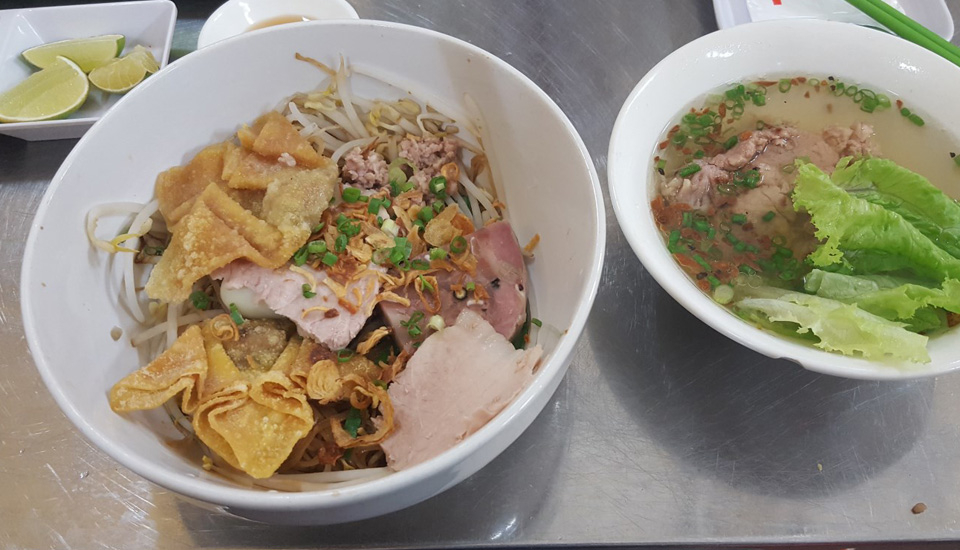
Hủ tiếu pate is one of the four most beloved types of hủ tiếu in the coconut land (the other three are vegetarian hủ tiếu, beef ball hủ tiếu, and squid hủ tiếu). I’m certain this version exists only in Bến Tre. Bến Tre hủ tiếu in general—and hủ tiếu pate in particular—differs from Saigon-style hủ tiếu first in the noodles: they are dry and chewy. When a customer orders, the owner quickly grabs a handful-sized portion, briefly blanched in boiling water for about a minute until just softened, then transferred to the bowl.
The uniqueness of hủ tiếu pate lies simply in those three or four triangular slices of pate neatly arranged on top. No matter how sweet the broth or how chewy the noodles, if the pate isn’t just right, the whole bowl is considered a failure. The real magic of hủ tiếu pate is the perfect harmony of flavors—sipping the fragrant, sweet broth while crunching into the chewy, crispy pate, then dipping it in a small dish of clear fish sauce mixed with chili.
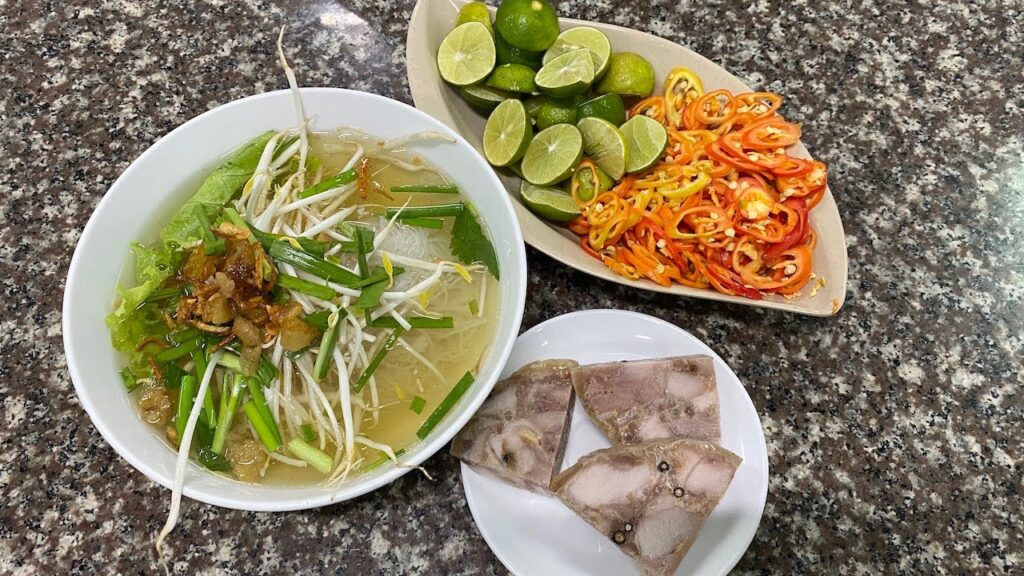
For many people, a bowl with just three or four slices of pate feels like it’s “not enough”—by the time you reach the last piece, you’re still craving more, so they often order extra slices to take home. Especially in households with children, those pate slices become their favorite snack.
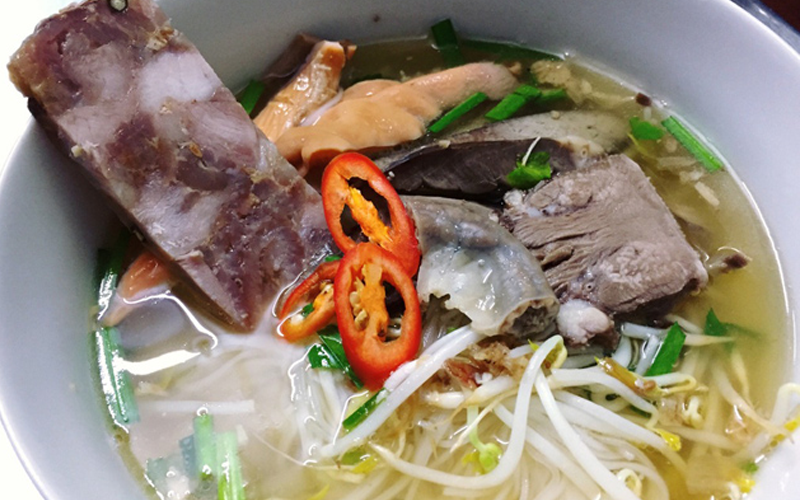
In the past, hủ tiếu pate was simply noodles with pate, occasionally with a few slices of lean pork. Nowadays, to make the broth richer and give customers more choices, many places serve pate together with offal—mainly heart, liver, stomach, and tender pork intestines. A full bowl of hủ tiếu pate with all these toppings costs only 25,000–30,000 VND.
While hủ tiếu pate in Bến Tre is legendary, it’s not a mass-produced dish. True food lovers in Bến Tre only go to the original spots everyone calls “hủ tiếu Ngã Ba Tháp” (Three Towers Intersection), “hủ tiếu Cổng Chào” (Welcome Gate), or “hủ tiếu Công Viên Tượng Đài” (Monument Park). These places don’t have fancy names—they simply call themselves “Hủ Tiếu Pa Tê” as a proud brand statement. They only open in the afternoon and evening, so from around 5–6 p.m., the stalls are always packed.
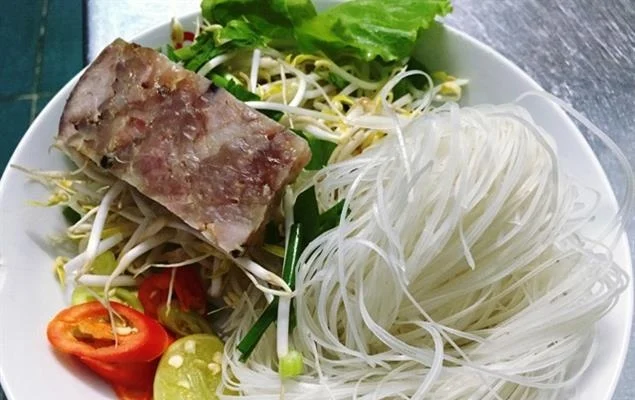
If you ever visit Bến Tre and want to taste the authentic hủ tiếu pate, just go into the city, ask any local about the hủ tiếu at “Ngã Ba Tháp,” “Cổng Chào,” or “Công Viên Tượng Đài”—everyone knows the way and will guide you precisely. I guarantee you’ll never forget the special, unforgettable flavor of this one-of-a-kind dish.