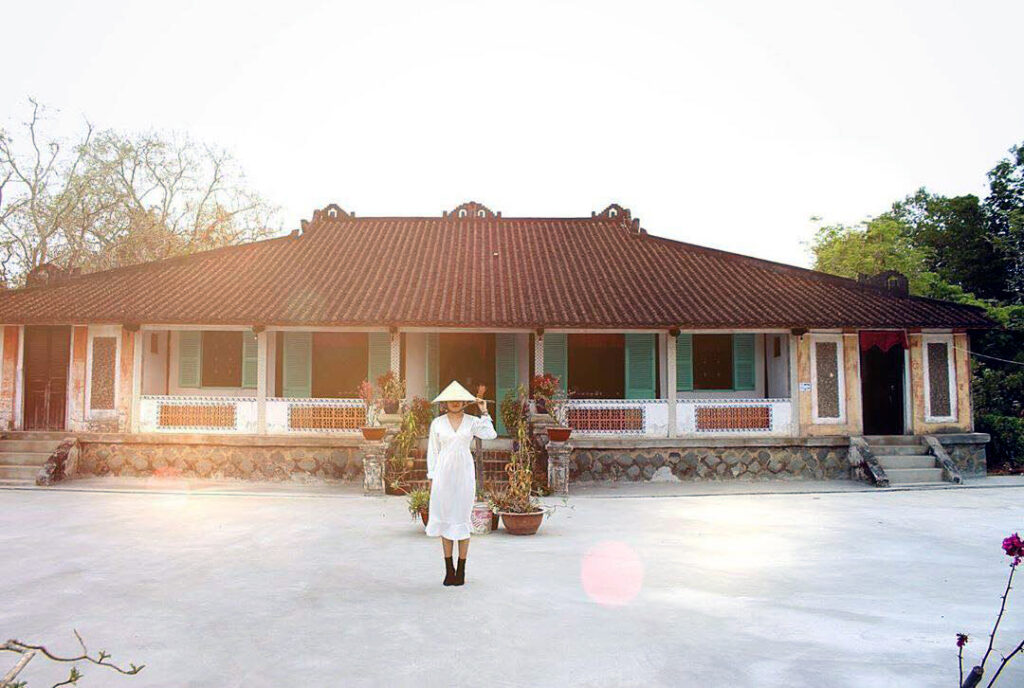
Vĩnh Tràng Pagoda is one of the oldest pagodas in the Mekong Delta region. After enduring years of sun and rain and the devastation of wartime bombs, the pagoda still stands majestically with its splendid beauty.
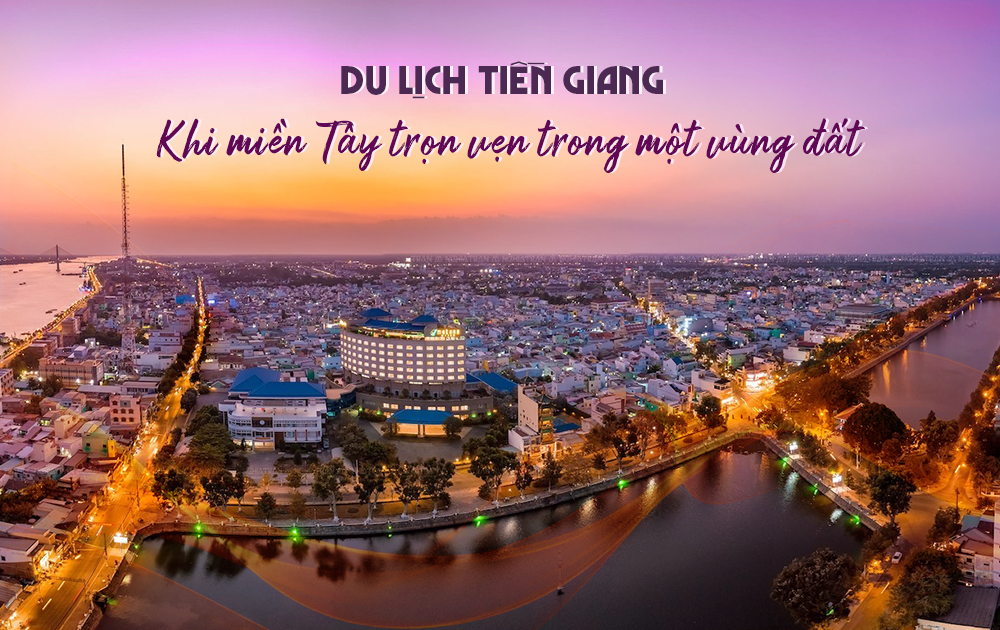
The pagoda is located on a fruit garden covering nearly 2 hectares, in Mỹ Hòa village, now Mỹ Phong commune, Mỹ Tho City, Tiền Giang Province.
In the past, the pagoda was originally a small hermitage built by District Chief Bùi Công Đạt in the early 19th century. In 1849, under the abbotship of Venerable Thích Huệ Đăng, it was expanded into a large temple and named Vĩnh Tràng Pagoda. His successor was Venerable Thích Thiện Đề. After his passing, the pagoda fell into decline.
In 1890, devotees went to the royal pagoda Linh Thứu to invite Venerable Quảng Ân – Chánh Hậu to become the abbot. In 1895, he organized the reconstruction of the pagoda. The pagoda was then severely damaged by a storm in 1904. From 1907 to 1911, he encouraged followers to contribute labor and funds for a major restoration and invited sculptor Tài Công Nguyên to take charge of decoration and the carving of statues for worship in the pagoda.
The first thing that strikes visitors upon arriving at the pagoda is the magnificent beauty of the Tam Quan (three-entrance) gate, created by artisans from Huế in 1933. The uniqueness of this gate lies in the art of assembling fragments of pottery and porcelain to form colorful pictures harmoniously illustrating Buddhist legends, folk tales, and traditional themes such as the four seasons, the four sacred animals, and floral motifs.
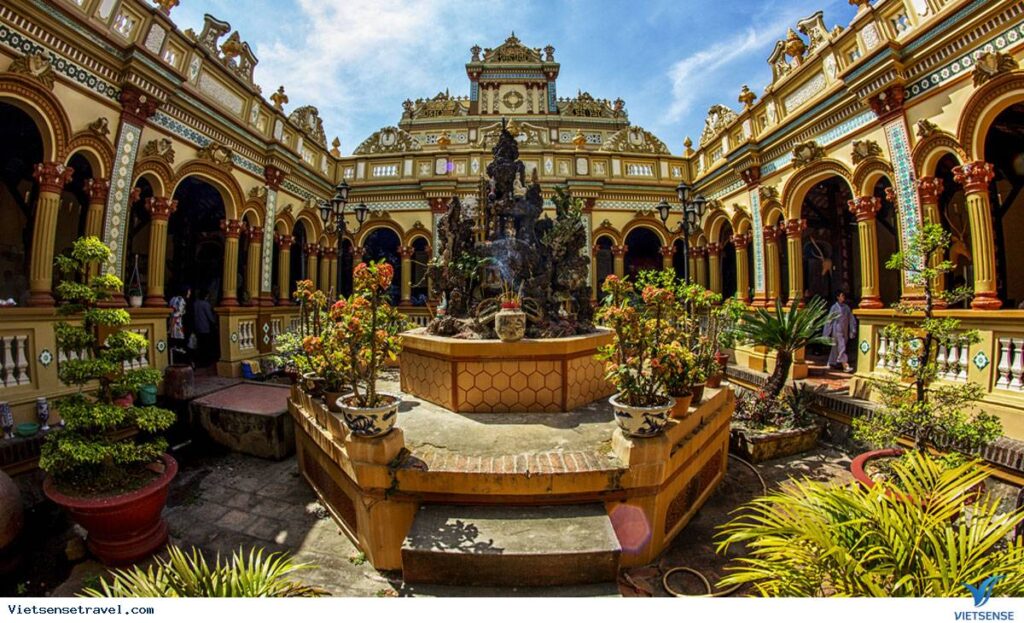
The façade of Vĩnh Tràng Pagoda is decorated in a style that combines both Asian and European architectural features. Here one can find Renaissance-style motifs, Roman-style arches, French wrought iron, Japanese ceramic tiles… Chinese characters are written in an ancient seal script style, while the Vietnamese national script is written in a Gothic style. From afar, visitors may imagine the pagoda resembling Angkor with its five towers.
In the main hall, there are intricately carved wooden panels, including a bas-relief depicting the Eight Immortals riding animals, created by local artisans around 1907–1908. On the altar stand many statues such as Amitabha Buddha, Shakyamuni Buddha, Arhats, and Bodhisattvas. The oldest statues in Vĩnh Tràng Pagoda are the Three Holy Ones (Amitabha, Avalokiteshvara, and Mahasthamaprapta), cast in bronze. The Jade Emperor statue is also made of bronze and is life-sized.
Along the walls on both sides of the main hall are altars dedicated to the Ten Kings of Hell (Thập Điện Minh Vương Bồ Tát). Particularly noteworthy is the set of Eighteen Arhats and unique wooden carvings created by southern Vietnamese artisans in 1907. This set is made from precious wood, each statue about 0.8 meters tall with a knee width of 0.58 meters, placed on both sides of the Buddha hall. Each Arhat holds a symbolic object representing the senses, which Buddhist teachings refer to as the six faculties: eyes, ears, nose, tongue, body, and mind, across the three times of past, present, and future. These Arhat statues are well-proportioned and vivid, riding animals such as buffaloes, oxen, horses, camels, hippopotamuses, and rhinoceroses.
Within the pagoda grounds, there are also many ornamental plants and rockeries, creating a sense of peace and tranquility for visitors, while further enhancing the pagoda’s splendid appearance.
It can be said that Vĩnh Tràng Pagoda is one of the oldest and most beautiful pagodas in the Mekong Delta. For this reason, it welcomes a large number of visitors from all directions every day who come to visit and worship.
Source: Hậu Giang Newspaper