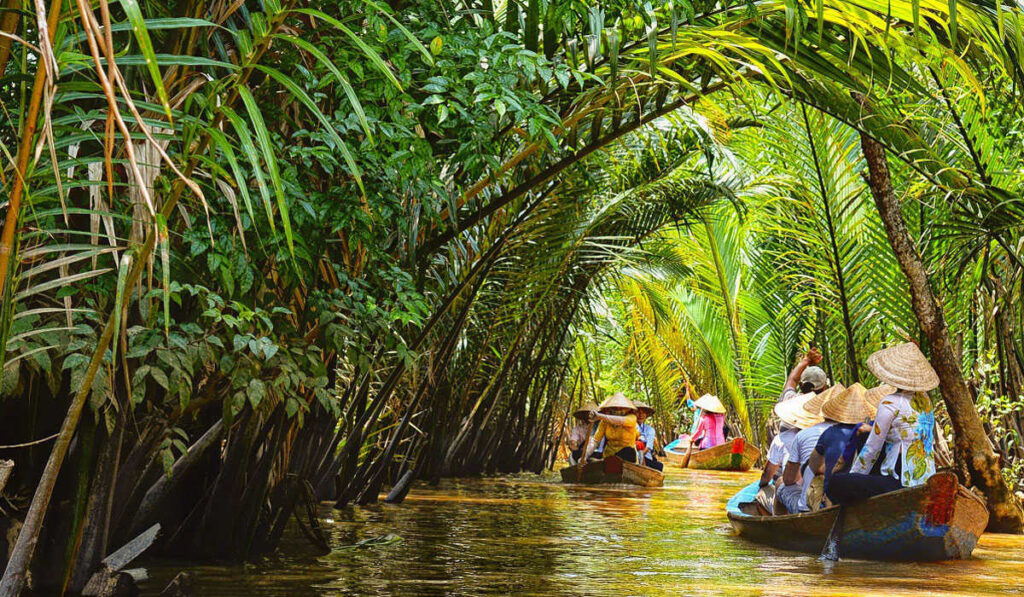
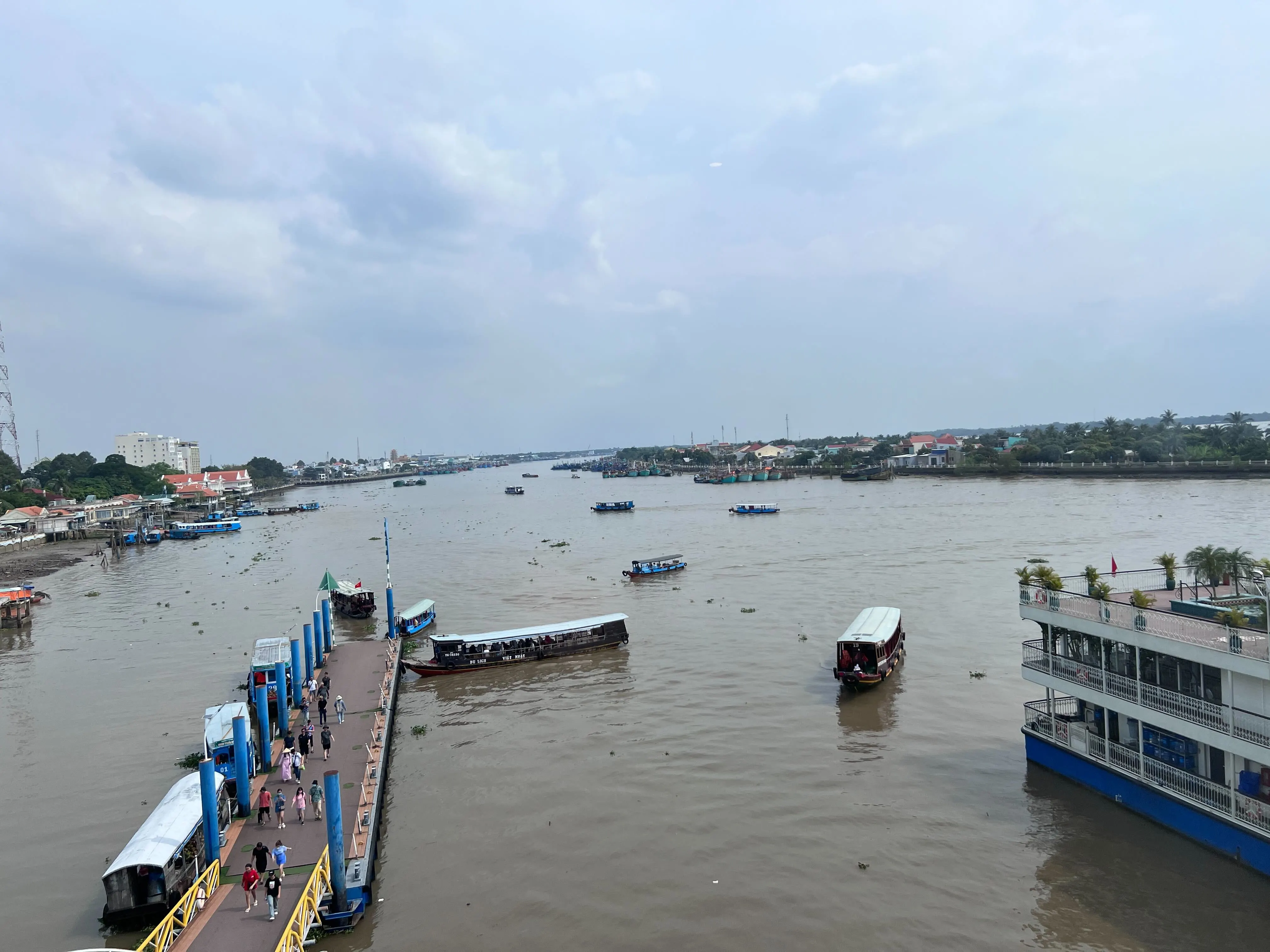
Visiting Cape Cà Mau, travelers can admire the majestic beauty of the forests and the vastness of the sea. This is the only place on mainland Việt Nam where visitors can witness the sun rising in the East and setting in the West.
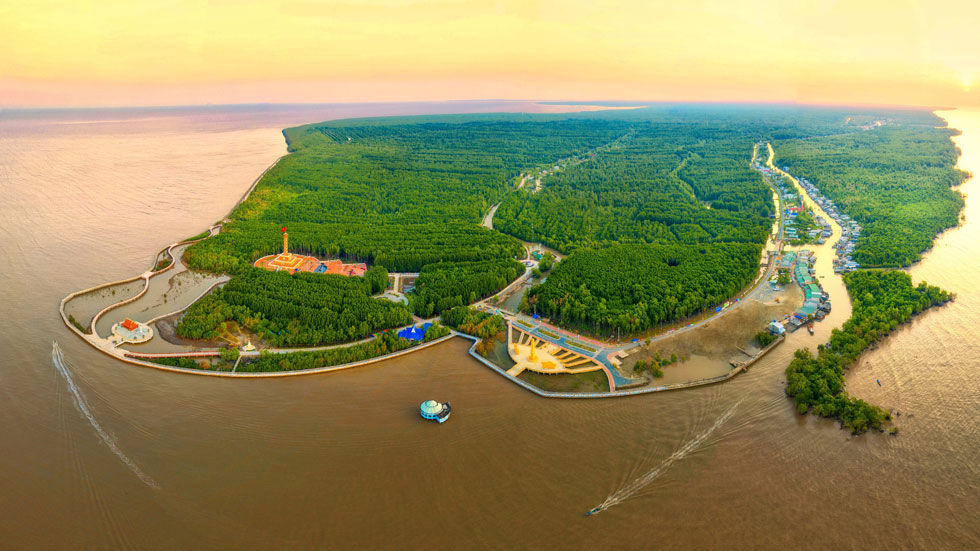
Cape Cà Mau is shaped like an arc. Each year, alluvial deposits carried by rivers accumulate to form mudflats about 100 meters long and hundreds of hectares wide along both the eastern and western sides. Like a natural phenomenon, the land area expands seaward by several hundred hectares every year.
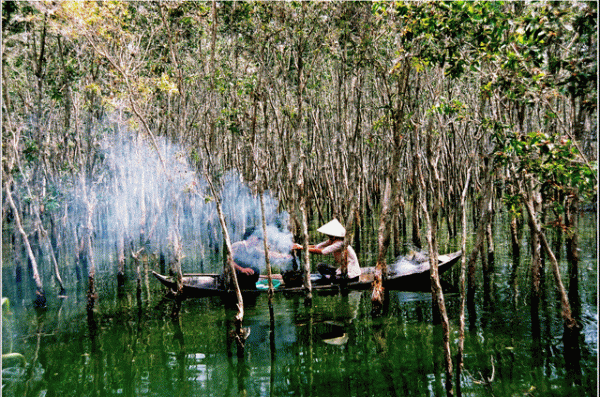
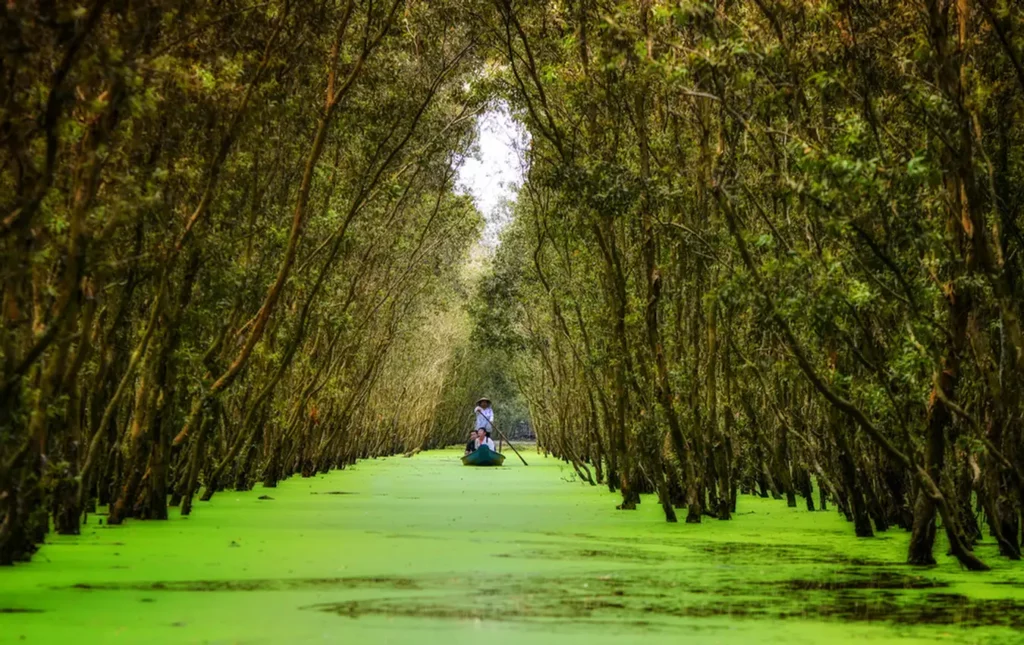
Mangrove apple trees, sonneratia trees, and mangroves grow accordingly, gradually expanding the mangrove forest area and bringing great benefits in terms of shrimp, fish, and many other aquatic resources. Further inland are wetland forests, including melaleuca forests and seasonally flooded grasslands.
This southernmost point of the country offers visitors unique, wild, and fascinating experiences that cannot be found everywhere.
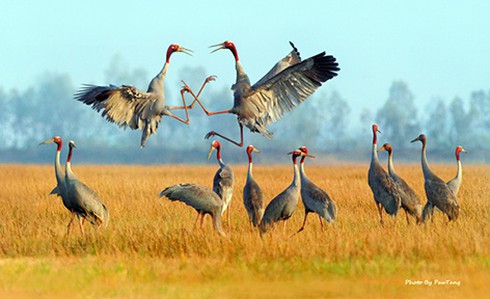
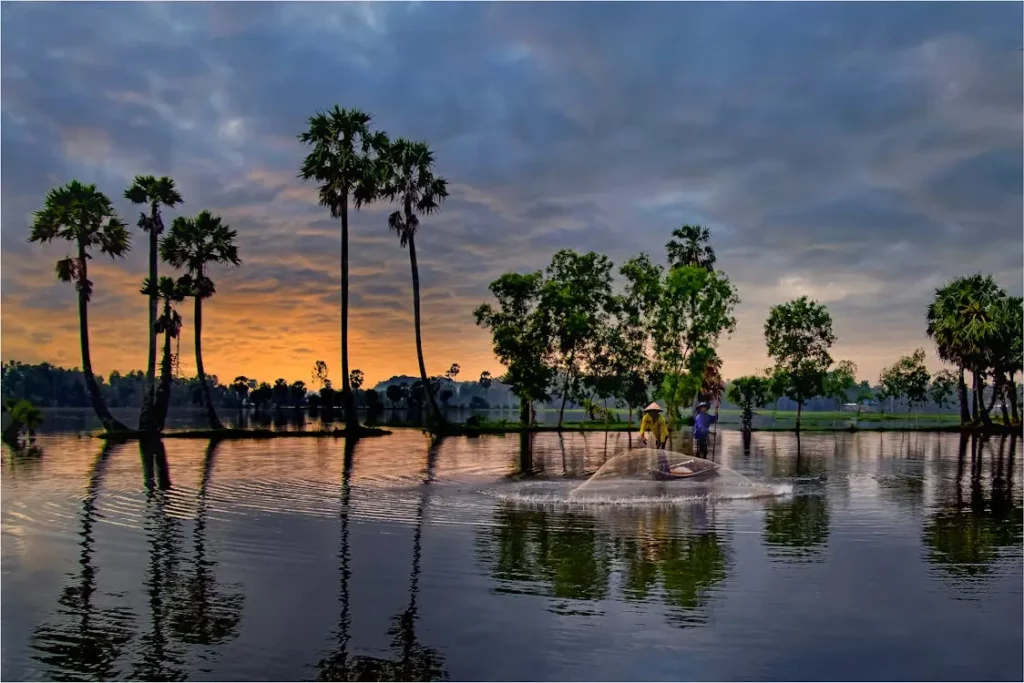
To reach Cape Cà Mau, visitors must take a high-speed canoe, embarking on an adventurous journey through the Cửa Lớn River, Ông Trang Islet, U Minh Forest, and the Cape Cà Mau National Park. Among these, Ông Trang Islet stands out with its sandbanks covered in lush green mangrove apple trees, appearing from afar like watercolor paintings amid the vast waters and sky. The western mudflats of Cape Cà Mau are closely associated with Ông Trang Islet. Here, the land advances into the sea by 50 to 80 meters each year. When winter arrives, flocks of birds from the cold northern regions stop here to forage before continuing their long journey to distant Australia.
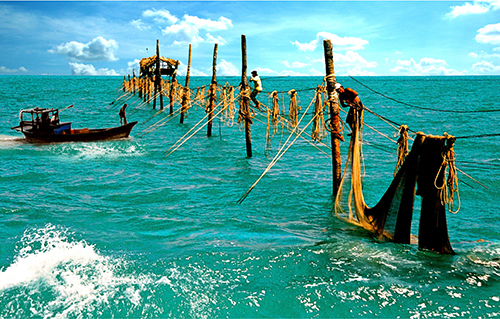
Not only that, visitors can enjoy fresh local specialties rich with the taste of alluvial soil such as oysters, blood cockles, hairy clams, vọp clams, len snails, shrimp, crabs, and blue crabs, while also immersing themselves in soulful and mellow vọng cổ melodies that deeply touch the heart and vividly reflect the traditional culture of the Mekong Delta.
Those who love exploration will be captivated by Cape Cà Mau National Park—the world’s second Amazon rainforest. After conquering the 20.5-meter-high Vọng Hải Đài observation tower, visitors will be overwhelmed by this vast park covering more than 41,800 hectares. With careful observation, one can spot rare wildlife species such as the grey-legged pelican, painted stork, otters, large-spotted civets, various rare turtles, along with hundreds of species of aquatic life, plants, and amphibians under conservation.
Cape Cà Mau National Park is a mangrove wetland area with an extremely diverse ecosystem, where mangrove forests meet melaleuca forests. It is home to 239 plant species of melaleuca and mangrove forests, 36 mammal species from 17 families, 194 bird species, 260 fish species, and many amphibians and reptiles, including rare species such as the long-tailed macaque, smooth-coated otter, fishing cat, fiery squirrel, saltwater crocodile, turtles, water monitors, and reticulated pythons.
Compiled by Băng Tâm