Chợ nổi Cái Răng has long been known to both domestic and international tourists as one of the two most famous floating markets in the Southwest region. Many people say that if you come to Cần Thơ but haven’t visited Chợ nổi Cái Răng, it’s as if you haven’t truly experienced the former “capital” of Tây Đô.
What could be more delightful than a spring morning drifting on the Hậu River, watching the Tây Đô sunrise, listening to Southern Vietnamese folk songs (hò), and visiting Chợ nổi Cái Răng – the distinctive feature of the Cửu Long riverine culture.
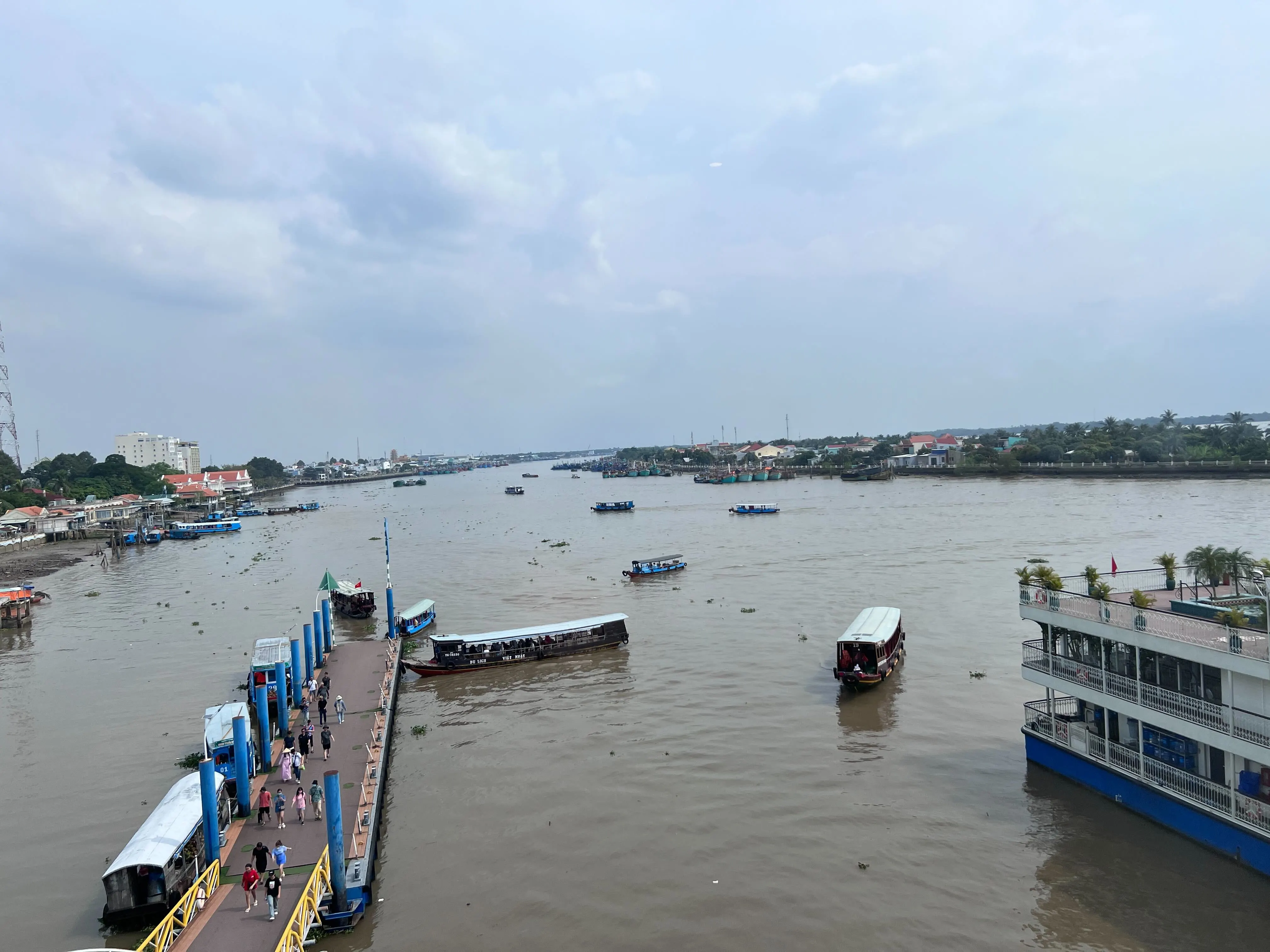
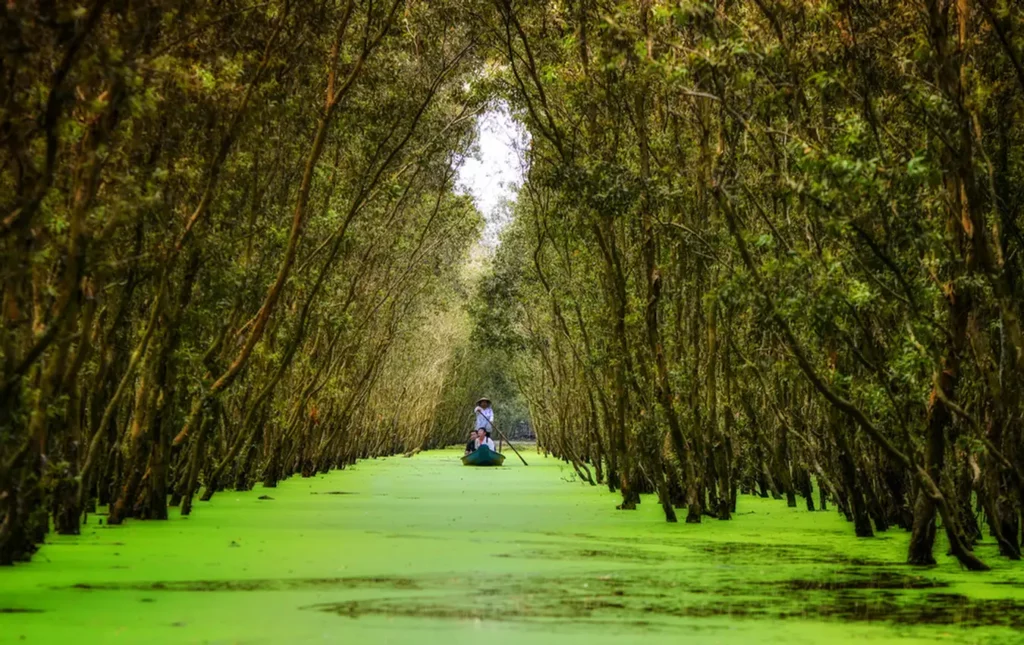
At dawn, from Ninh Kiều Wharf (Cần Thơ City – the former capital of Tây Đô), looking out over the gentle, poetic Hậu River, you can already see boats loaded with produce moving back and forth. In the Mekong Delta, with its dense network of rivers and canals, boats and sampans are the main means of transportation for locals, just like motorcycles in urban areas.
However, this is precisely one of the “special attractions” that draws tourists to this land. What could be more interesting than drifting on the Hậu River at sunrise, taking in the scenery and the people of the Cửu Long river region.
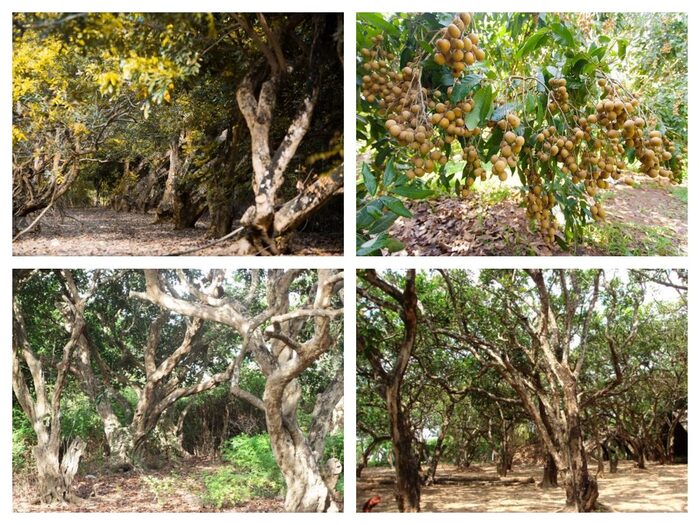
While riding a boat to visit Chợ nổi Cái Răng, tourists are guided by local boatmen to explore nearby villages, fruit orchards, and immerse themselves in the simple yet warm community life through Cần Thơ folk songs (hò). After each rustic verse, applause rings out in appreciation for this unique art form.
“Hò ơ… ơ… ơ… Which young man is as dashing as the one from Nhơn Ái
Hair slicked back, side-parted in the seven-three style
Wearing pajamas, a checkered scarf around his neck
Seeing the sweet girl from Ba Xuyên
Wanting to confess a few words to her
Farming is so hard, dear
Come with me to the orchard, eat fruit and live in abundance forever”
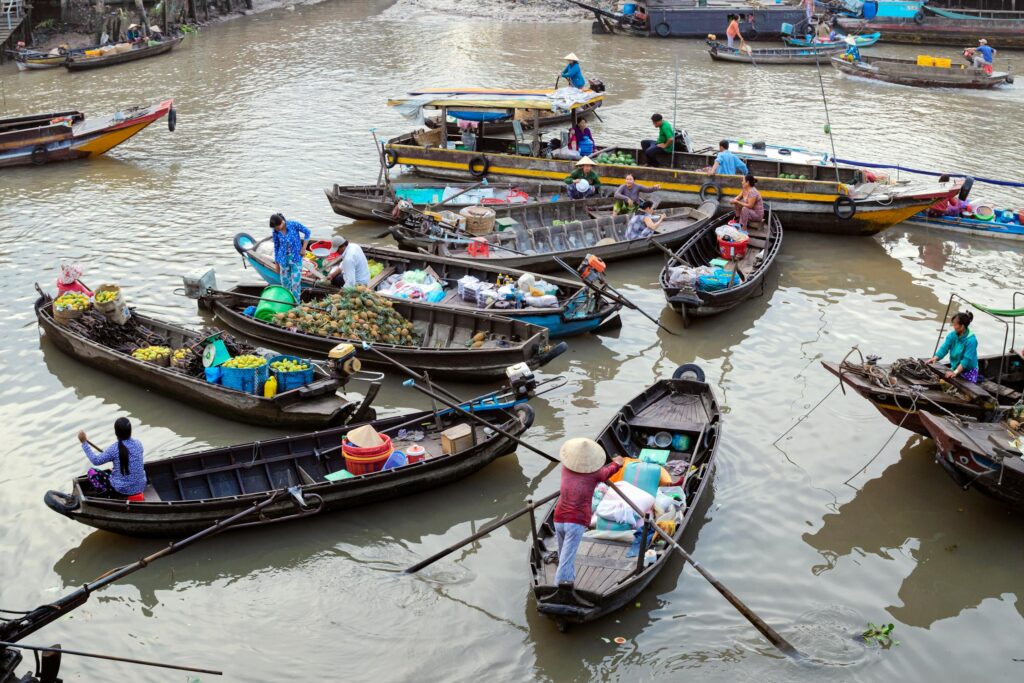
Located about 5-6 km from the center of Cần Thơ City, Chợ nổi Cái Răng has become an ideal tourist destination for visitors to the Tây Đô region. The market is busiest around 6 a.m. and ends by 8-9 a.m., with hundreds of large and small boats trading various fruits and agricultural products from this riverine countryside.
Regarding the name Cái Răng, there are several explanations. One legend says that long ago, a huge crocodile in this area had its tooth stuck in the riverbank, hence the name Cái Răng (The Tooth). According to folklorist Vương Hồng Sển, the name derives from a mispronunciation of “cà ràng” (a type of stove). Local guides tell the story of a devoted couple in love on this river. One day, the girl was eaten by a large crocodile. The young man killed the crocodile to avenge her, skinned it, and chopped it into pieces. The crocodile’s tooth remained at this bend of the river, while its skin and head were at the upper bend, leading to bridges named Cái Da and Đầu Sấu. Though the legend may sound gruesome, tourists prefer the romantic love story on this murmuring river.
Since they cannot shout to advertise, locals came up with a very effective and visible method: On each boat, they plant a tall pole and hang all the goods they want to sell on it, called “treo bẹo” (hanging goods). From afar, buyers can spot the type of goods they need and pull alongside to trade.
Just like on land, the floating market not only sells fruits but also has boats carrying hủ tiếu (rice noodles), coffee, cigarettes, beer, daily necessities… serving the river traders. These “drivers” are so skilled that they can steer the boat with their feet, weaving through to serve customers in need.
What attracts tourists the most is the experience of visiting the floating market while enjoying the river region’s produce right on the vendors’ boats, with the warm, affectionate hospitality typical of the Mekong Delta people.
According to Vnexpress