Bánh ú nước tro is a traditional dish eaten during the Tết Đoan Ngọ (Mid-Year Festival) of the Southern Vietnamese people. Nowadays, Bánh ú nước tro also appears during other festivals and memorial ceremonies.
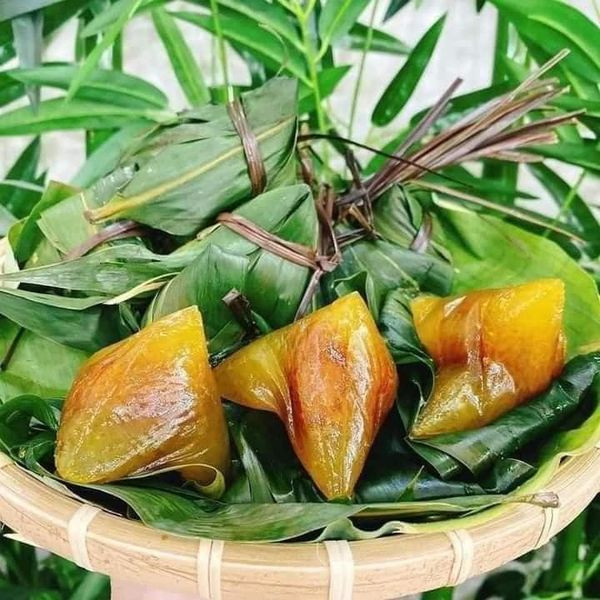
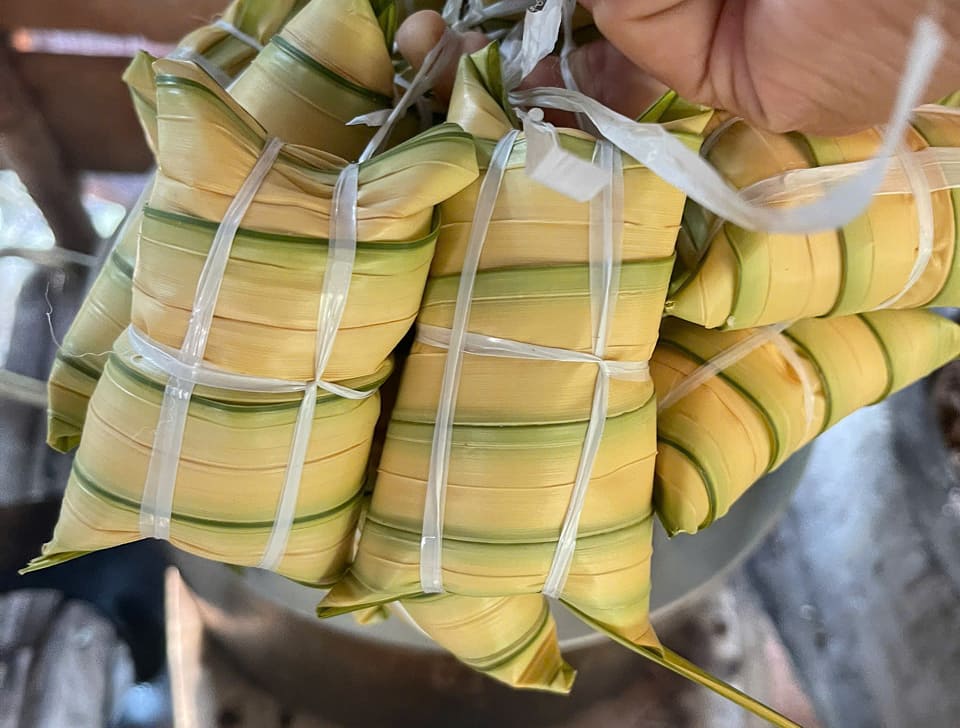
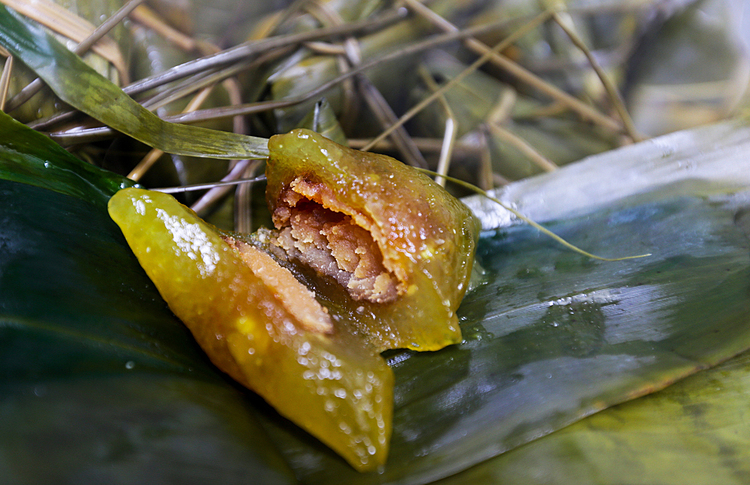
Bánh ú nước tro has a pyramid shape, about the size of an adult’s fist. It is wrapped in bamboo leaves, with glutinous rice on the outside and mung bean filling inside. Although the ingredients seem simple, making Bánh ú nước tro requires many meticulous and elaborate steps.
In the past, to make ash water for the cake, people burned sticky rice straw to obtain ash, mixed it with water, let it settle, and then took the clear liquid. Nowadays, ash water is readily available at markets, making the process much more convenient. In addition, when preparing the rice, it is important to note that if the rice is not transparent enough, the cake will not look appealing, while too much transparency can result in a slightly bitter aftertaste. This depends largely on the maker’s experience.
How to make Bánh ú nước tro:
– Rinse the glutinous rice several times until completely clean. Soak the rice in a basin of cold water mixed with a little salt for about 5–6 hours, then rinse again thoroughly.
– Put the rice into a clean basin, add filtered water mixed with ash water (one spoon of ash water per 1 liter of water). The water level should fully cover the rice. Soak for 20–22 hours. During soaking, you can occasionally test the rice by placing a few grains between your fingers and gently squeezing; if the grains break slightly, the rice has absorbed enough ash water.
– After that, rinse the rice several times with cold water until clean, mix in a little salt, and drain well.
– Peel the mung beans and soak them in warm water for about 1–2 hours. Then cook the beans with a small amount of water until they become soft.
– While the beans are still hot on the stove, add sugar and stir quickly with a wooden spoon until smooth. Transfer the mung bean mixture to a pan and cook over low heat until slightly dry. Adjust the sweetness to taste, turn off the heat, let it cool, and roll into small round balls.
– Wash the bamboo leaves thoroughly. Boil a pot of water and blanch the leaves briefly until they become soft, making them easier to wrap.
– When wrapping the cakes, roll one end of the leaf into a funnel shape, add a layer of rice, then the filling, followed by another layer of rice. Wrap tightly into a triangular shape and secure with banana fiber string. After wrapping, place the cakes into a pot and boil them. Once cooked, remove the cakes and soak them in cold water to cool. Then tie them into bundles and hang them on a rack so the leaves dry quickly.
When unwrapped, the cake has a dark golden color, smooth and non-sticky to the leaves. Taking a bite, you can feel the soft and chewy texture of the rice, with a mildly sweet and pleasant mung bean filling inside. Bánh ú nước tro is light and easy to eat, not greasy, and has a cooling effect, making it especially popular during hot days.
The small bamboo leaves and delicate strings embrace the tiny, translucent, lovely cakes… all the skill and finesse are embodied in them. Interestingly, the smaller the cake, the more it reflects the dexterity of the person who wraps it.