My childhood stretched along the branches of my hometown rivers, along the wild lộc vừng trees lining the breezy dikes. Back then, I didn’t know the tree had such a beautiful name. The children in my village simply called it by its familiar name—the Chiếc tree.
From Wild Greens to the City
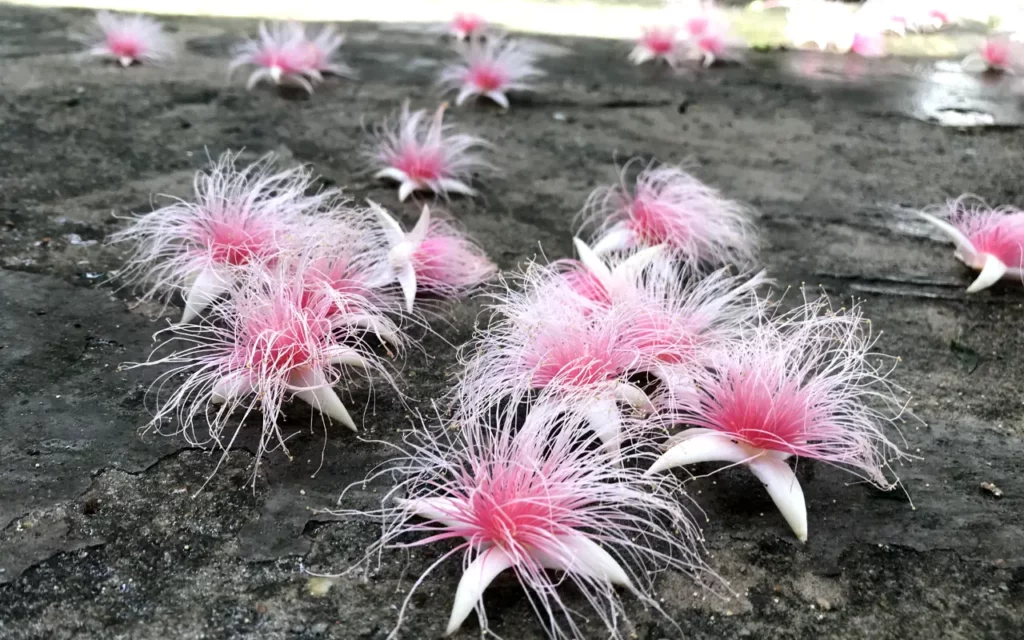
I often wondered why a wild-growing tree could bear such proudly elegant flowers—pure white petals blooming in cascading clusters.
I remember in the past, around the second lunar month, when the tree sprouted young leaves, people in my village would pick them to eat with braised fish or use them to wrap bánh xèo. The slightly astringent taste of the leaves made meals more intriguing. The young leaves were purple, glossy, and full of moisture. Thanks to these wild greens, in the remote countryside where food was scarce, laborers found renewed strength after simple yet satisfying meals.
Some dishes were prepared more elaborately, such as salads made from young leaves mixed with lime juice and peanuts. Because the young leaves had a mildly bitter taste, whenever the tree sprouted new foliage, it became an excuse for mothers to make bánh xèo and other delicacies to enjoy with the leaves.
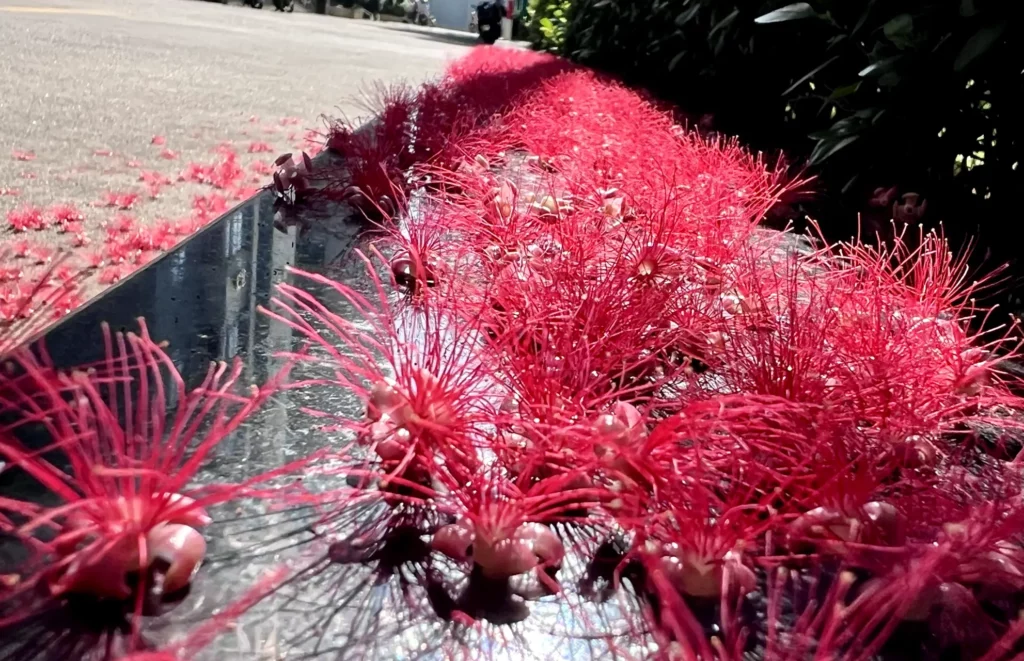
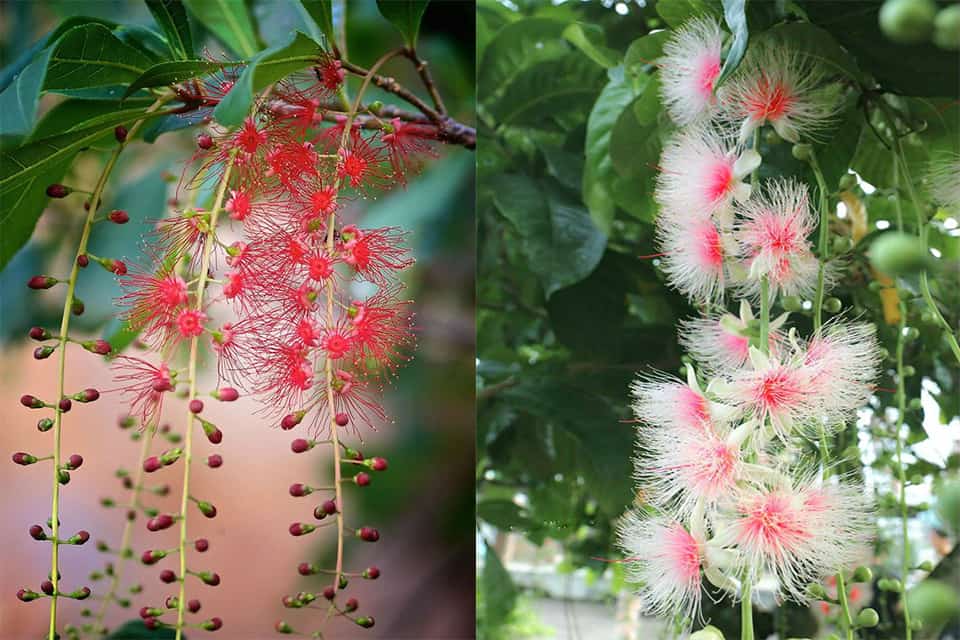
The lộc vừng tree comes in two varieties: white-flowered and red-flowered. The white-flowered variety has larger blossoms. However, regardless of color, each type possesses its own proud and elegant beauty.
Today, as living conditions improve, people gradually eat less of these once-beloved leaves. No longer needing to venture into distant fields or forests, one can now find this tree everywhere—from cities to rural areas—standing in home yards as a symbol of luck and prosperity.
Though “domesticated,” when the season comes, the lộc vừng tree still sheds old leaves and produces tender new shoots. Watching the tree sprout fresh leaves, I am reminded of my childhood days herding buffaloes across fields and working the land; of meals eaten in the fields under blazing sun or pouring rain, with nothing but cold rice, sesame salt, and tender leaves; of my mother, bent with age, clutching a handful of leaves while preparing meals, praising their deliciousness over and over…
General Information about the Tree
The lộc vừng tree is one of the most valued ornamental trees, belonging to the genus Barringtonia, with the scientific name Barringtonia acutangula. It is commonly grown in moist coastal regions of South Asia and Northern Australia. In Vietnam, the tree thrives throughout the country from south to north. It is part of the “Three Blessings” group, which includes the fig tree (symbolizing happiness), the lộc vừng tree (symbolizing prosperity), and the cycad (symbolizing longevity). Because the word “lộc” (fortune) appears in its name, many people plant it in their yards not only for shade but also to attract wealth.
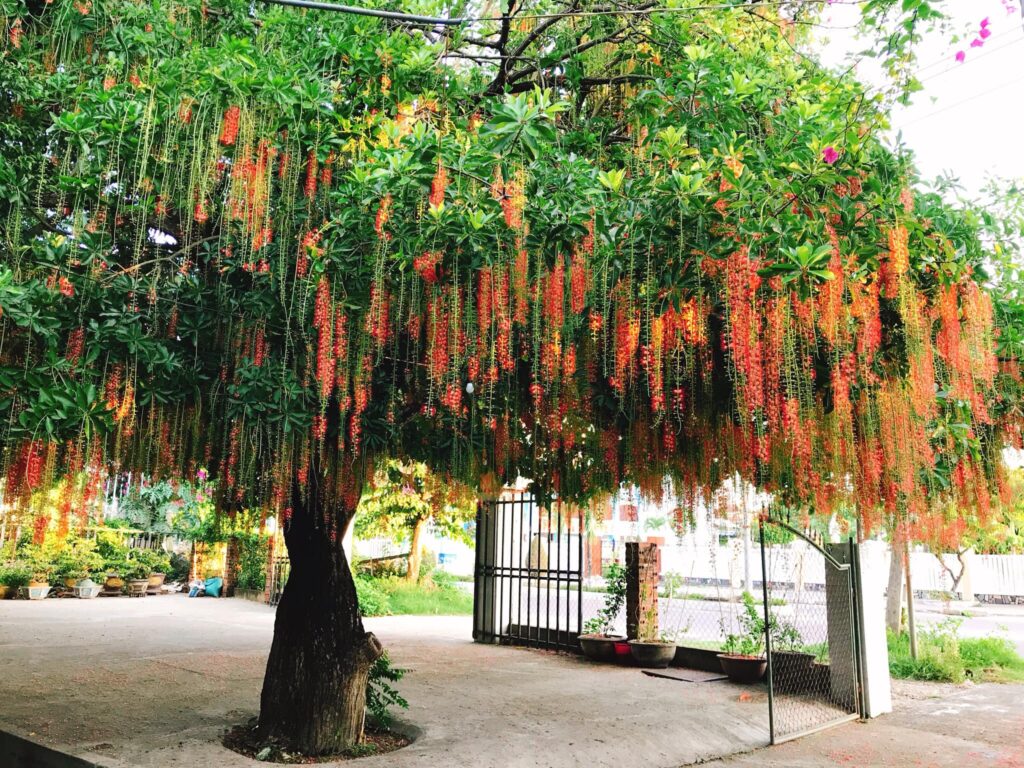
This is a sturdy hardwood tree. Its leaves are lance-shaped, and its flowers come in two colors—white and red—blooming in clusters that hang like elegant chains. The flowers typically bloom from March to August, during which time the tree bursts into full blossom and releases a gentle fragrance.
Symbolic Meaning
The lộc vừng tree symbolizes wealth, prosperity, good fortune, and abundance. It also represents family harmony and unity, reflected in its lush canopy and clustered blossoms.
Its large, sturdy trunk symbolizes strong willpower, while the tree’s longevity signifies long life for family members. At the same time, the lộc vừng tree brings a sense of peace and security, warding off misfortune.
Three Common Types in Vietnam
There are many varieties with different characteristics, but in Vietnam, three common types are typically seen: red-flowered lộc vừng, white-flowered lộc vừng, and rau vừng.
Red-flowered lộc vừng
This is the most commonly planted variety. It features captivating red flowers accompanied by a light fragrance. The species originates from wetland regions in South Asia, Northern Australia, the Philippine archipelago, and Queensland Island.
In Vietnam, due to its red blossoms and auspicious name, it is widely chosen as an ornamental tree for home gardens.
White-flowered lộc vừng
This variety bears striking white flowers that bloom in clusters, making it a popular choice for landscaping and garden decoration.
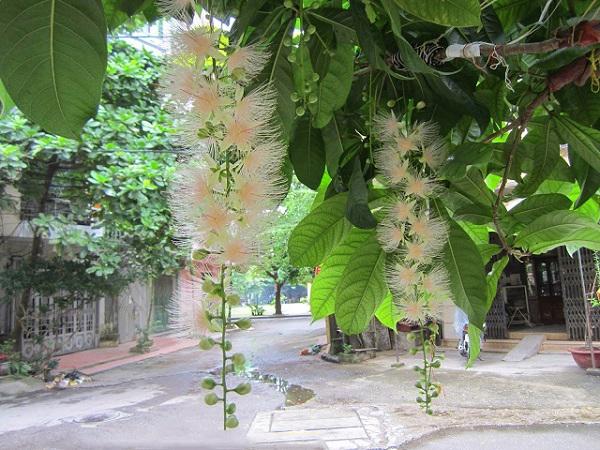
Sesame plant
This type is commonly grown in southern Vietnam, particularly in mangrove areas and along coastlines. It is mainly planted for shade, with a lush canopy. Notably, the tree bears fruit directly from its branches rather than from flowers.
According to traditional Eastern medicine, the tree has neutral properties and a mildly sweet taste. Its aromatic seeds are believed to be effective in treating physical weakness and premature graying of hair. Additionally, the fruit is used to treat coughs, asthma, and eczema, while the bitter roots are valued for their anti-inflammatory and heat-clearing properties.