What makes An Giang an attractive investment destination in the Mekong Delta? As one of the few localities that possesses a full range of terrain — plains, hills, mountains, and an international border — An Giang is gradually asserting its position through continuous efforts to expand infrastructure, improve the investment climate, and effectively leverage its border-region potential. With a nearly 100-kilometer border shared with Cambodia and an increasingly well-developed interregional transport network, this upstream land is emerging as a strategic gateway, opening up new development opportunities for the entire region.
The Upstream Location Creates a Distinct Advantage for An Giang
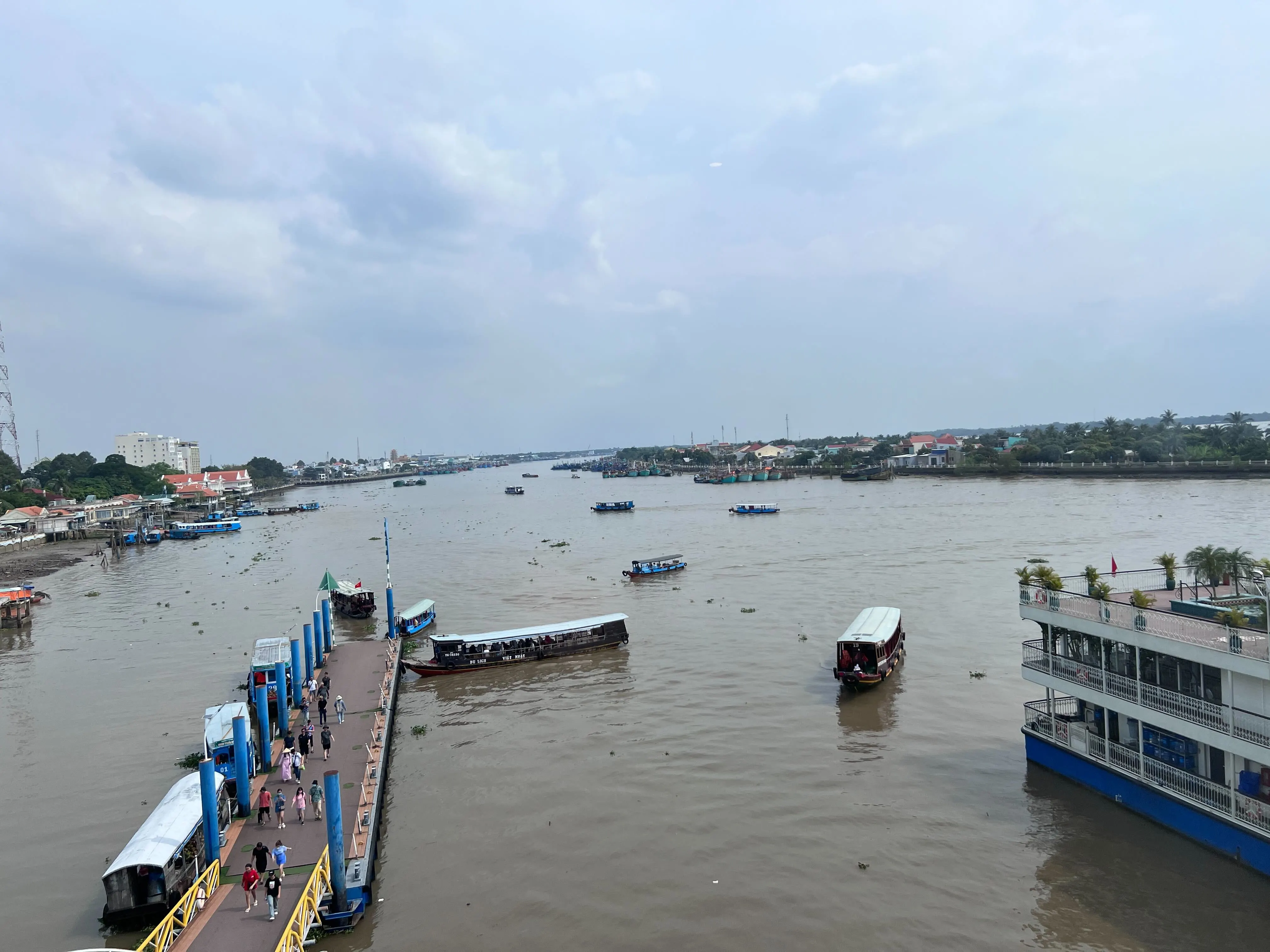
An Giang’s uniqueness compared to other provinces in the Mekong Delta lies in its distinctive geographical position. Located at the upstream of the Hau River and sharing nearly 100 kilometers of border with Cambodia, the province serves both as an international trade gateway and a strategic connector to countries within the Greater Mekong Subregion.
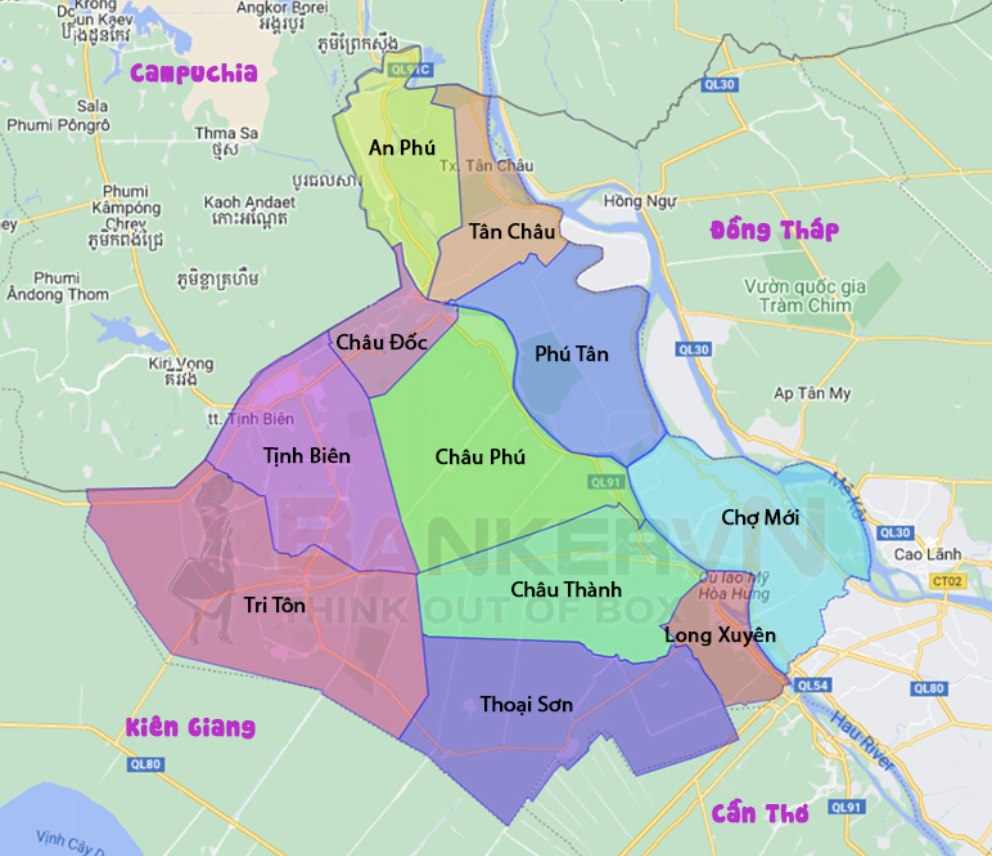
Location of An Giang (Source: bankervn)
The An Giang Border Economic Zone has been oriented by the Government to develop as a multi-sector integrated model encompassing industry, trade, tourism, and logistics. This marks a milestone affirming An Giang’s new role on the regional economic map.
A series of major transportation projects are helping shorten the distance between An Giang and key economic centers:
- – The Chau Doc – Can Tho – Soc Trang expressway, directly connecting to Tran De International Seaport.
- – Chau Doc Bridge, National Highway N1, and the Long Xuyen bypass road, which have been completed to expand urban space and ease congestion on existing traffic routes.
- – Provincial Roads 948 and 949 have been upgraded to connect the Tri Ton – Tinh Bien mountainous areas with the main development corridors.
- – Long Xuyen City is only over 40 km from Can Tho Airport, while My Thoi Port is now capable of receiving vessels of up to 10,000 tons.
From Long Xuyen, Chau Doc, or Tinh Bien, interregional travel and cross-border trade with Phnom Penh (Cambodia) have become more convenient than ever. Newly opened routes are turning into pathways for growth, helping An Giang rise as a dynamic and modern destination — a place that offers not only potential, but also a clear path toward the future.
Cultural Diversity Shapes the Unique Identity of the Land
What makes An Giang so memorable and worth returning to? Perhaps it is the rare cultural convergence of multiple ethnic groups living harmoniously on the same land — Khmer, Kinh, Cham, Hoa, and others. Beyond customs and rituals, An Giang’s cultural identity is vividly expressed through architecture, cuisine, beliefs, and even the rhythm of everyday life.
From Chau Doc to Tri Ton and Tinh Bien, it is easy to encounter brightly colored Khmer pagodas and ancient Cham mosques. Most notably, the sacred Ba Chua Xu Temple attracts millions of pilgrims every year.
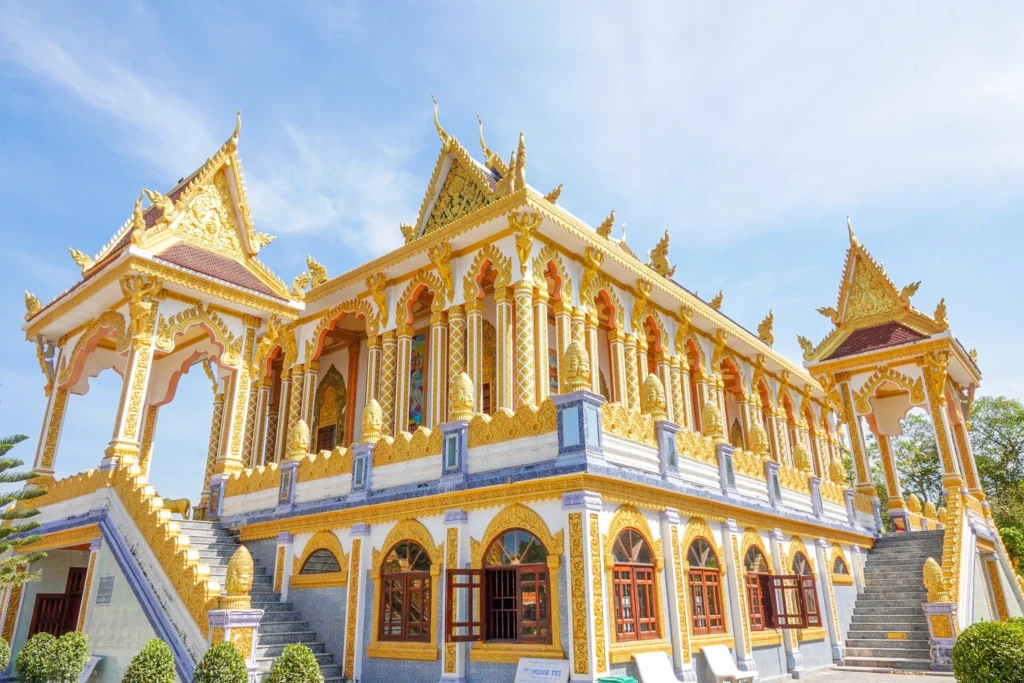
Distinctive Khmer pagodas in the Mekong Delta
This is not merely a place where cultures “coexist,” but where they truly live together and blend naturally, forming a colorful yet harmonious An Giang. While rapid urbanization has caused many regions to gradually lose their cultural identity, An Giang has managed to preserve its distinct character. This is what makes the upstream land not just a destination, but a place where visitors can feel and understand a vibrant living culture in the heart of the Mekong Delta.
In December 2023, the Ba Chua Xu Temple of Sam Mountain (Chau Doc City, An Giang) was officially inscribed by UNESCO on the Representative List of the Intangible Cultural Heritage of Humanity. This marks the first time a spiritual practice from the Southwestern region of Vietnam has received this recognition, affirming the profound cultural value and enduring vitality of the Ba Chua Xu belief.
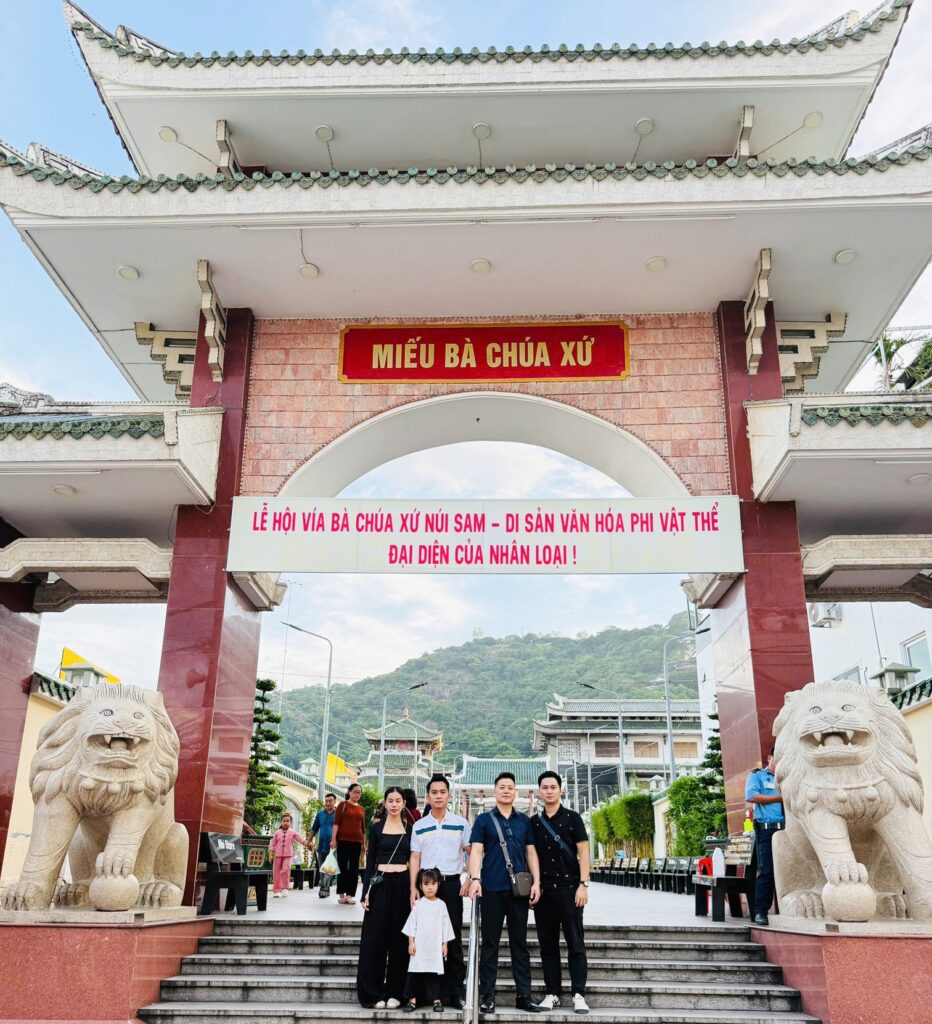
Ba Chua Xu Temple of Sam Mountain – A Spiritual and Cultural Destination of Southwestern Vietnam
Beyond being the largest pilgrimage site in the Mekong Delta with millions of visitors annually, the Ba Chua Xu Festival held in the fourth lunar month has become a distinctive spiritual tradition closely tied to the lives of Southern Vietnamese people. UNESCO recognition is not only a source of pride for An Giang, but also contributes to elevating Vietnam’s cultural values on the global stage.
A Truly Distinctive An Giang in the Mekong Delta
If one asks what makes An Giang different from the rest of the Mekong Delta, the answer lies in its diversity. As the only province in the region that features high mountains, vast plains, major rivers, and an international border, An Giang brings together all the geographical, cultural, and human elements needed to create a truly unique identity.
From the mystical Seven Mountains range to the lush palm fields of Tri Ton and Tinh Bien; from distinctive Khmer festivals to the Ba Chua Xu belief that attracts millions of visitors — all come together to form a multi-layered cultural landscape that is both simple and mysterious. The people of An Giang are gentle and hardworking, yet resilient and forward-looking in economic development, cultural preservation, and openness to change.
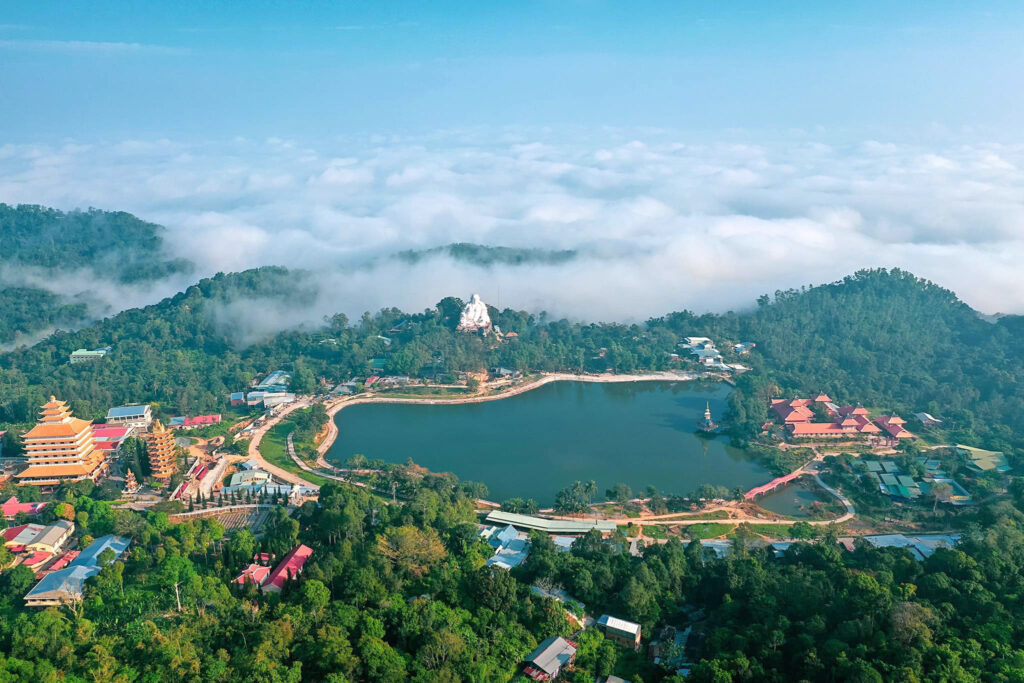
That Son (Seven Mountains) – Seven Mystical Peaks
These qualities make An Giang not merely a place on the map, but a vivid experience for those seeking to explore the cultural and natural depth of the riverine Southwest.
Infrastructure Development Opens Up Interregional Connectivity Opportunities
With its strategic upstream position along the Mekong River, An Giang is gradually transforming into a key connectivity hub linking Vietnam with Cambodia and other provinces in the Mekong Delta. In recent years, the province has been prioritized for major transport investments, opening up new development space and creating strong momentum for investment attraction.
Notable projects include the Chau Doc – Can Tho – Soc Trang expressway, National Highway N1, the Long Xuyen bypass, Chau Doc Bridge, and Provincial Roads 948 and 949 — all contributing to the completion of an interregional transport network that shortens travel time and strengthens links between economic zones, industrial parks, and key tourism destinations.
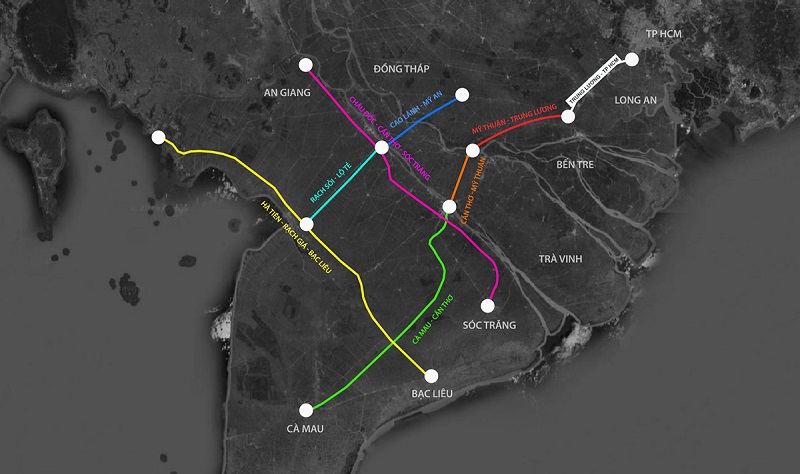
Overview of the Chau Doc – Can Tho – Soc Trang Expressway
In particular, the An Giang Border Economic Zone has been identified as one of the country’s eight key border economic zones, serving as a major trade hub with Cambodia and the Greater Mekong Subregion. Integrated planning across transportation, logistics, and urban development is shaping a “development triangle” linking Ho Chi Minh City – Can Tho – Phnom Penh, with An Giang as a vital node.
Opening the Future Through Investment and Tourism Potential
Beyond its strategic location and increasingly完善 infrastructure, An Giang stands out for its strong investment appeal and diverse tourism potential. As the local economy continues to transform positively, many sectors are becoming attractive destinations for both domestic and international investors.
In high-tech agriculture, An Giang is developing specialized zones for rice, fruit trees, and aquaculture linked to processing and export. Industrial parks such as Binh Long IP, Hoi An IP, and Xuan To IP are being synchronously planned, attracting investment in clean manufacturing and supporting industries.
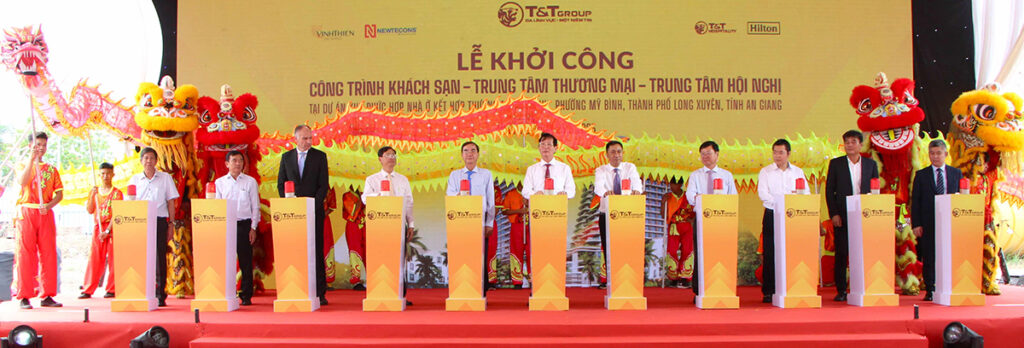
T&T Group breaks ground on An Giang’s first 5-star hotel project with a total investment of nearly VND 2,300 billion (Source: An Giang Online)
Meanwhile, An Giang’s tourism sector is being oriented toward sustainable development, effectively leveraging existing strengths. From spiritual tourism sites such as Ba Chua Xu Temple and Hang Pagoda, to eco-tourism destinations like Tra Su Cajuput Forest and Cam Mountain, as well as culturally rich areas such as Tri Ton and Tinh Bien — all together form a diverse tourism map that attracts large numbers of domestic and international visitors.
The UNESCO recognition of Ba Chua Xu Temple as an Intangible Cultural Heritage of Humanity is not only a proud milestone, but also opens opportunities for An Giang to reach further on the international tourism map.
Clearly, when asking “What makes An Giang special?”, the answer goes beyond landscapes, culture, or geography — it is a land that is strongly transforming, confidently paving the way for the future through its sustainable potential and distinctive identity.