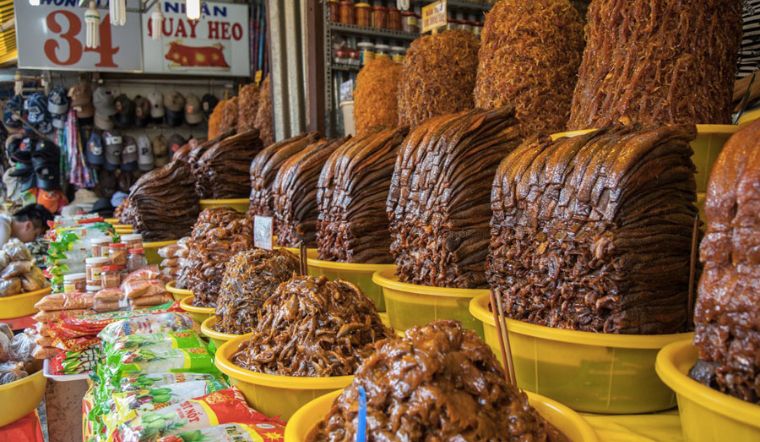
Bánh mì – the street food bread of Vietnam, has been praised by foreigners in recent times, and it seems that bánh mì has truly “taken the throne” from phở to become the most beloved Vietnamese dish among international fans.
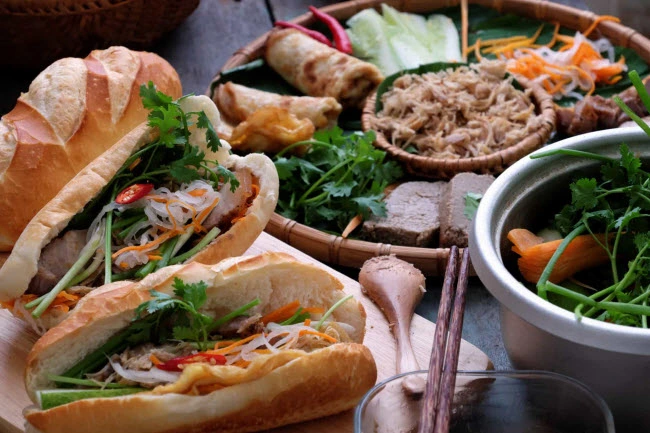
There’s one thing that has always bothered me whenever I think about Vietnamese cuisine on the global stage: people insist on translating every Vietnamese dish name into English. Phở or bún just become generic “noodle,” and sometimes bún even gets lumped in as “soup.” Even if the translation is accurate, I sincerely don’t want them to do that. No one calls sushi “fish and rice,” no one calls tom yum “spicy soup” or “Thai soup,” and no one calls beef bourguignon “beef stew.” Why can’t phở just simply be phở and bún just simply be bún? Even if it’s hard to pronounce, it’s a Vietnamese dish, and nothing could be better than having its name known in its original Vietnamese form—a name that immediately brings to mind a steaming bowl of phở with fragrant bone broth scented with star anise and cinnamon, tender rare and well-done beef slices, rather than some generic Korean, Japanese, or Chinese noodles.
I stayed annoyed about this until recently, when across travel and food websites worldwide, food blogs, and even renowned lifestyle bloggers, everyone seems to have gone… crazy over bánh mì. And they call it “banh mi” with passion and admiration, not “Vietnamese baguette” or any other English name. I think this is truly a milestone—bánh mì has made foreigners remember it by its own unique name, a one-of-a-kind name etched in their minds whenever they crave Vietnamese-style bánh mì. And for me, this also shows that bánh mì has truly “taken the throne” from phở and become the favorite Vietnamese dish among foreigners.
Hard to believe, right? For an entire decade, the dish we were most proud to show off to foreigners was phở. Phở appeared everywhere—on every magazine and every travel guidebook. It became an icon, something you had to eat when visiting Vietnam. If there had been a survey back then, I’d bet everyone would say they came to Vietnam and loved phở. But it seems everything changed in just the last 1-2 years. Now, all anyone talks about when it comes to Vietnamese food is bánh mì. Bánh mì is everywhere—on the covers of magazines, in travel experience articles by food bloggers. In the UK or the US (and of course many other Western countries), bánh mì shops are popping up like mushrooms with names like Bun Mee, Banh Mi My Tho (in the US), or Kêu, Banh Mi Bay, Banhmi11 (in the UK). In Malaysia, there’s a brand called Ô Bánh Mì that’s become a massive hit and a favorite spot for locals. In Thailand, mobile bánh mì carts roam the cities and have become the most talked-about and sought-after name. Even Yum Brands—the company behind KFC and Pizza Hut—opened a bánh mì shop in Texas called Banh Shop. David Farley, the BBC’s food and travel writer, generously declared: Vietnamese bánh mì is the best in the world! And the famous food blogger Iamfoodblog bluntly stated: I think bánh mì is the sandwich I admire the most! Truly, the world has gone mad for the bánh mì craze—a completely new obsession, and now all anyone thinks about is bánh mì.
I’m not surprised that Westerners are so obsessed with bánh mì. With its similarities to sandwiches (and we all know how much they love sandwiches), bánh mì is truly a breath of fresh air compared to Cuban sandwiches, kebabs, or those monstrous American footlongs stuffed with lettuce, bacon, and a few cheeses. The love for bánh mì can be explained by the fact that it’s the perfect collision between Western cuisine and the essence of Vietnamese flavors—it has all the traits of a modern dish that any busy person needs. It’s familiar to Western palates yet full of the intricate, refined Asian tastes.
I mean, come on—who wouldn’t love bánh mì? I still remember when I was a kid, every morning my mom would leave me 5-10 thousand VND for breakfast. While my parents were out, I’d ride my bike to the street near home to buy bánh mì. Back then, one bánh mì cost just 5 thousand VND, with a crispy crust and fillings overflowing with red-pink sausage and bì. Or sometimes, just plain bánh mì with cheap, mild butter and a sprinkle of ruốc—that was enough to satisfy a simple kid like me. And oh! Do you remember that sound—the crack of the crust shattering in your mouth on the first bite? It’s the most cheerful and joyful sound a food can make. Then the soft inner layer acts like a cushion, soaked evenly with butter and meat juices, making it even more flavorful. And how could we forget the fillings? The fillings are truly the soul of the bánh mì. Char siu pork, pâté, giò chả, fried egg, sausage bì… each shop has its own way to make the fillings special. They’re rich, savory, and full of flavor like a forest. Finally, a touch of tangy pickled daikon and carrots, plus a few sprigs of herbs, and the whole bánh mì bursts with herbal aromas—all blending with that magical crust. There you have it: a paradise of salty, sweet, crunchy, chewy, soft—a paradise of every flavor on earth.
We had phở pave the way for Vietnamese cuisine to reach the world, hủ tiếu making even a chef dubbed the “Devil” like Gordon Ramsay bow and admit it’s one of the best dishes he’s ever eaten. And now, we have bánh mì—the “sandwich” phenomenon that the whole world worships. The most wonderful thing is that not only has the dish become famous, but the culture and spirit of an entire nation embodied in it is also being passed on through this simple food. The shortest way to the heart is through the stomach. So sometimes, without any big campaigns or grand gestures, just one bánh mì is enough to bring the world’s friends closer to us.
PiterDeeDee / MASK Online
According to Kênh14