For many generations, the primary means of transportation and livelihood for the people of the Mekong Delta has been boats, with the “xuồng ba lá” (three-plank canoe) standing out as a unique cultural icon. Living in this riverine region, even the poorest household owns at least one.
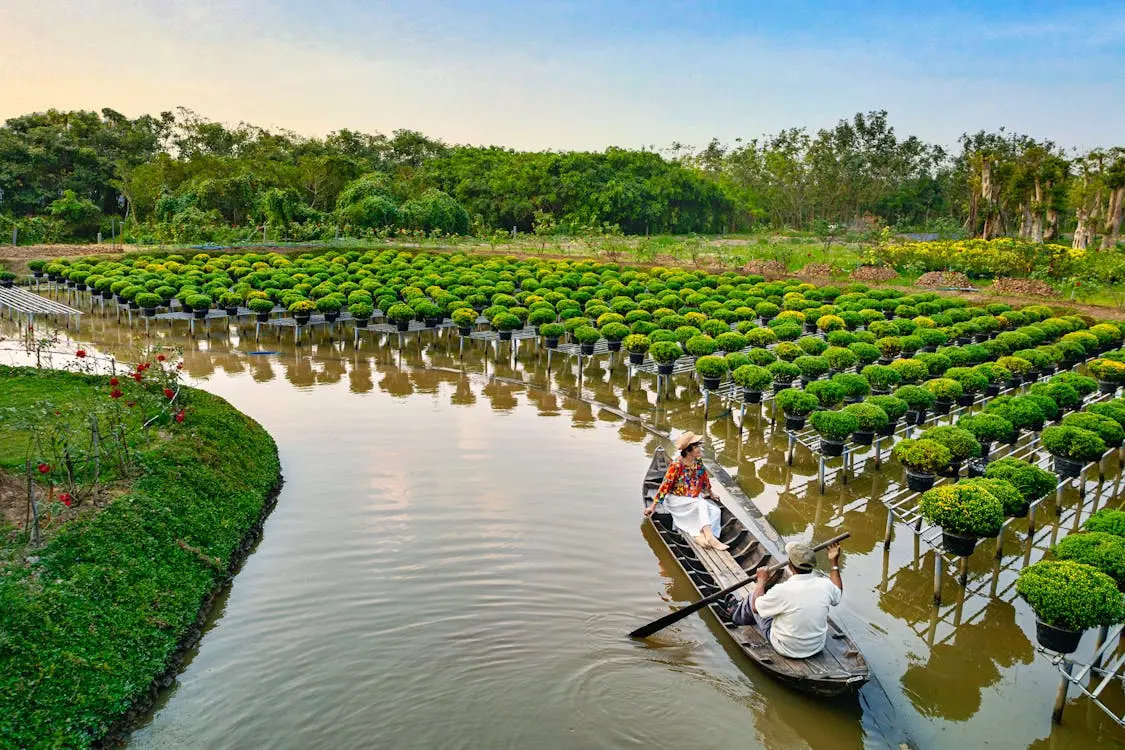
This is considered a symbol of riverine civilization in a young alluvial land, a region of swampy fields and submerged canals where the flood season lasts up to six months a year.
In the past, this marshy land was flooded year-round with very few roads, while canals crisscrossed everywhere, reaching right to the front door of every house. The flood season and high tides made travel even more difficult for the locals. Residents of the Plain of Reeds (Đồng Tháp Mười) still remember a familiar folk song:
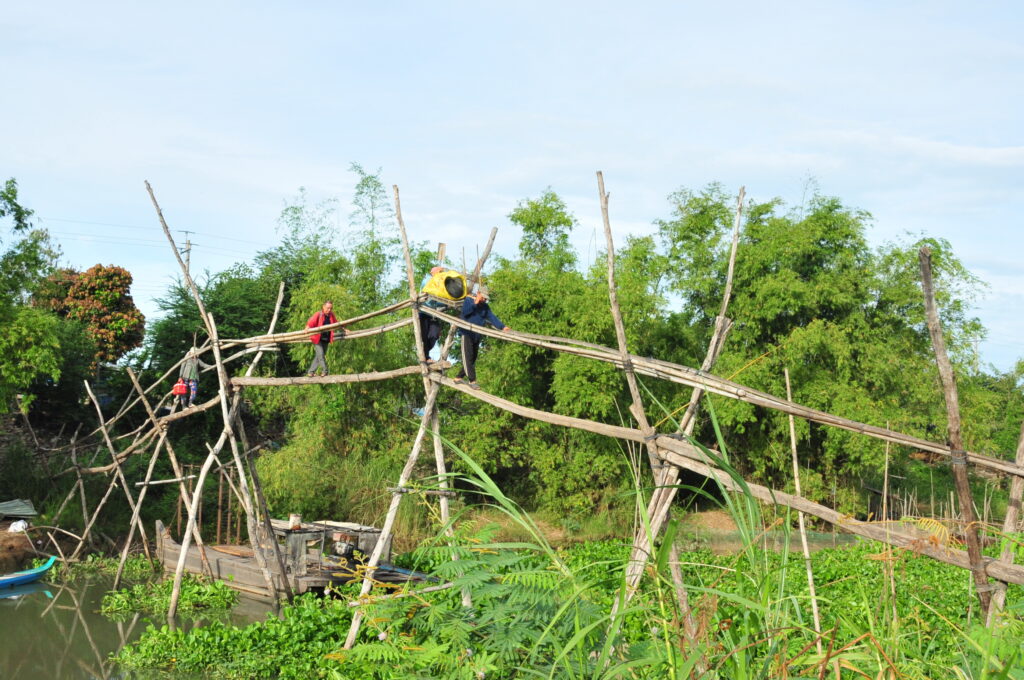
Though the three-plank canoe drifts precariously The bamboo bridge is shaky and difficult to cross My dear, do not hesitate or worry Sit in the three-plank canoe amidst the rising tide.
Here, in the areas where people live and work, the land is swampy and flooded almost year-round. Roads are difficult to build and rare; therefore, the canoe is the most useful and popular means of transport in every rural area.
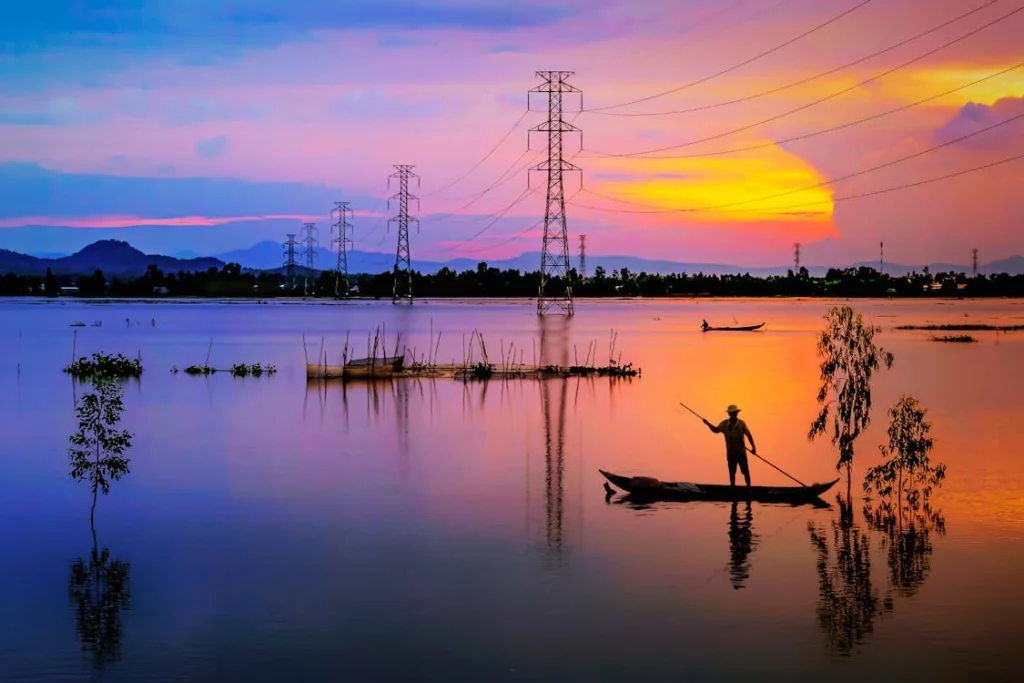
From the house to the garden, one must go by boat. Neighbors visit each other by boat. In poor rural villages, the most common vessel is still the canoe. People call the “xuồng ba lá” the “legs” of the Southern river folk. Similarly, it is also called “traveling by hand”—with just two arms rowing, one can go near or far supported by the boat. Some highly skilled local youths can even sit on the canoe and use their feet to row, letting the boat glide gently over the poetic blue water. Any family that cannot afford a canoe feels as if their feet are tied. No matter how poor, a household must at least own one canoe.
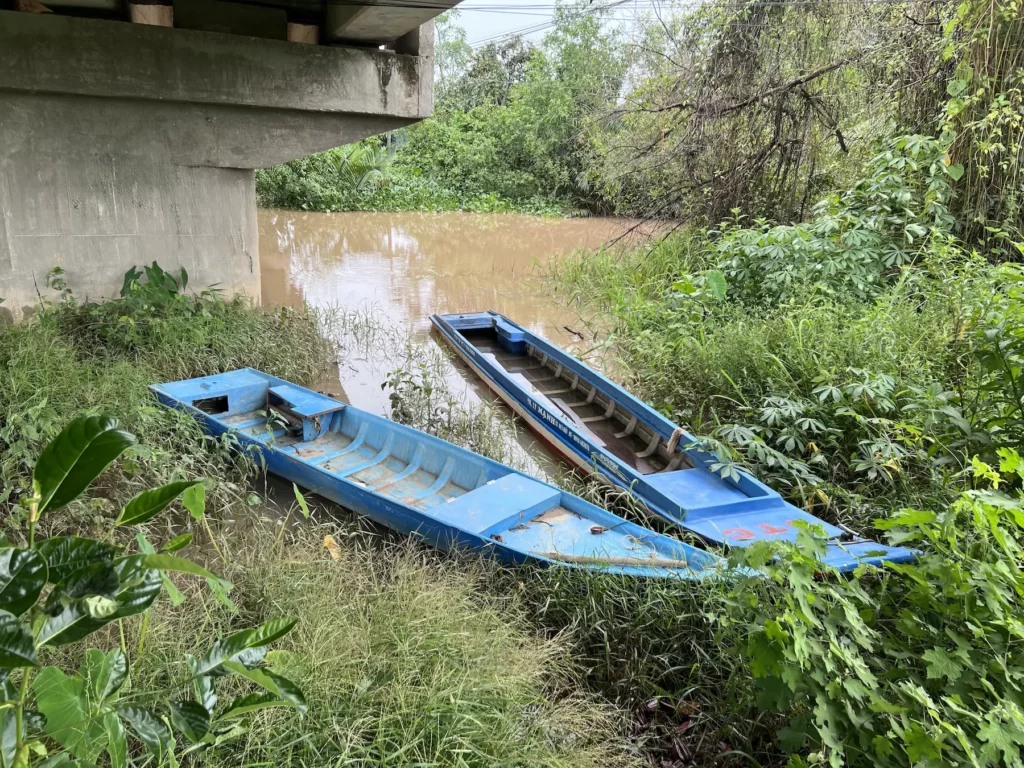
The original “xuồng ba lá” was built lengthwise with three flat, beautiful, and sturdy wooden planks. A wider plank was used for the bottom, and two planks on the sides formed the hull. Thus, it was called “three leaves” (ba lá). A poet once wrote:
Our hometown’s three-plank canoe As fragile as a banyan leaf in the current A crescent moon on the winding river Small, yet still braving the rising flood…
Over time and through changing eras, forest wood became increasingly scarce and expensive. Boat builders had to find ways to join multiple planks together to build a boat, but it was still called a “xuồng ba lá.” With today’s high technology, boats are also made from alloy materials and non-metallic composites. Recently, many composite boats have appeared on the canals.
Although built in different ways, the role of the boat for the Southern river people remains invaluable—a traditional heritage that preserves the unique lifestyle and livelihood of this land. Many still remember song lyrics adapted from a folk melody: …
My house is two canals and a creek away from yours I see your long hair and your purple “ba ba” shirt I am poor and haven’t bought a three-plank canoe yet I cannot bear to wade through the muddy canal to see you So tomorrow, I will go to Mr. Nam Cua’s house to borrow one.
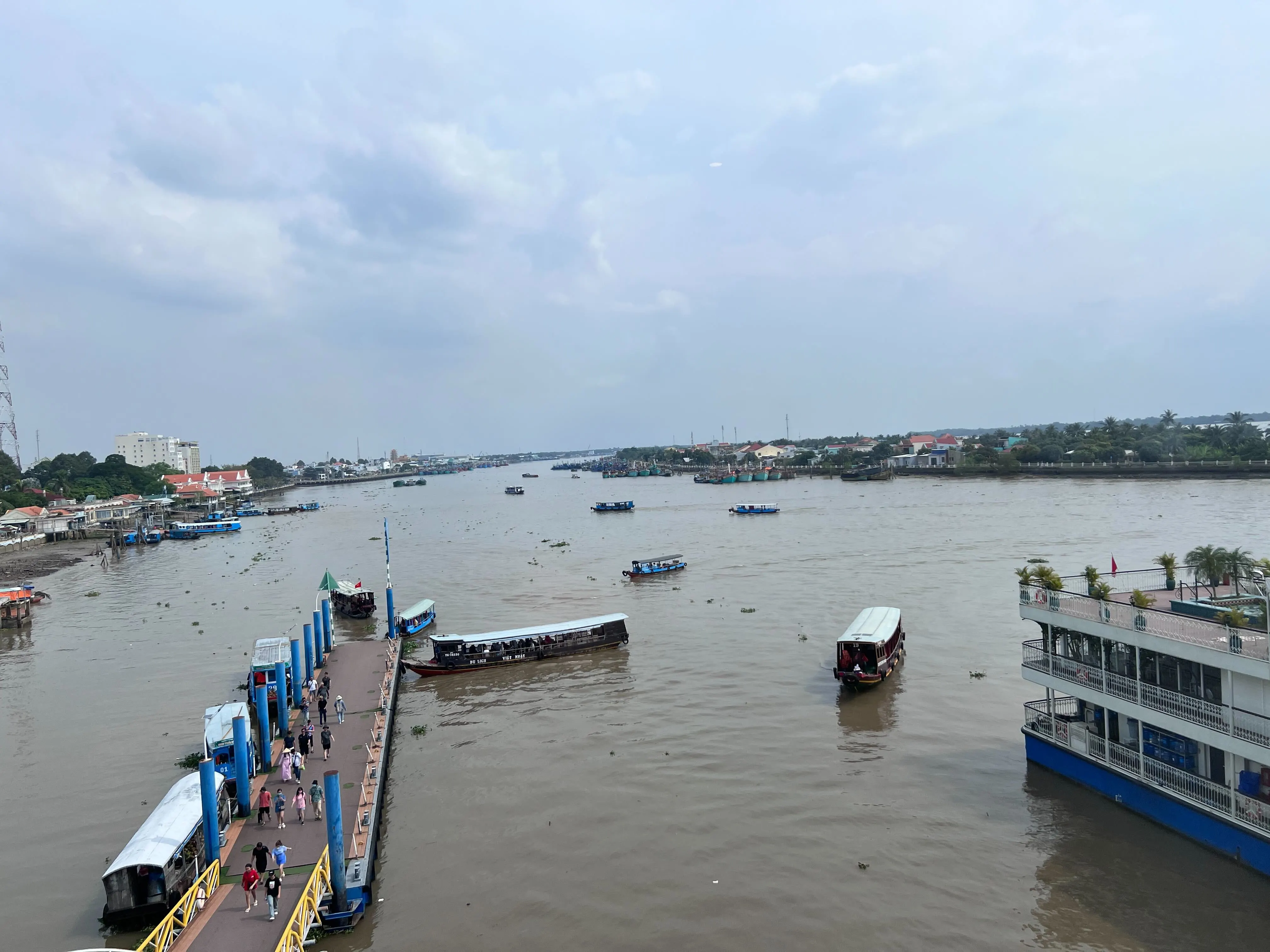
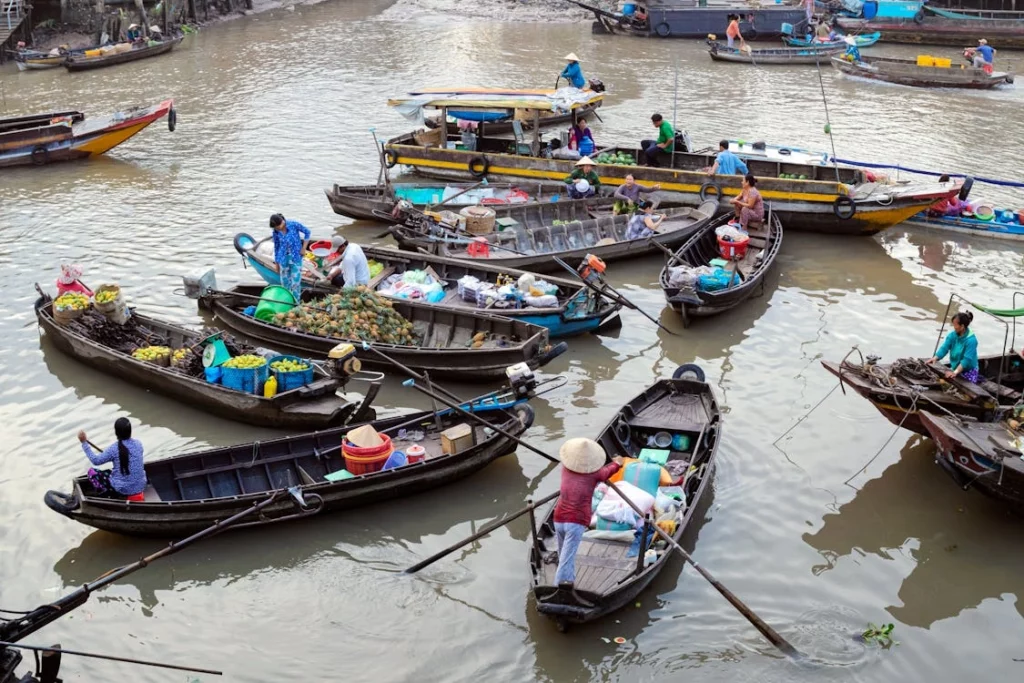
Today, throughout the Mekong Delta, many national highways, provincial roads, and inter-commune paths have been developed. Along the canal banks, there are now roads, concrete bridges, and motorbikes zipping by. However, on the canals—especially at ferry terminals and floating markets—the canoe can never be absent. Many domestic and foreign tourists visiting the Southwest want to sit on a canoe to sightsee along the peaceful canals, dip their hands into the cool water, or watch the moon shimmer on the river at night. It is a piece of the homeland that lingers in everyone’s heart, remembered by all who wander far away.
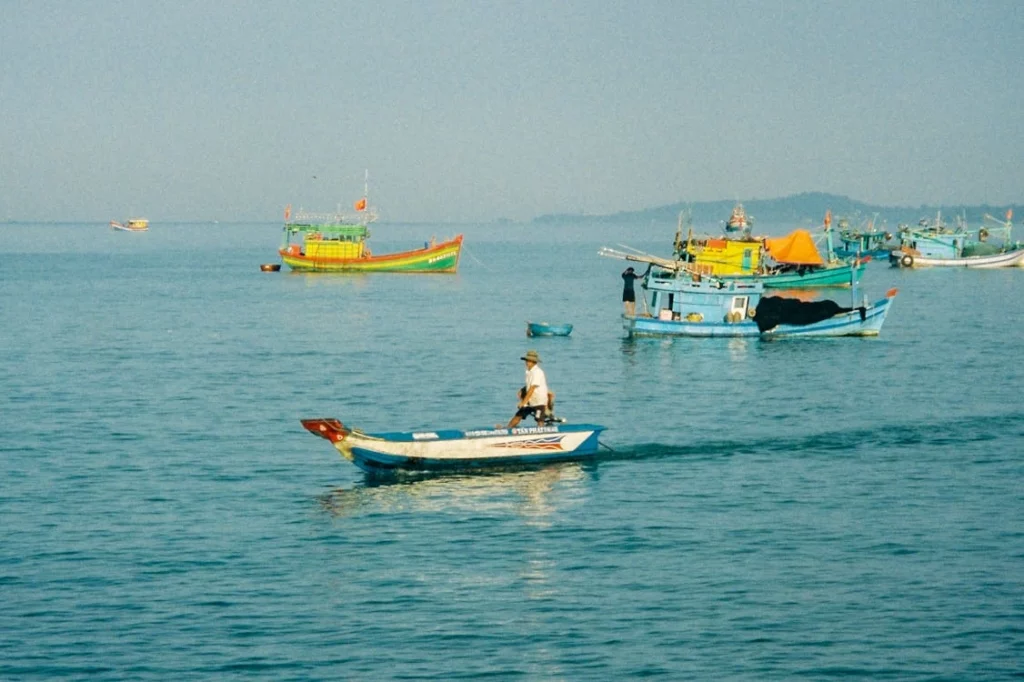
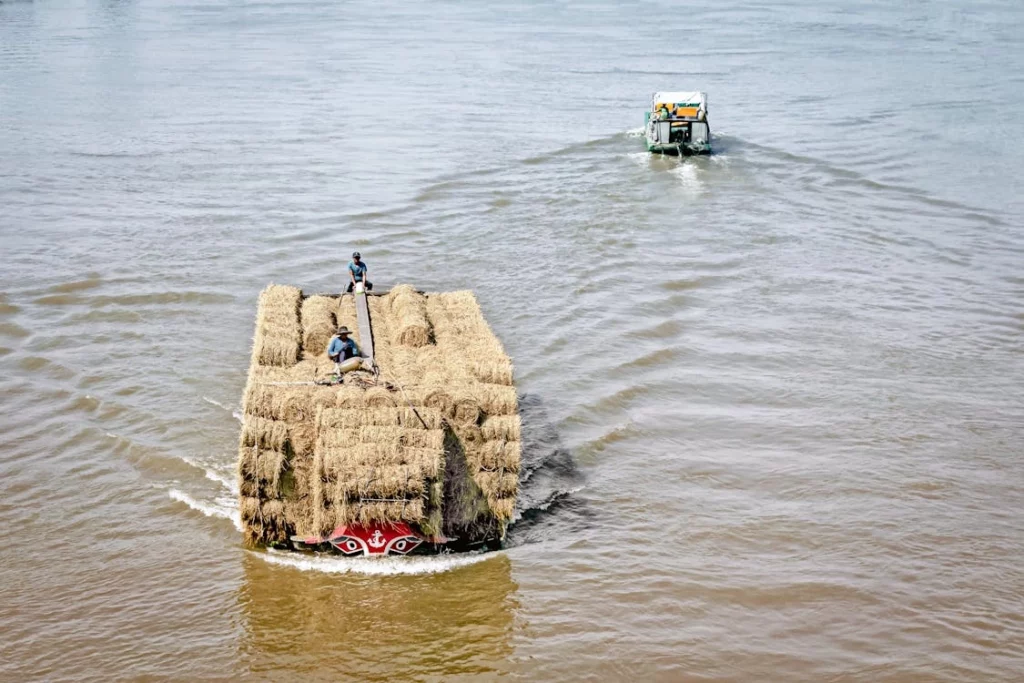
Boats and canoes in the West are mostly built from Hopea odorata wood and are very diverse with many types and names such as: Ghe bầu, ghe tam bản, chẹc, vỏ lãi, xuồng ba lá, xuồng năm lá, tam bản, xuồng vỏ gòn, dugout canoes, rowing boats, motorboats, and “tail-shrimp” motorboats…
According to mekongculture
Làng nghề đóng xuồng ghe Bà Đài, Đồng Tháp