Tra VinhThe Southwestern region of Vietnam is famous for its fertile land and abundant fruits. Each area has its own specialty: Cai Be is known for its sweet tangerines, Vinh Kim for its blacksmith village star apples, while Tra Vinh is renowned for the quach fruit.The unique flavor of quach fruit from Tra Vinh
If you are someone who loves nostalgia, who enjoys traveling back through memories to rediscover rustic dishes and regional specialties, you should visit Tra Vinh at least once to experience dishes made from quach fruit.
Quach fruit – a specialty of Cau Ke District, Tra Vinh
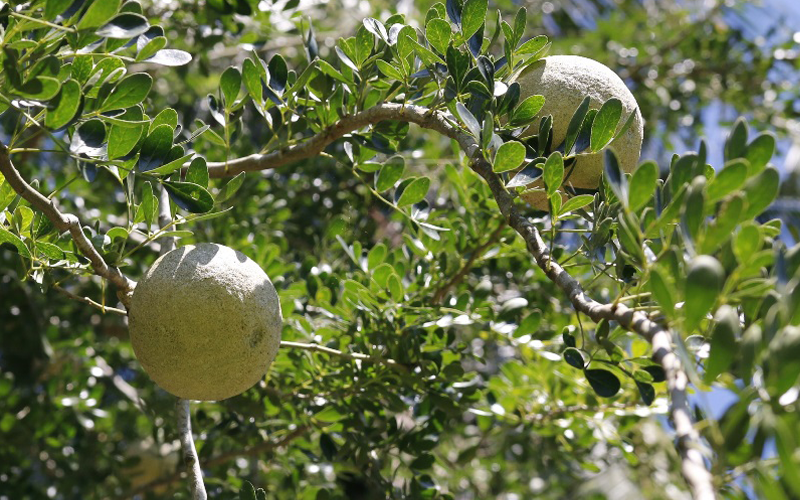
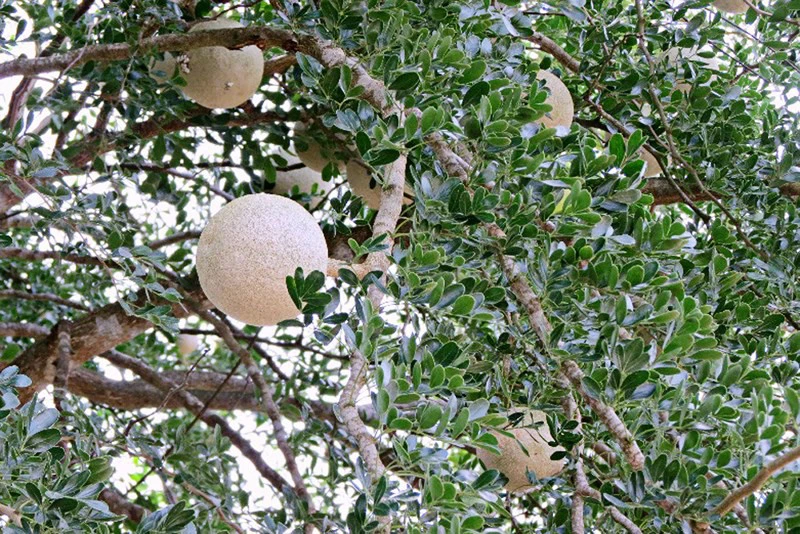
Quach fruit is also known as the Gao tree. The fruit resembles a wood apple, with a rough, grayish-white skin. The Khmer people in Cau Ke District often grow this tree along dikes, around their homes, or intercropped with other fruit trees.
The tree grows to about 7–8 meters tall, with small leaves and thorny branches similar to the needlebush tree. It takes around seven years for the tree to bear fruit, and the older the tree, the more fruit it produces. The quach fruit ripens during the twelfth and first lunar months.
Like durian, when quach fruit ripens, it naturally falls from the tree. Despite falling from a height, the fruit does not break because it is only just ripe and still firm.
The unique flavor of quach fruit from Tra Vinh
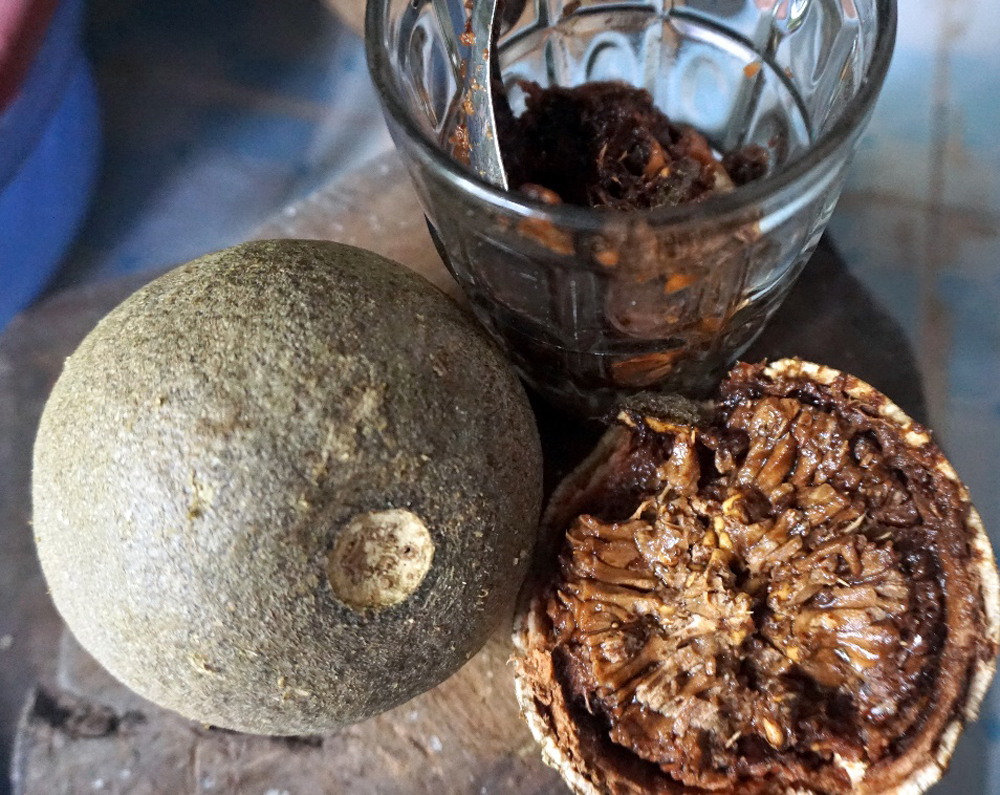
When ripe, quach fruit releases a very distinctive fragrance. Although it differs from the aroma of custard apple, it still captivates many people. After being left for a few more days or weeks, the fruit becomes fully ripe; the skin turns silvery white and soft. With just a light cut of a knife, one can see tiny seeds resembling dark purple pomegranate seeds, which are crunchy when eaten.
For women, quach mixed with fish sauce or mashed with ice and sugar is a favorite cooling treat, while for men, quach infused in alcohol has become a specialty.
To make quach mashed with ice and sugar, simply scrape the pulp into a glass and mash it well. Add granulated sugar and crushed ice to create a refreshing and memorable summer drink.
Quach mashed with ice
Taking a spoonful of quach, its aroma gently reaches the nose, while the mild sourness tingles the tongue. The sweetness of sugar and the creamy richness of milk spread throughout the palate, creating a pleasant sensation. The most refreshing moment comes when enjoying quach on a sweltering summer noon—the fruit’s tangy taste quickly dispels the heat of the sun.
Quach mashed with iceQuach wine
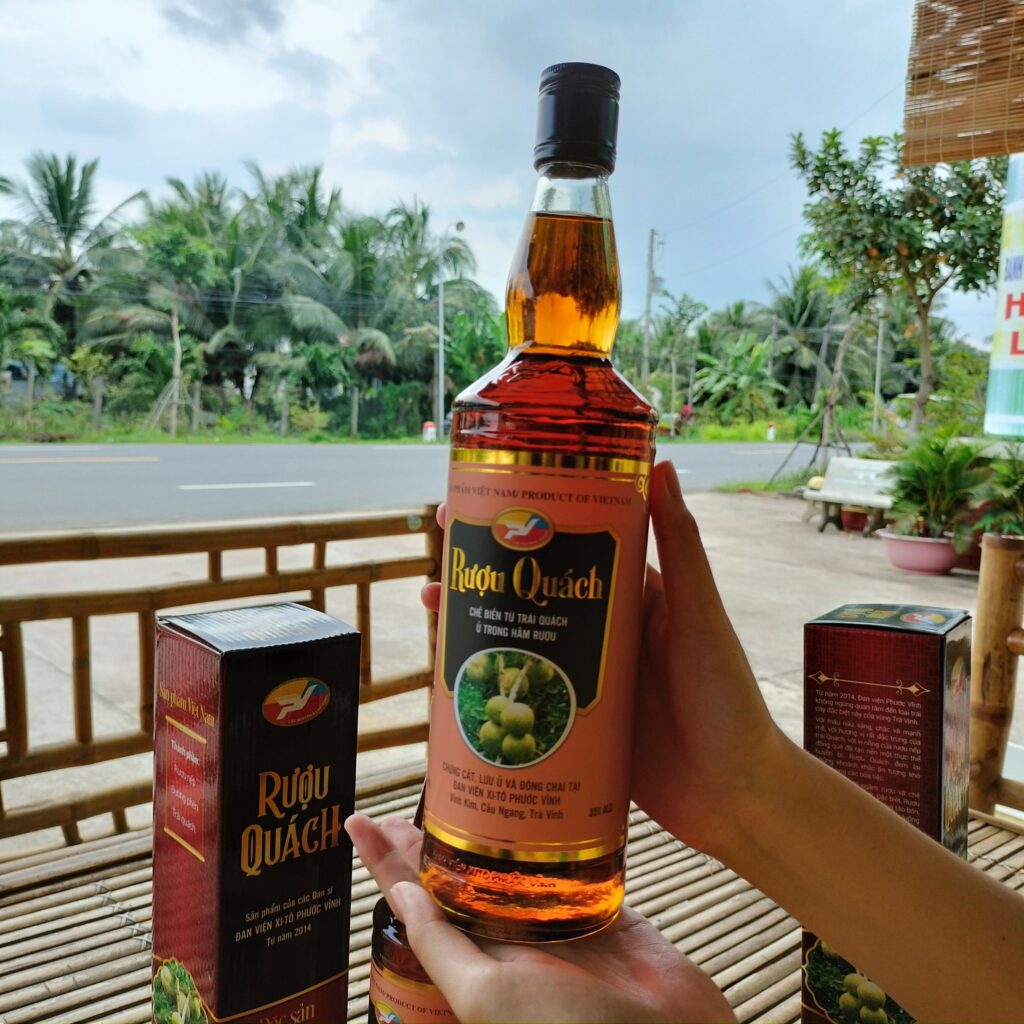
In Cau Ke, quach is also processed into a type of wine considered a local specialty. Drinking this wine allows one to enjoy the distinctive aroma of quach and is believed to be beneficial for people with high blood pressure, body aches, and kidney health. To make this medicinal wine, people scoop the pulp of quach fruit and soak it in jars of glutinous rice wine or pure rice alcohol. For a better-tasting wine, some slice the fruit into several pieces before soaking. However, according to seasoned wine enthusiasts, drilling a few small holes in the fruit’s shell before placing it into the jar produces clearer wine, unlike the cloudiness that may occur with the other methods.
Quach wine
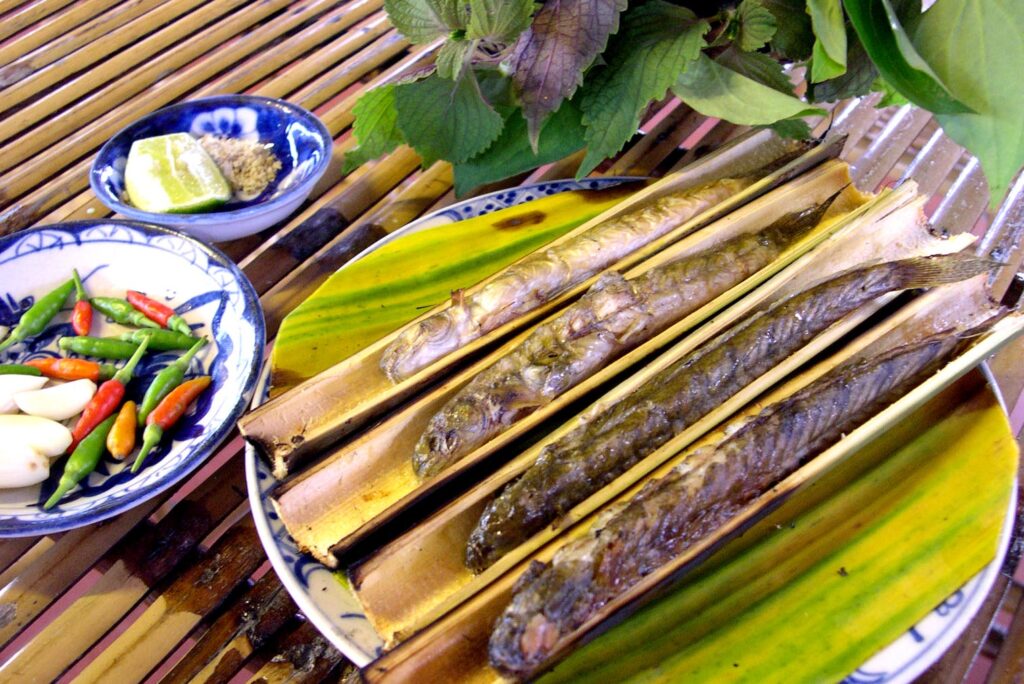
Grilled snakehead fish in bamboo tubes is very popular in Vietnam due to its unique flavor, white flesh, and high nutritional value, especially the gallbladder which leaves an unforgettable taste.
If you ever have a chance to visit Trà Vinh, especially Ba Động — a coastal area blessed with abundant natural beauty — don’t forget to enjoy dishes made from a local crustacean known in folk language as “chù ụ.” The name “chù ụ” likely comes from its somewhat clumsy appearance, with a grumpy-looking face....
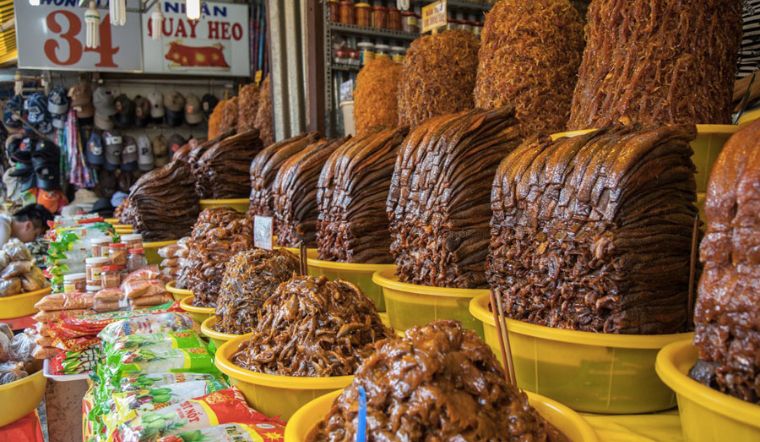
Vietnam is not only famous for its abundance of fish species, but its various types of fermented fish paste also contribute to the distinctive flavor of our cuisine. Each region has its own type of fermented fish paste, such as shrimp paste, fish paste, crab paste, and prawn paste, etc. Remember to try them as you travel through these regions!
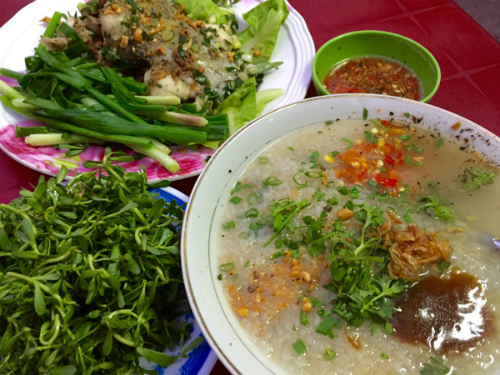
Traveling along National Highway 1A towards the Mekong Delta, particularly through Tien Giang province, you'll find many eateries selling local specialties, including snakehead fish porridge with bitter herbs.
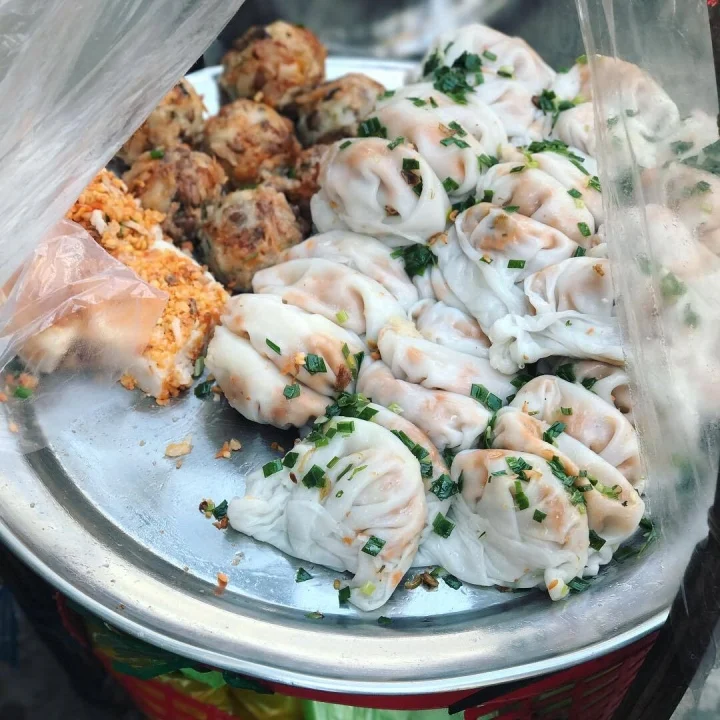
The distinctive slightly pungent taste of radish blended with the rich flavor of shrimp and pork filling brings a unique and delicious sensation to radish cakes. Radish cakes may still sound unfamiliar to many people in Saigon, but for those from Bạc Liêu — the land famous for the story of the wealthy young man...
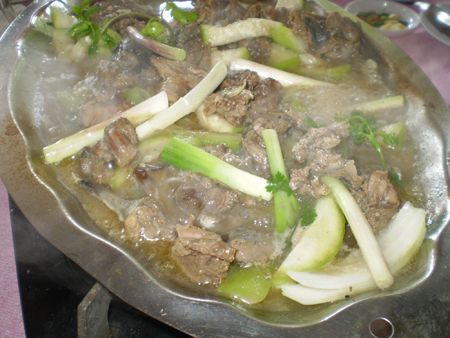
Le le meat is considered a delicious and highly nourishing dish, and stir-fried le le with winter melon is regarded as the main course in a meal. The dipping sauce must strike a perfect balance of sour, spicy, and sweet. Just try it once, and you’ll never forget this rustic yet elegant delicacy… According to...
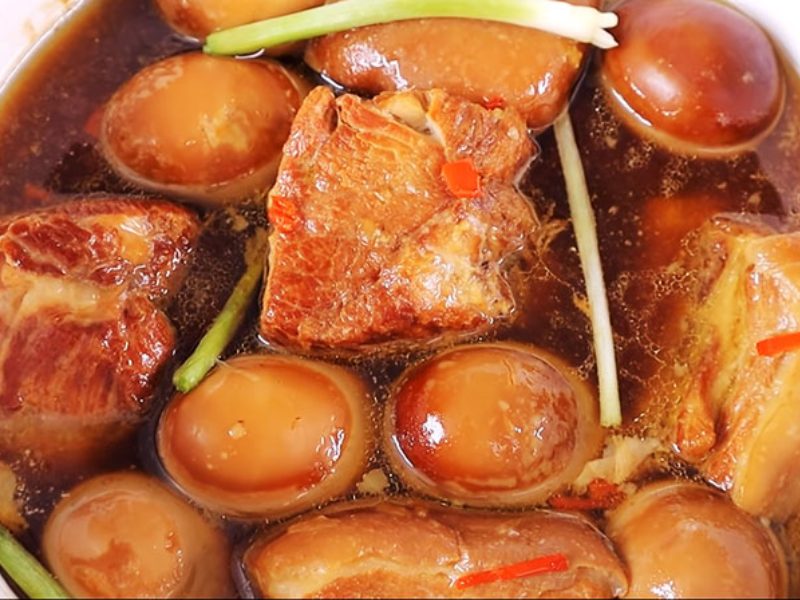
Thit kho tau (Caramelized Pork and Eggs) has become one of the indispensable dishes in the Lunar New Year meals of people in the Mekong Delta in particular and the Southern region in general. It seems to have become a tradition that as Tet approaches, Southerners prepare thit kho tau for the holiday as an...
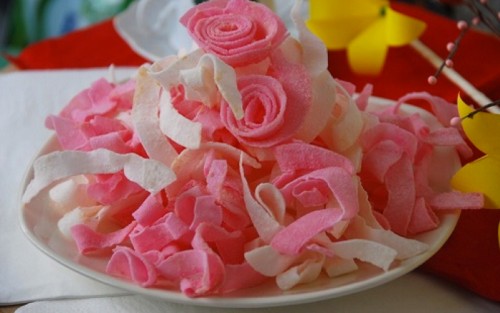
Coconut jam (mứt dừa) is undeniably one of the most familiar treats in the South—so familiar that just mentioning its name instantly brings thoughts of Tết and that unforgettable flavor: the mild richness of coconut, the sweetness of sugar and condensed milk, and the delicate vanilla aroma. When talking about Tết sweets, no one can...
In the past, suckermouth catfish was little known to the public, but nowadays people in the Mekong Delta have become quite fond of this fish. Suckermouth catfish (also known as pleco, algae eater), scientifically named Hypostomus punctatus, is a freshwater fish originating from South America. It was imported by ornamental fish enthusiasts from Hong Kong...
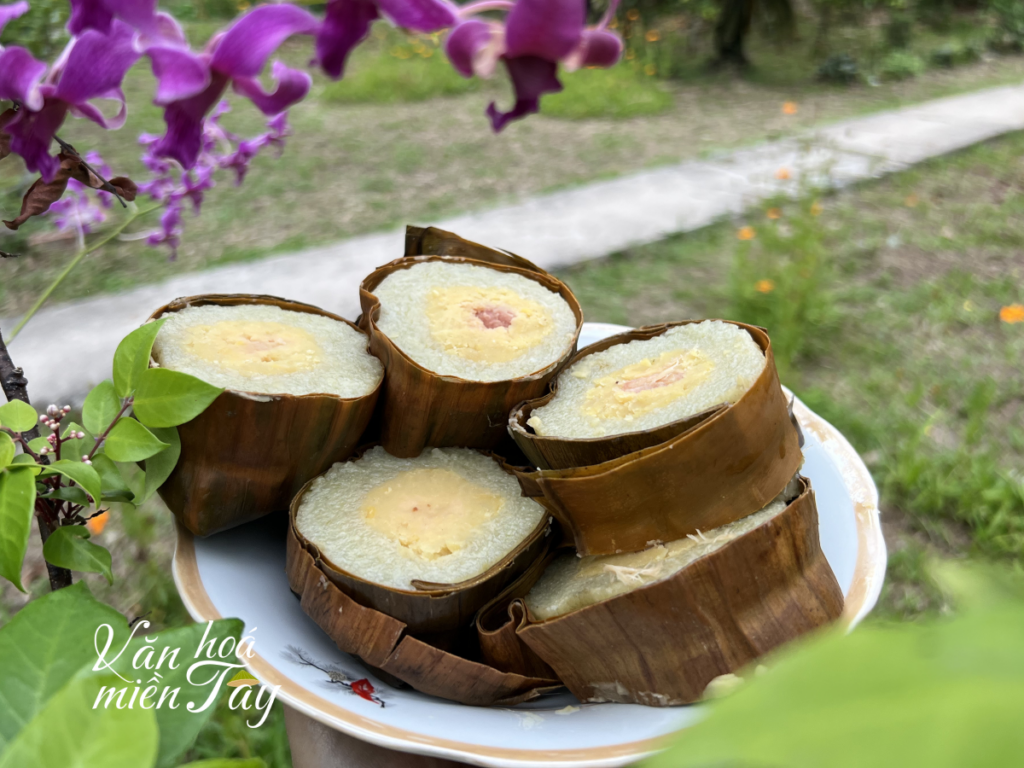
Western Vietnamese Bánh Tét is one of the traditional dishes that embodies the rich cultural identity of Southern Vietnam. It is not only enjoyed during the Lunar New Year (Tết) but is also closely associated with death anniversary ceremonies, ancestor worship, and family gatherings. For the people of the Mekong Delta, each bánh tét is...
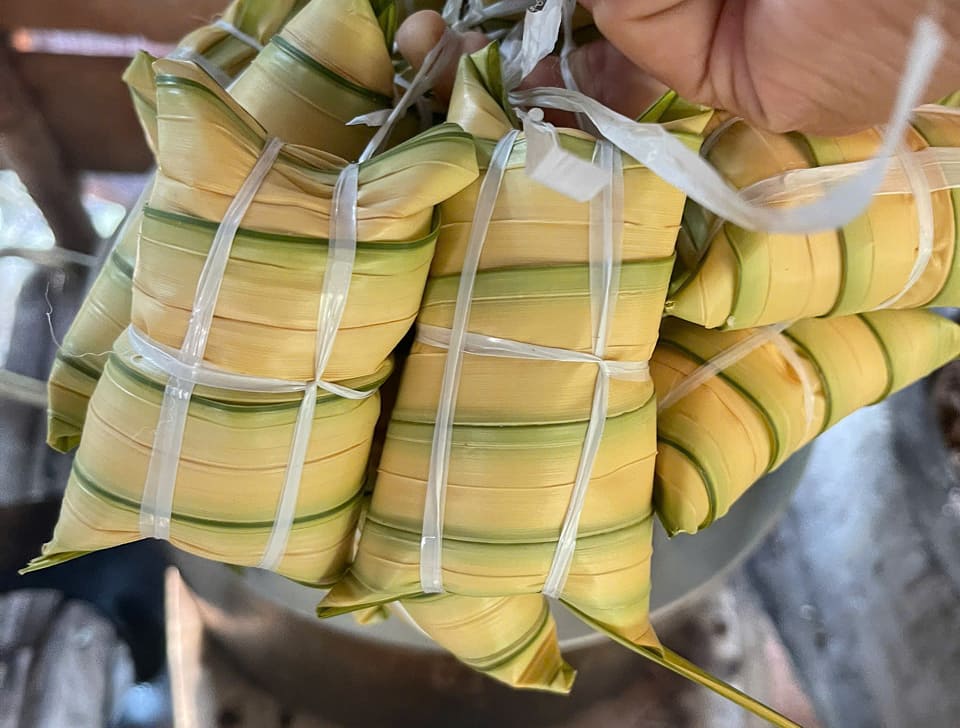
[vanhoamientay.com] Coconut leaf cake – a piece of sticky rice, rich and fragrant with coconut milk, nestled in a coconut leaf rolled up like a spring – has become deeply ingrained in the childhood memories of children in the Southwestern region of Vietnam. Over the years, this childhood treat has become a regional specialty. “Please...
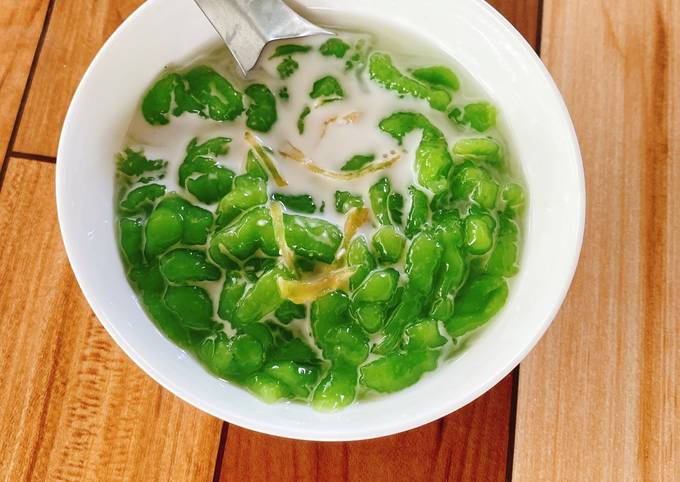
Some dishes that seem very “rustic” have become unique and hard-to-find delicacies in the city. Bánh lọt with coconut milk is a snack that Western Culture would like to mention… On a hot sunny day, enjoying a glass of bánh lọt with coconut milk is simply unbeatable. There are 2 types of bánh lọt that...