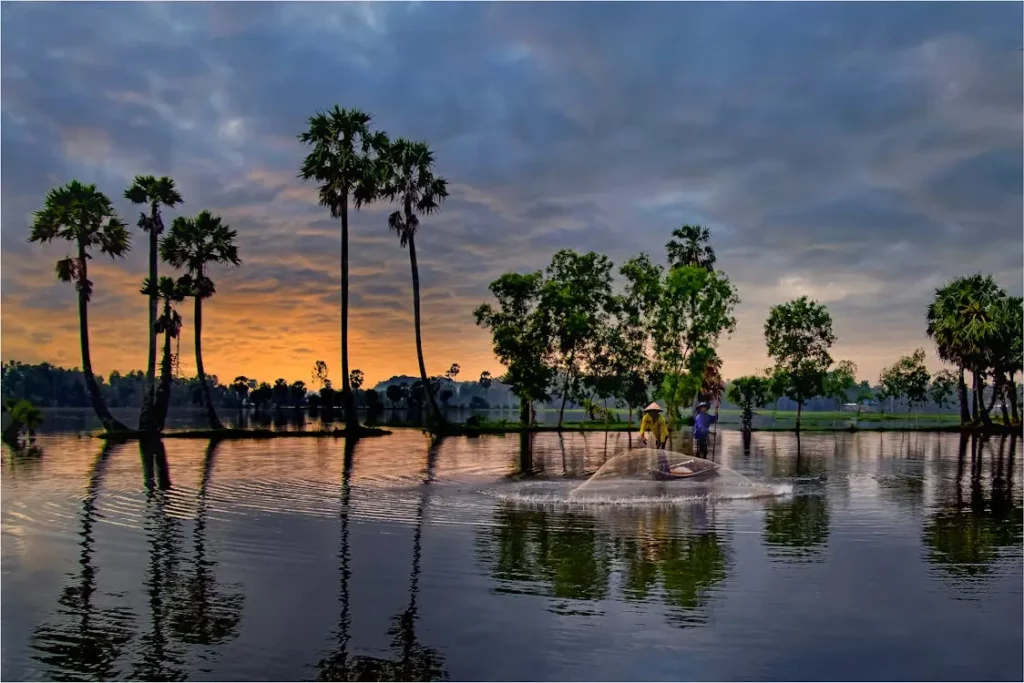
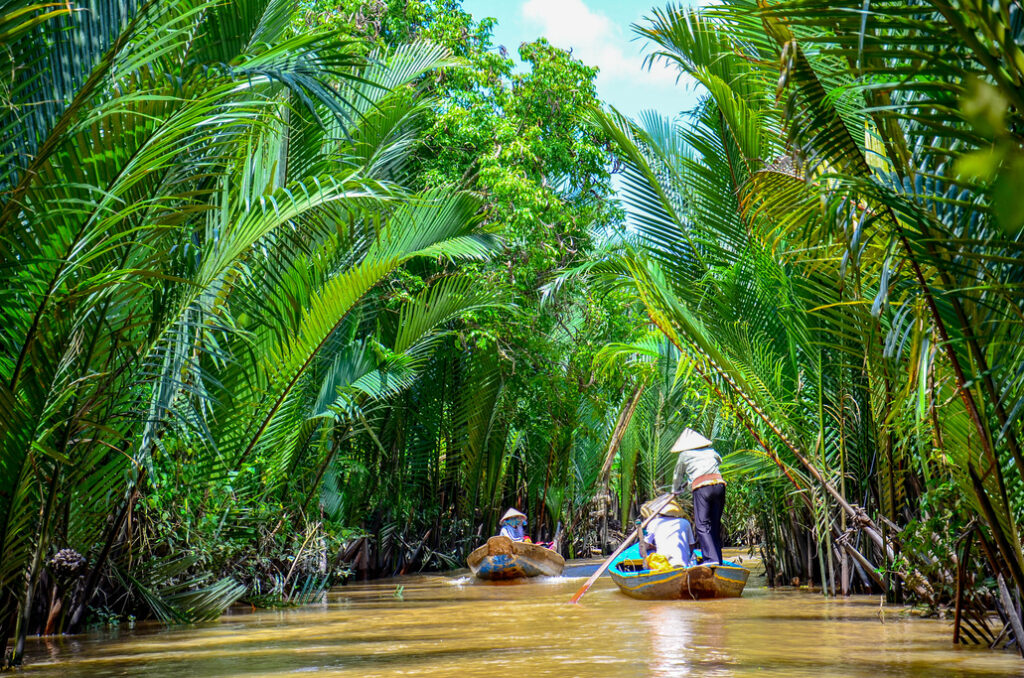
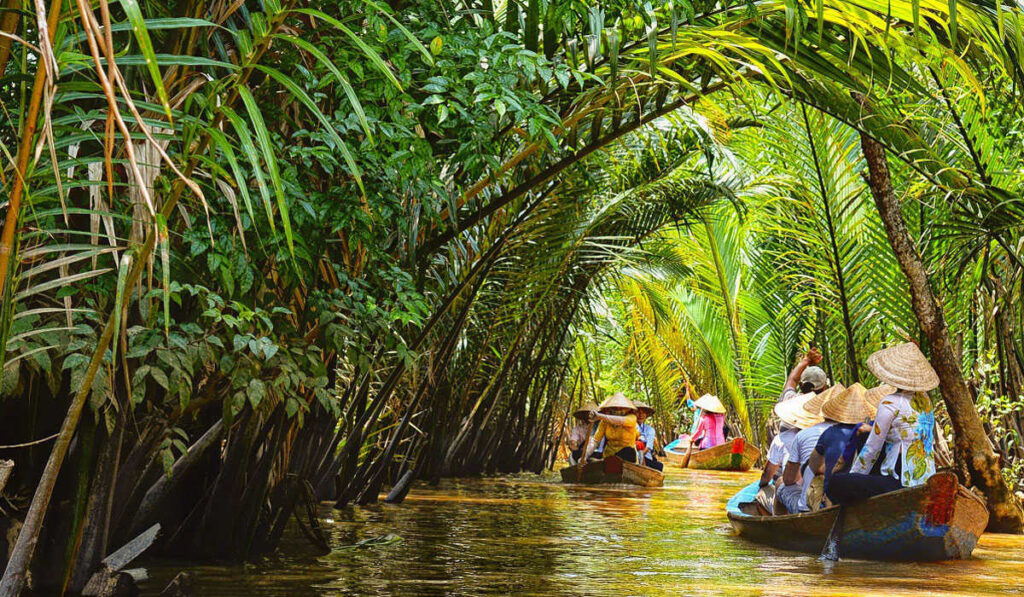
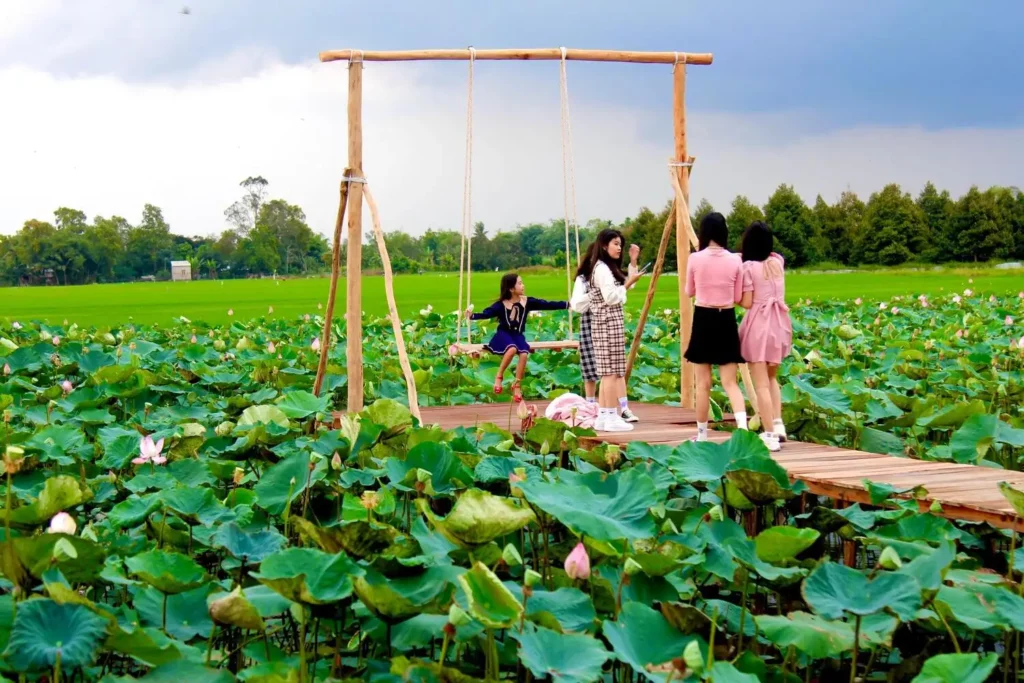
Along the banks of the Ba Lai River, the Vam Ho Bird Sanctuary in Ben Tre is covered by more than 15 hectares of pristine wild date palm forests and rich vegetation.
The Vam Ho Bird Sanctuary ecotourism area covers about 68 hectares in Tan My Commune, Ba Tri District, Ben Tre Province. From Ben Tre City, follow Provincial Road 885 to Ba Tri Town, then turn toward Tan Xuan junction to reach Vam Ho, a journey of approximately 52 km. Vam Ho Bird Sanctuary is a unique ecosystem, typical of coastal mangrove forests at the mouth of the Mekong River, possessing high biological value and potential for ecotourism development.
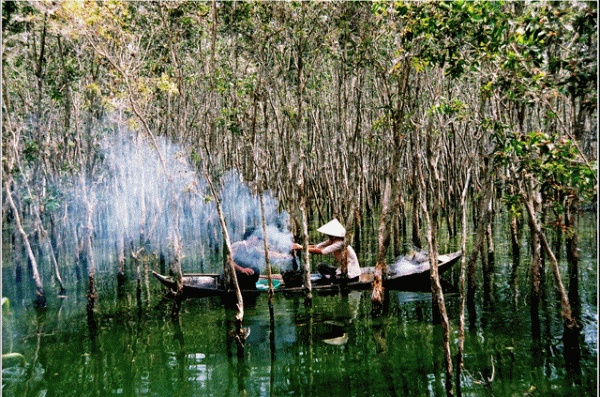
This land has been known for over 100 years as “Cu Lao La” (Leaf Islet). With an average elevation of about 1.2 meters above sea level, Vam Ho is an ideal location for various plant species to thrive, forming a mangrove forest stretch spanning dozens of hectares along the Ba Lai current.
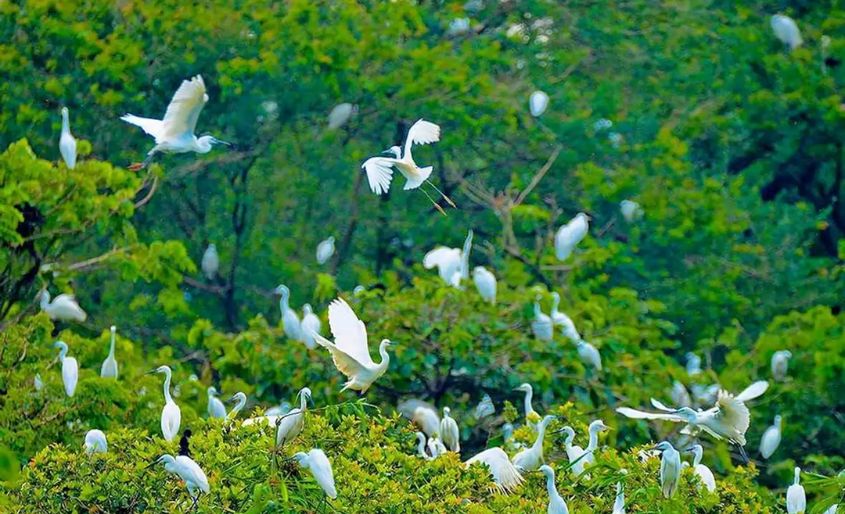
This is the habitat for over half a million birds. Vam Ho Bird Sanctuary hosts about 84 species from 35 families and 12 different orders; the most numerous include white storks, small egrets, night herons, and grey herons. The lower bushes are the world of waterhens, coucals, and drongos, while the ground level is home to wild animals such as bats, civets, snakes, squirrels, and pythons.
Every year during the rainy season, when upstream rains arrive (around the 10th to the 4th month of the lunar calendar), Vam Ho becomes more vibrant than ever. This is the best time for birds to gather and breed. On the tops of wild date palms, nests hang heavy on the branches. In addition to native birds, migratory species from regions like China, Russia, and Australia occasionally stop by to forage and rest on their flight path to the East Sea before continuing their journey.
Visitors here can stroll along forest paths, paddle boats through the mangroves, visit resistance war bases, walk across precarious bamboo bridges, or relax on hammocks swaying among the casuarina trees. After immersing themselves in nature, tourists can enjoy rustic dishes made from shrimp, fish, or turtles freshly caught from the ponds.
During sunset, with the countless sounds of birds returning to their nests, visitors will truly sense the wild life and return to the most natural and pristine ecosystem of the Western region.
According to BenTre