[vanhoamientay.com] Coconut leaf cake – a piece of sticky rice, rich and fragrant with coconut milk, nestled in a coconut leaf rolled up like a spring – has become deeply ingrained in the childhood memories of children in the Southwestern region of Vietnam. Over the years, this childhood treat has become a regional specialty.
“Please buy some coconut leaf cakes.”
This cake is made with really delicious seasonal sticky rice.
He bought them to treat his relatives.
“Your hot, freshly baked cakes are sweeter and tastier than sugar.”
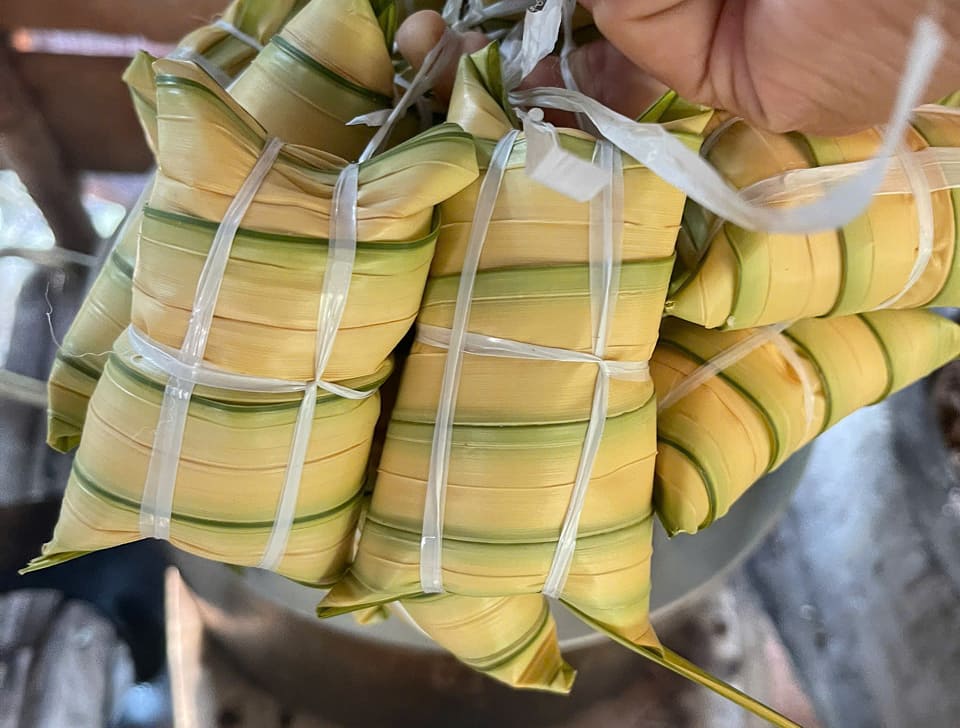
Coconut leaf, the leaf that encapsulates childhood memories.
The names of the cakes in my hometown in the Mekong Delta are very easy to remember; whatever characteristic the cake has or what ingredients it’s made from, that’s what gives it its name, like banana cake or coconut leaf cake.
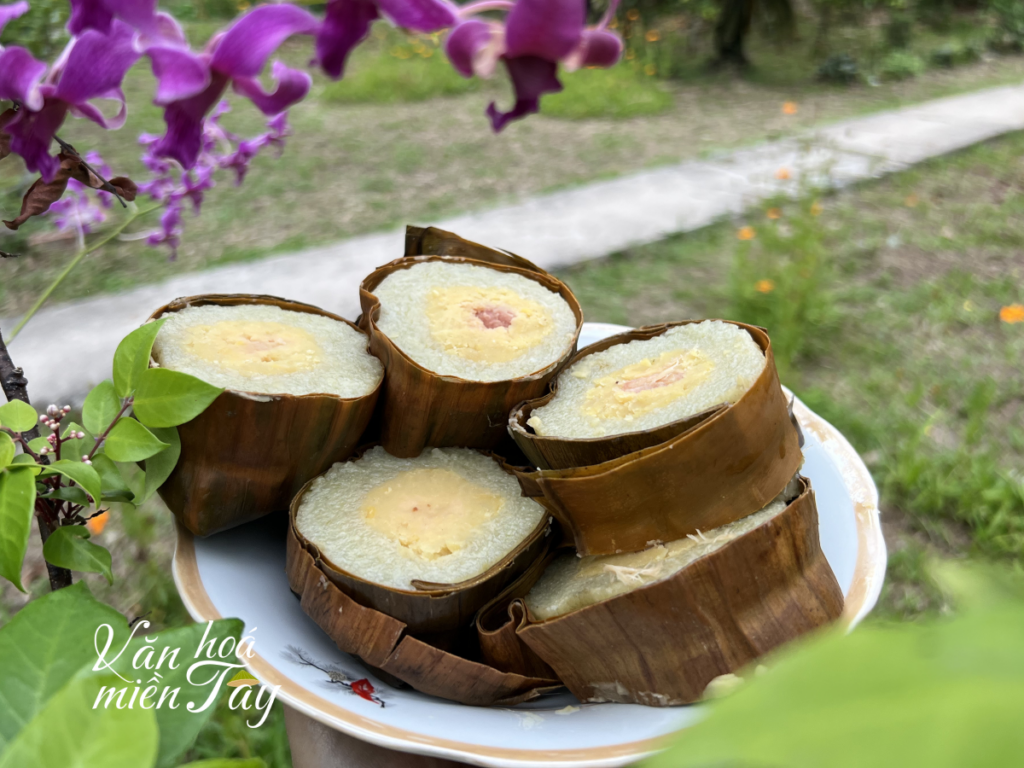
Inside the coconut leaf, rolled up like a spring, is a piece of fragrant sticky rice along with rich, sweet coconut milk. The ingredients for this cake are not too complicated, including sticky rice, mung beans, grated coconut, and bananas for the filling.
It’s unclear when exactly, but along with bánh tét, bánh ít, and bánh ú , bánh lá dừa has become a signature cake embodying the flavors of this fertile alluvial land. Not overly elaborate, bánh lá dừa satisfies diners with its wonderful blend of ingredients.
Coconut leaf cakes are found in most provinces of the Mekong Delta, but to be considered the capital of this cake with its coconut leaf crust, Ben Tre must be called the land of coconuts. When you have the chance to visit the Mekong Delta, you will have the opportunity to enjoy coconut leaf cakes that combine the nutty flavor of beans, the sweetness of bananas, and a subtle aroma of coconut leaves, all blended with the richness of coconut milk and sticky rice, creating an unforgettable experience.
As the name suggests, this type of cake is wrapped in young coconut leaves, or young shoots of water coconut that haven’t yet fully developed into fronds. The coconut leaves chosen must be slightly young and soft for the cake to be fragrant and have a beautiful color. Besides choosing the leaves, selecting the glutinous rice is also extremely important; the chosen type is sticky rice with plump, round grains, which are washed thoroughly and soaked overnight to absorb water.
Mung beans are soaked until the husks loosen, then rinsed clean. Dried coconut, not too old, is grated to extract the flesh, which is then squeezed to make a thick, fragrant, and creamy coconut milk. This milk is then mixed with glutinous rice and stirred briefly to allow the flavors to infuse. Many people also add a little black bean to the glutinous rice to enhance the aroma of the cake.
Depending on personal preference, there are many different fillings such as coconut or banana. Typically, people use mashed coconut mixed with mung beans, cooked until tender, then add scallions and a little salt for flavor, and roll into balls to use as filling. Or, more simply, people use bananas cut in half and marinated with a little sugar as a filling, which is also very delicious.
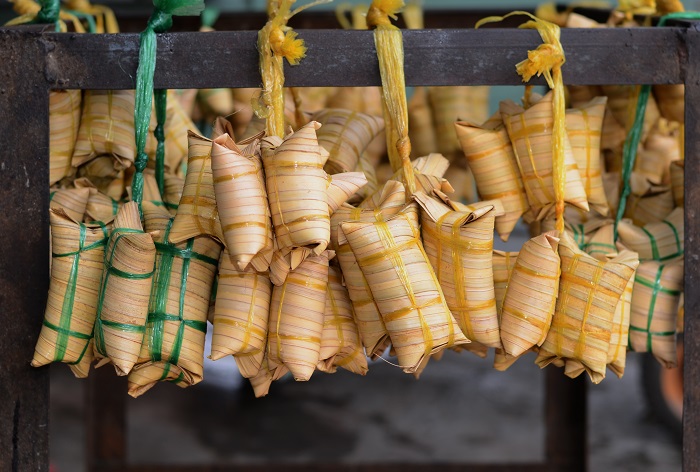
When wrapping the rice cakes, don’t wrap them too tightly, otherwise they won’t cook evenly. If you wrap them too loosely, they’ll absorb too much water, become soggy, and taste unpleasant. Before placing them in the pot, the rice cakes are tied tightly together in bunches.
Each cake is nearly a handspan long and about the size of a cucumber. The banana-flavored cakes are tied with green string, while the bean-filled ones are tied with yellow string for easy identification. People often add a layer of coconut leaves to the bottom of the pot when boiling to prevent the cakes from burning and to infuse the sticky rice with the fragrant aroma of fresh coconut leaves.
Coconut leaf cakes can be served hot or cold, depending on personal preference. When eaten, the cake has a slightly salty taste from the salt, the richness of the coconut, the chewiness of the glutinous rice, the nuttiness of the beans, combined with the unique flavors of each filling and the fragrant aroma of glutinous rice. All these elements blend together, allowing the eater to experience the elegant and rustic taste of the cake.
After cooking, the coconut leaf cakes are removed from the pot and hung to drain. Because they are tightly wrapped, they can be stored for 2-3 days without spoiling. With a relatively low price of only about 5,000 VND per cake, coconut leaf cakes from the Mekong Delta in general and Ben Tre in particular have become a popular, affordable, and delicious local delicacy. When you eat them, you’ll experience the rich, creamy taste of coconut, the fragrant aroma of sticky rice, and the nutty flavor of beans, combined with various fillings to create an unforgettable dish.
Besides being sold commercially, coconut leaf cakes are also made at home. Whenever they craved them, children would follow their parents to cut coconut leaves to make the cake wrappers, then soak the sticky rice and beans, prepare a large pot, put it on the stove, and wait patiently. From these beautiful childhood memories, coconut leaf cakes have become a food of nostalgia for many people from the Mekong Delta.
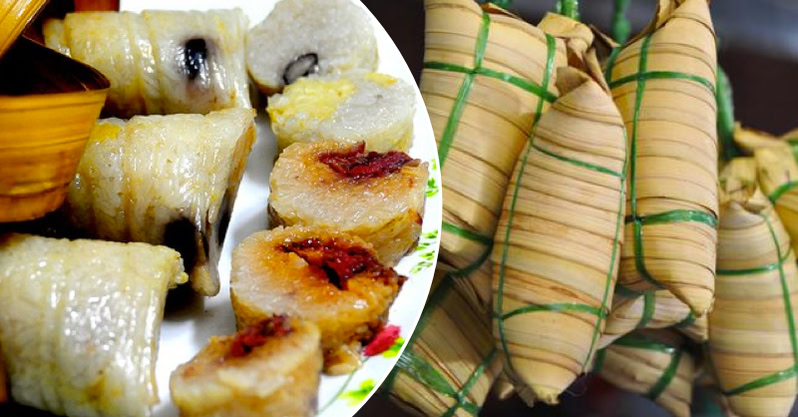
Wrapping coconut leaf cakes is a simple task, yet it requires skill. Young coconut leaves, after being washed, are gently heated over a fire to soften them, then folded into small funnel or triangle shapes that fit comfortably in the hand.
The person wrapping the cake carefully scoops the batter into the center of the leaf, ensuring there’s just enough so the cake doesn’t overflow during steaming. Then, the edges of the leaf are neatly folded and pressed tightly to keep the cake sealed and looking nice.
The children huddled around the stove, some adding firewood, others fanning the flames, their eyes constantly fixed on the bubbling pot of rice cakes. Occasionally, giggles would erupt as one of them eagerly asked if the cakes were ready yet.
The moment spent tending the fire while waiting for the bread to bake was not just about waiting for a batch of fragrant bread, but also about waiting for the simple, innocent joy of childhood by the hearth in the countryside.
This cake originated in the rustic countryside, where coconuts grow abundantly and are closely intertwined with the lives of the people. Using readily available rice flour and fresh coconut, the villagers created this simple cake for everyday consumption, at local markets, or during family gatherings. It’s unclear exactly when coconut leaf cake first appeared, but it’s known that over generations, this cake has become a familiar part of folk cuisine, carrying the flavors of the countryside and the imprint of simple life.
Childhood memories of the 80s and 90s generations
For us, the children of the 80s and 90s generations, the image of our grandmother or mother sitting by the stove, her hands nimbly wrapping dumplings, is probably still vividly imprinted in our memories. The children sat around the fire fan. The rich, creamy aroma of coconut milk blended with the scent of coconut leaves as the cake baked filled the house, creating a cozy feeling that I only remembered fondly when I grew up.
The gentle sweetness of bananas, the light creaminess of coconut… simple, unpretentious, yet enough to make childhood memories complete.
Growing up, we went through many changes. Modern cakes and pastries are becoming increasingly diverse, visually appealing, and elaborate. However, amidst countless new and exotic flavors, coconut leaf cake still holds a very special place in our memories. It’s not just a dish; it’s a symbol of a slower pace of life, of family bonds, of days of scarcity but filled with love.
Perhaps that’s why, whenever one comes across coconut leaf cakes somewhere, on a small roadside stall – their heart suddenly feels calm. It’s just a simple cake, but it’s enough to transport us back to childhood, to carefree days, where happiness was sometimes just a warm, steaming coconut leaf cake in our hands.