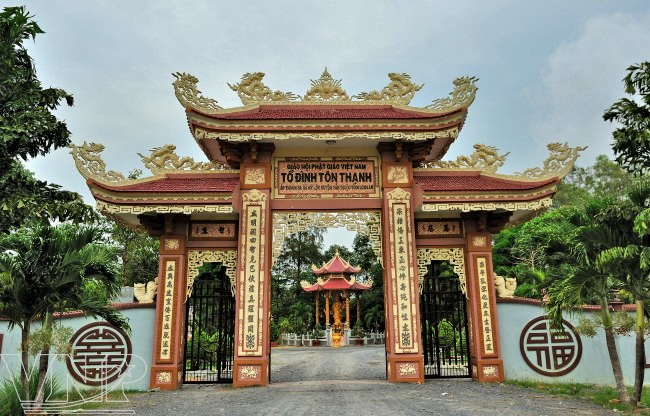
Tôn Thạnh Pagoda is the oldest pagoda in Long An Province, and it was here that the great poet Nguyễn Đình Chiểu once lived, wrote poetry, practiced medicine, and composed the heroic work “Văn tế Nghĩa sĩ Cần Giuộc” (Funeral Oration for the Martyrs of Cần Giuộc).
Long An is a land imbued with the distinctive characteristics of the Mekong Delta river region, featuring vast fields and lush orchards nourished by the alluvial deposits of the Vàm Cỏ Đông and Vàm Cỏ Tây rivers.
It can be said that Long An is an ideal destination for visitors, as this area possesses a cultural foundation that was formed and developed very early in the Mekong Delta, from the 1st to the 6th century AD. This is the Óc Eo culture of the ancient Kingdom of Phù Nam, strongly influenced by the essence of Indian civilization.
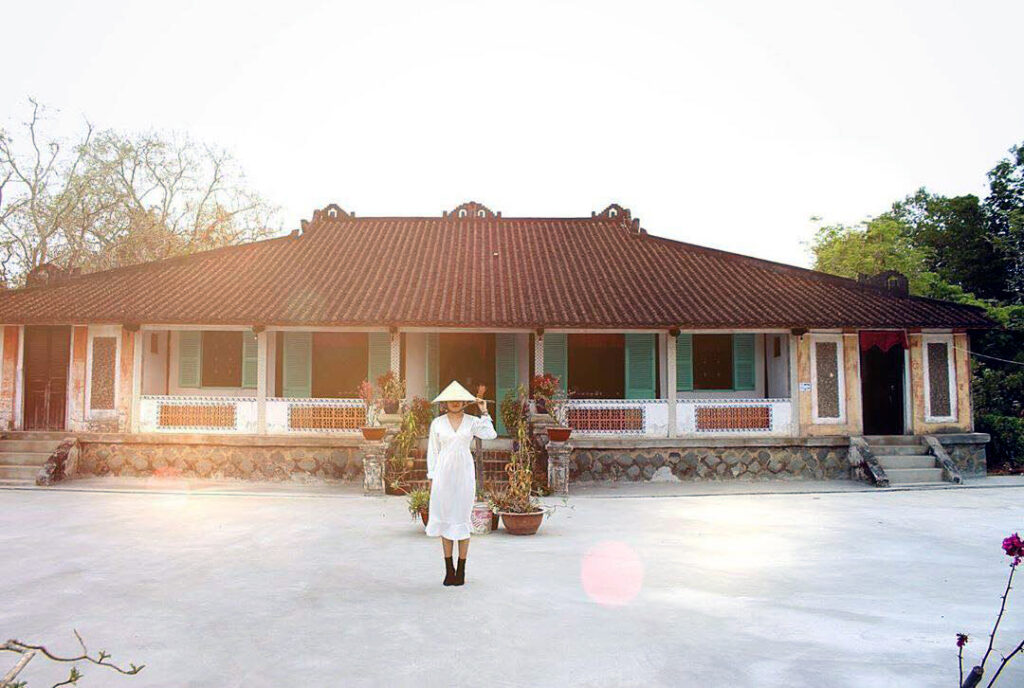
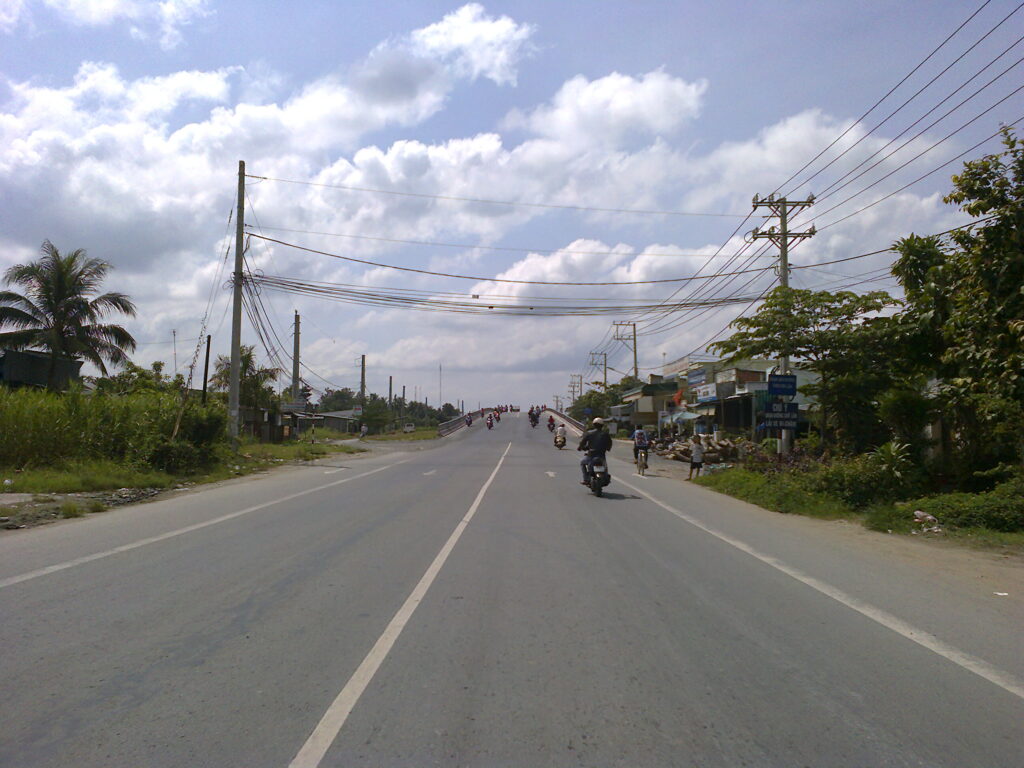
Tôn Thạnh Pagoda is located on Provincial Road 835, about 3 km from the center of Cần Giuộc District, Long An. From the outside, it appears as simple and modest as many other pagodas. However, few people know that this is the oldest pagoda in Long An Province, and it was here that poet Nguyễn Đình Chiểu lived, wrote poetry, practiced medicine, and created the heroic “Văn tế Nghĩa sĩ Cần Giuộc”.
Tôn Thạnh Pagoda is closely associated with the history of resistance against the French. Originally named Lan Nhã, it was founded in 1808 by Zen Master Viên Ngộ.
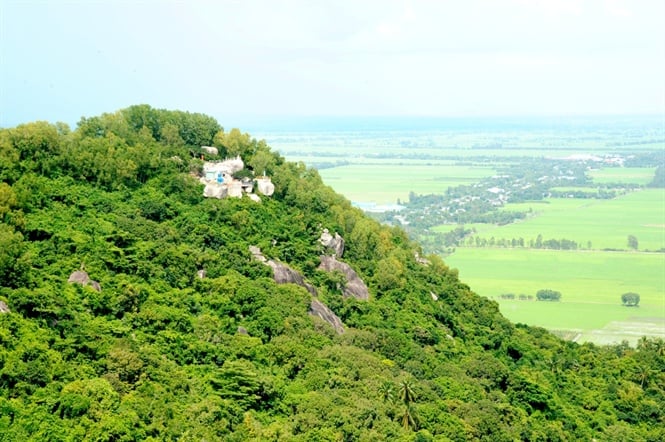
This ancient pagoda lies hidden within a lush green forest. The path leading to the pagoda is a long, straight stone-paved road, lined on both sides with colorful ornamental plants. After walking a few hundred meters, on the right-hand side you will see the solemn memorial stele of Nguyễn Đình Chiểu.
“At Tôn Thạnh Pagoda, the night watches grow cold and deep, A loyal heart entrusts itself to the light of the full moon.
At Dinh Lang Sa, in but half an hour to cleanse one’s grief, A fragile fate drifts away with the flowing water.
How painful it is: an aged mother sits crying for her child, A midnight lamp flickers faintly in the humble hut.
How mournful it is: a frail wife runs searching for her husband, The late afternoon shadows waver before the gate…”
Further inside the garden stands a three-tiered hexagonal tower, 4.5 meters high, which is the resting place of Patriarch Viên Ngộ. According to historical accounts, the pagoda initially followed a “Tam” (three-section) architectural layout. After many renovations, it now adopts a “Đinh”-shaped layout, covering an area of 940 m2 within a total compound of approximately 33,410 m2.
After enduring many historical upheavals, Tôn Thạnh Pagoda today no longer retains the former splendor of magnificent beams and gilded columns. Instead, its architectural complex now includes the front hall, main hall, lecture hall, east wing, and west wing, all with tiled roofs and brick walls. Nevertheless, the pagoda still preserves its ancient character through its system of four-symbol columns, the altar of the main hall, Buddha statues dating back to the early 19th century, as well as lacquered and gilded horizontal boards, couplets, and Chinese characters.
Those who visit Tôn Thạnh Pagoda often feel as if their hearts are laid bare along the long path of history. Nearly 200 years have passed, yet the image of the young Zen Master Viên Ngộ, who single-handedly reclaimed wilderness and created a peaceful life for the diligent people of Cần Giuộc, remains vivid. He was a figure who contributed to the development of marketplaces, improved transportation, and lasting prosperity, forever a source of pride for the people of Long An and Cần Giuộc.
Visiting Tôn Thạnh Pagoda means returning to a historic landmark of old Gia Định, lighting a stick of incense in remembrance before the stupa of the venerable monk Viên Ngộ, and honoring the memory of poet Nguyễn Đình Chiểu, who once stayed here to write immortal literary works. Such a journey will surely be both meaningful and rewarding for visitors.
Source: longangov