The chopping board plays an important role in creating delicious family meals, and to have such quality chopping boards, we must mention the village that produces them: Định An chopping board craft village in Đồng Tháp.
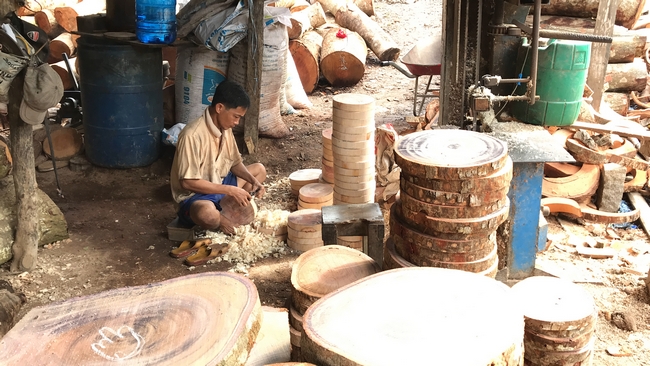
The chopping board making profession in An Hòa Hamlet, Định An Commune, Lấp Vò District operates year-round. For over 60 years, this place has formed a specialized village making wooden chopping boards. It is a hereditary craft passed from father to son.
When it first emerged, the chopping boards here were made from mù u wood, a very durable type of wood that often grows wild along riverbanks. Mù u wood is the most suitable for chopping boards because when chopping or mincing, the board does not get shredded or leave black marks. However, today the raw material for chopping boards is usually xà cừ (rain tree) or me (tamarind) wood.
To produce one chopping board, artisans must go through many steps such as segmenting the log, cutting the board, marking lines, rough shaping, carving, smoothing, planing the surface… In the early days, these steps were done manually, which was time-consuming and laborious—two people could only make 10–15 boards per day. Since the introduction of machines like saws, cutters, and electric planers, productivity has increased many times over.
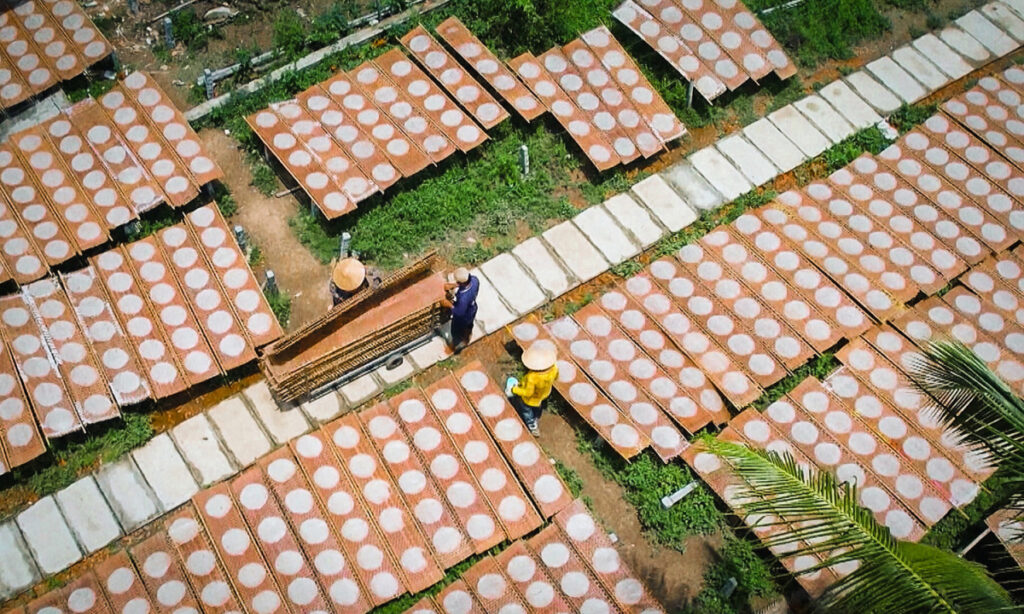
When visiting the Định An chopping board craft village, tourists always see a bustling scene with the sounds of saws, chisels, and machine operations. Some pull carts, others sun-dry the boards, with more than a dozen households practicing the craft along National Highway 54.
According to experienced people in the chopping board craft village, to make a good board, one must select old wood trees, dry them to remove resin, cut them into pieces, and sun-dry them to prevent mold.
Despite the difficulties and hardships, for more than several decades, the people of An Hòa Hamlet, Định An Commune have diligently continued this profession because it is both a source of income and a traditional craft.
In these months, around the 9th lunar month when the floodwaters begin to recede, the Định An chopping board village becomes lively again with the sounds of saws, chisels, and machines. Everyone is excitedly preparing to produce many types of chopping boards for wholesalers to sell during Tết (Lunar New Year).
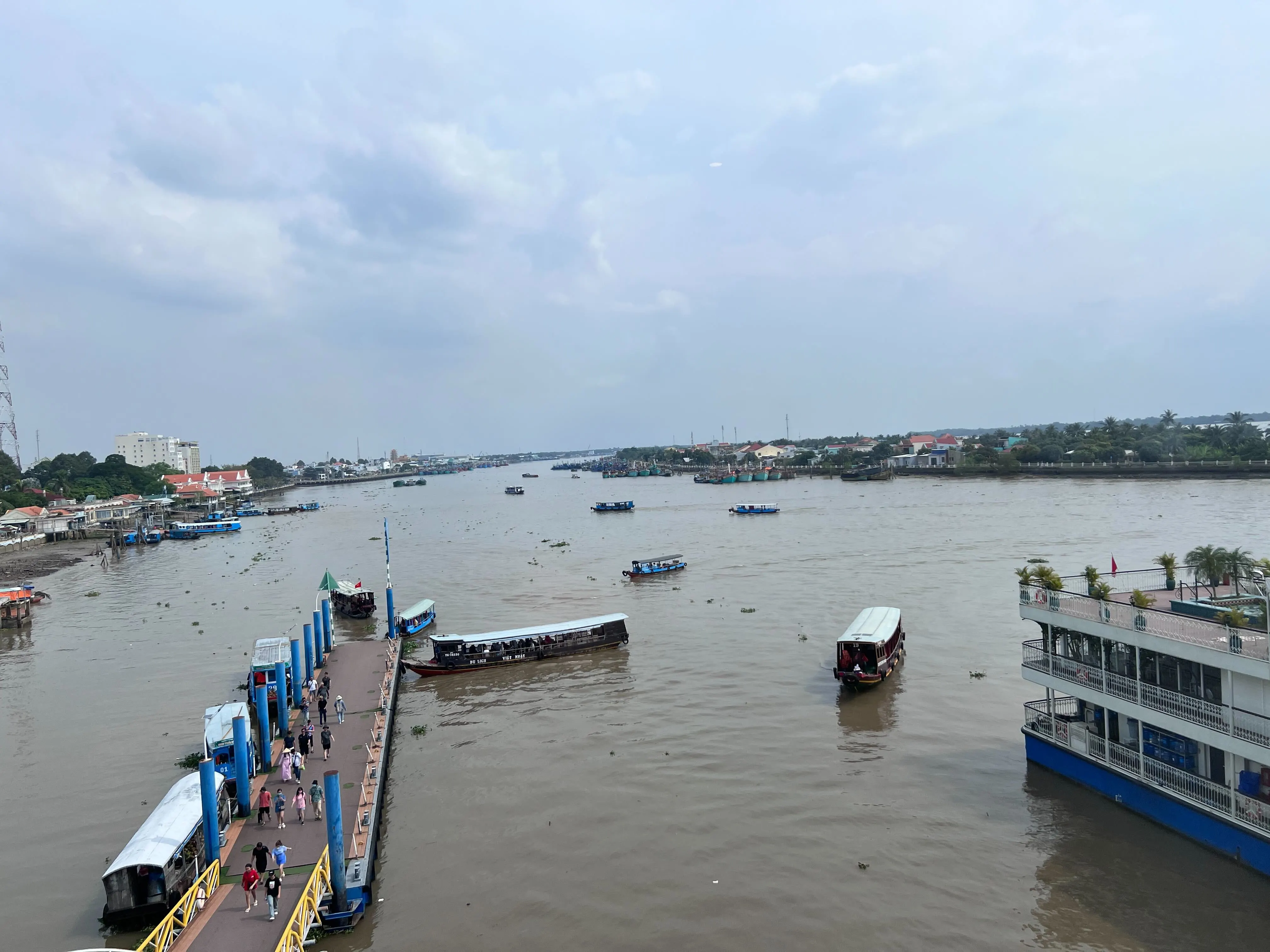
The section of National Highway 54 running along the Hậu River has a always cool atmosphere, with lush green scenery—making it a very suitable route for cycling tours to explore the craft village and experience the peaceful life of the Southern countryside.