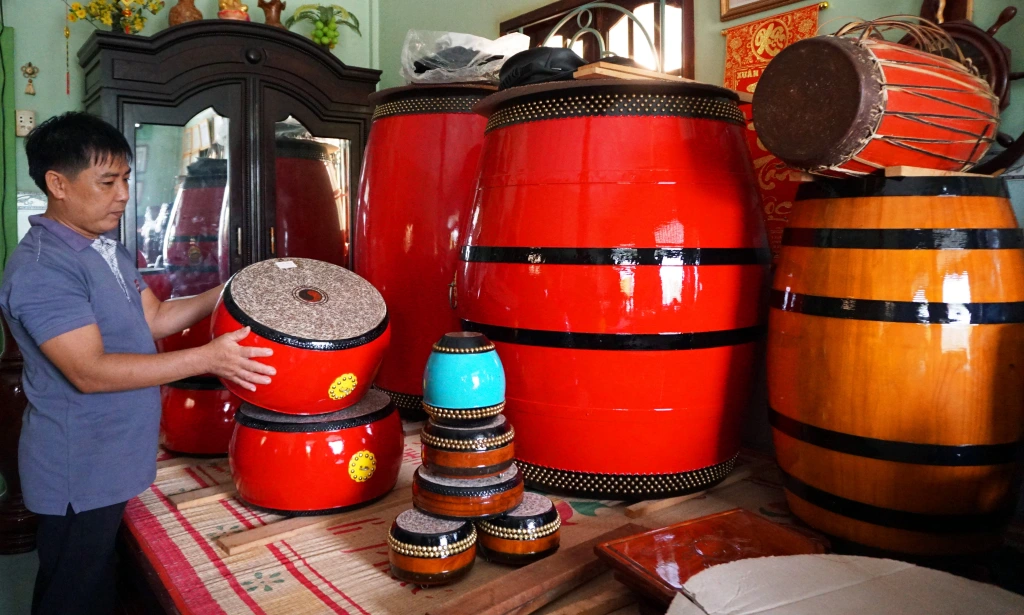
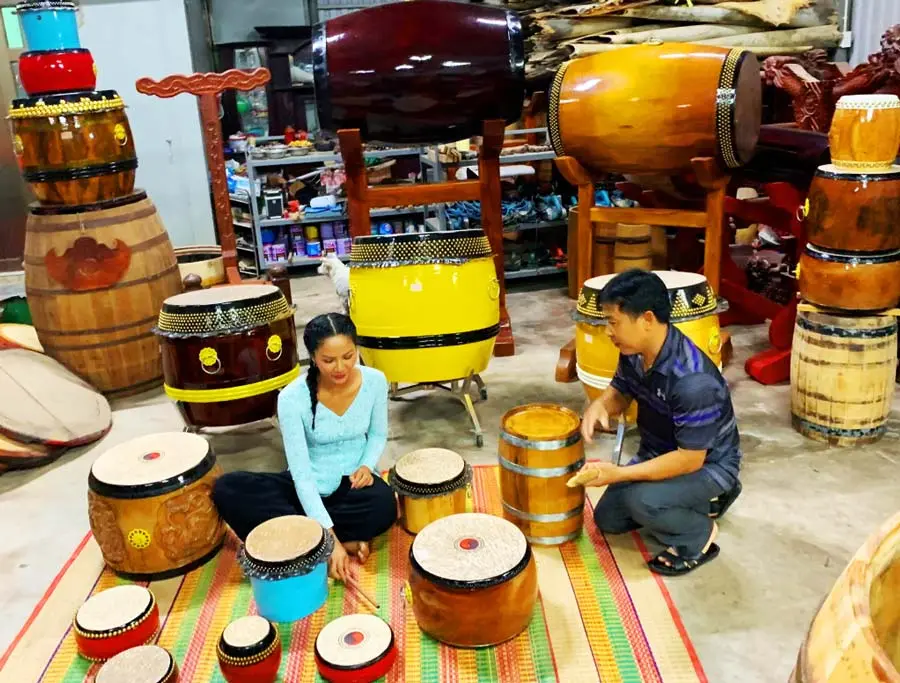
Long AnBình An Drum Village is known as the only drum-making village in Southern Vietnam.
Making a drum requires more than 20 stages, and the craft demands physical strength,
carefulness, and meticulous attention to every detail.
Bình An Drum Village – the only drum-making village in Southern Vietnam
In Vietnam, drums can be found almost everywhere—from communal houses, pagodas, temples,
and schools to traditional theater troupes and lion dance teams.
For many years, drums have been closely associated with the nation’s cultural activities
and folk beliefs.
If you have a chance to visit Long An Province, remember to stop by Bình Lãng Commune,
Tân Trụ District. This is home to Bình An Drum Village, a place that produces and supplies
the “only” drums in Southern Vietnam—an outstanding cultural highlight of the Southwest region
and a distinctive feature of Long An’s tourism.
Although considered a relatively new tourist destination, Bình An Drum Village has quickly
become a popular cultural attraction, drawing many visitors.
The Only Drum Craft Village in Southern Vietnam
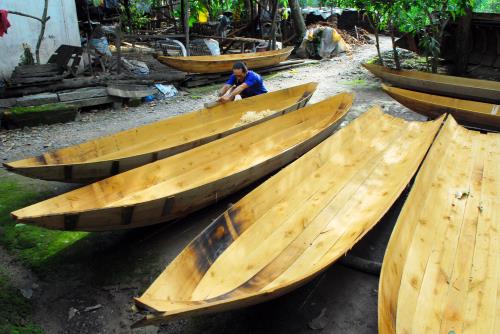
The first impression when visiting Bình An Drum Village is the sight of sao wood planks
and bamboo molds drying in the yard alongside buffalo hides stretched tightly over large frames.
The village is believed to have been formed nearly 200 years ago.
The person credited with developing the drum-making craft here was Mr. Nguyễn Văn Ty.
Most villagers have practiced this trade for decades, passing it down from generation to generation.
The only drum craft village in Southern Vietnam
In the past, Mr. Ty owned a fishing boat and traded fish sauce from Long An to the Mekong Delta.
During his trading trips, he noticed that along the Vàm Cỏ River, many people slaughtered buffaloes
and discarded the hides. Seeing this, he brought the buffalo hides home, dried them,
and experimented with making drums.
After Mr. Ty passed away, his descendants continued the craft.
Initially, drum-making was merely for entertainment, but later generations began producing drums
for commercial purposes.
Artisans then invented methods using scaffolding and wooden frames as tools to stretch drum skins.
Drum bodies were made from high-quality sao wood to ensure durability.
The drums were painted red and designed with an attractive appearance.
The drum body is made from high-quality sao wood to ensure durabilityBình An Drum Village
Despite ups and downs, the drum-making craft in Bình An has survived thanks to artisans
who are deeply devoted to their trade.
Today, sourcing materials—especially aged buffalo hides—has become more difficult,
yet local workshops still strive to preserve the traditional craft passed down by their ancestors.
Drum-making requires strength, precision, and meticulous attention to detail.
With swift hands, the artisan tightens the ropes after each strike,
gradually stretching the hide to its maximum tension.
When struck firmly with a mallet, a deep “thump” sound signals a perfectly tuned drum.
Making a drum involves more than 20 stages.
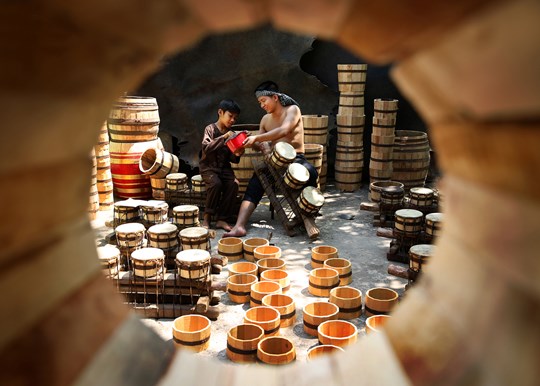
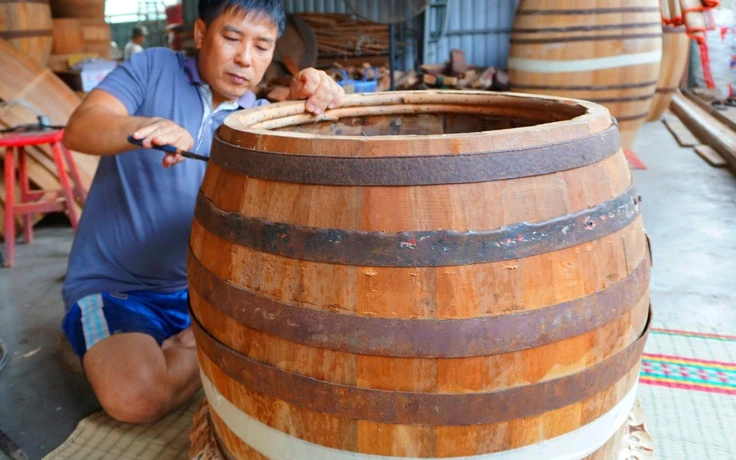
To ensure durability, sao wood must be carefully selected.
The wood is dried, measured, cut, bent, and treated against termites before being assembled.
Each plank must be skillfully joined so that no gaps remain.
The most difficult stage is stretching and fitting the buffalo hide.
The drum-making craft in Bình An survives thanks to devoted artisans
After being processed, buffalo hides are sun-dried thoroughly.
In the past, hides were stretched using ropes tied at four corners,
but today steel frames are used to prevent tearing.
To produce a clear and resonant sound, the hide must be carefully shaved before being stretched onto the drum.
Bình An drums are not only durable and visually appealing with diverse designs,
but their sound is also deeper and more resonant than many other drums.
The skillful wood-joining techniques and secret hide-processing methods create
the unique character of each Bình An drum.
The sound of these drums has traveled far—and it is this very sound
that draws visitors closer to the craft village.
It is hoped that Bình An Drum Village will become a well-known destination,
where visitors grow to love the sound of Bình An drums
as well as the talented, sincere, and gentle people of this land of drums.
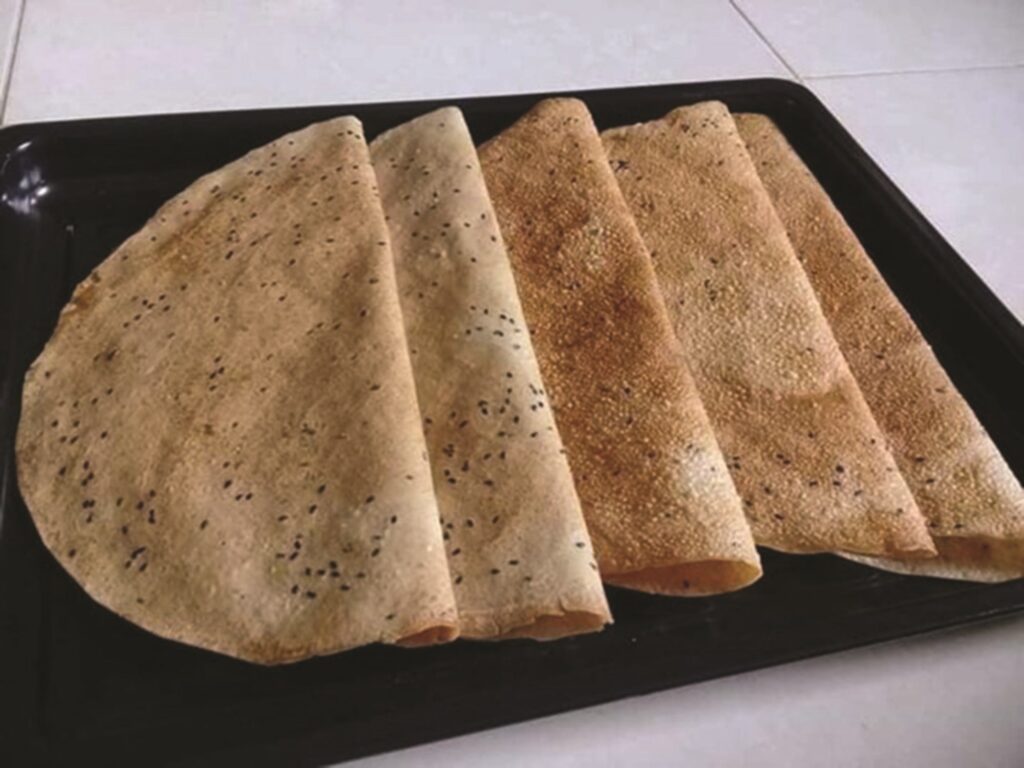
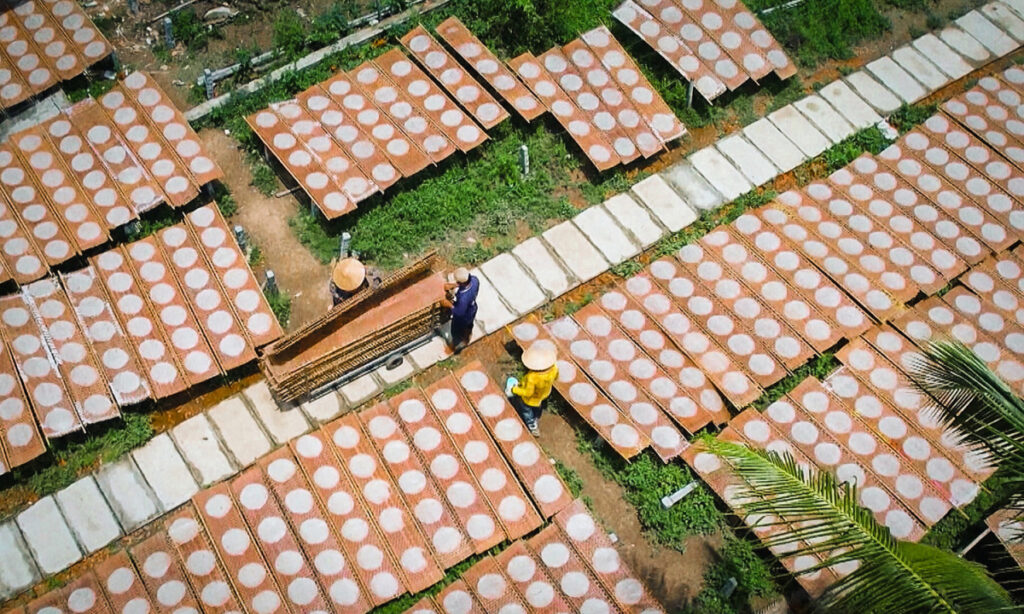
For a long time, the image of rice paper and puffed rice cakes from the famous craft village of Giong Trom district, Ben Tre province, has been quite familiar to tourists near and far. These simple cakes have offered the world sweet flavors, imbued with the love of people, land, and homeland. So when we are far away, every time we eat these cakes, we will feel the overflowing nostalgia for our homeland.
When mentioning mats, people in southern Vietnam often think of the once-famous Cà Mau mats. However, there is a traditional craft village that has created a mat brand no less renowned than Cà Mau mats, namely the traditional mat-weaving village of Long Định Commune (Châu Thành District, Tiền Giang Province). For those who have ever...
The bustling atmosphere of the days leading up to Spring, combined with the unique natural scenery of the Cai Mon flower and ornamental plant village, will bring you unforgettable experiences. Coming here, you will fully embrace the “miet vuon” (orchard) cultural space with ancient traces of the “Six Provinces of Southern Vietnam” (Nam Ky Luc...
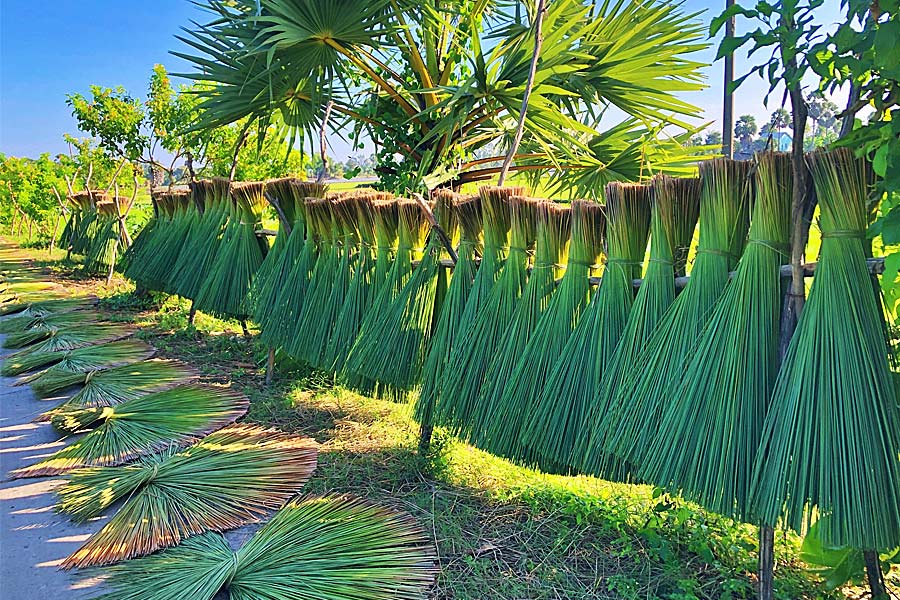
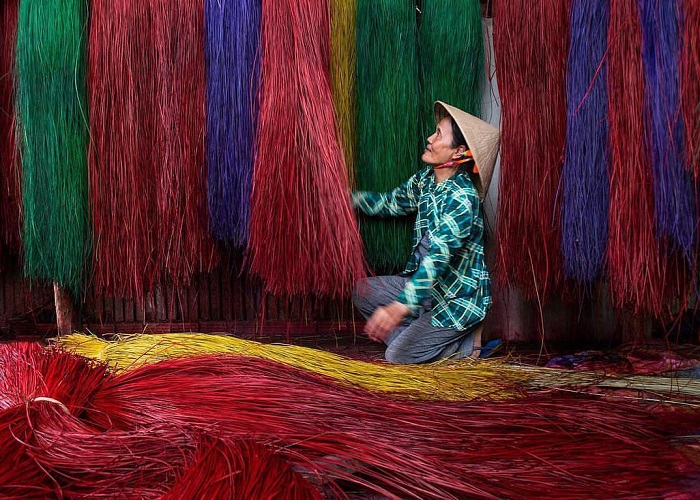
The craft of weaving sedge grass has existed in Tan Phuoc district for a very long time. Under the skillful hands of the artisans, many beautiful and valuable products such as mats, bags, hats, etc., have been created from sedge grass.
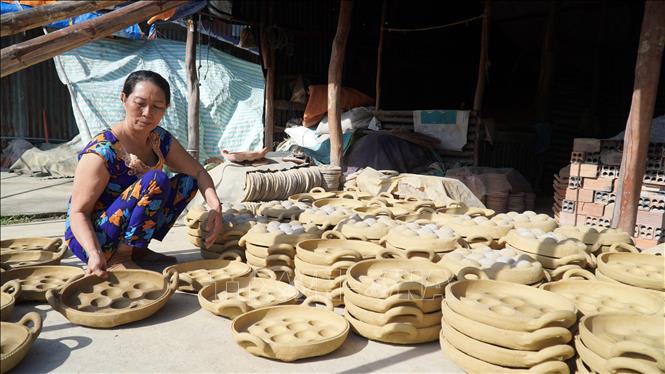
While many traditional craft villages are gradually fading away due to the replacement brought by technological advancements, the clay pot–shaping village in Hon Dat District, Kien Giang stands out as a particularly interesting exception. Located in the center of Hon Dat District, this traditional clay pot–shaping village has played an important role in preserving traditional...
The highlight of the Tri Tôn pottery village is that they do not use a potter’s wheel or apply any technical means. It is purely done by hand with innate experiential skills. Visiting Tri Tôn in An Giang Province and seeing with your own eyes the An Thuận pottery village of the Khmer people—locally called...
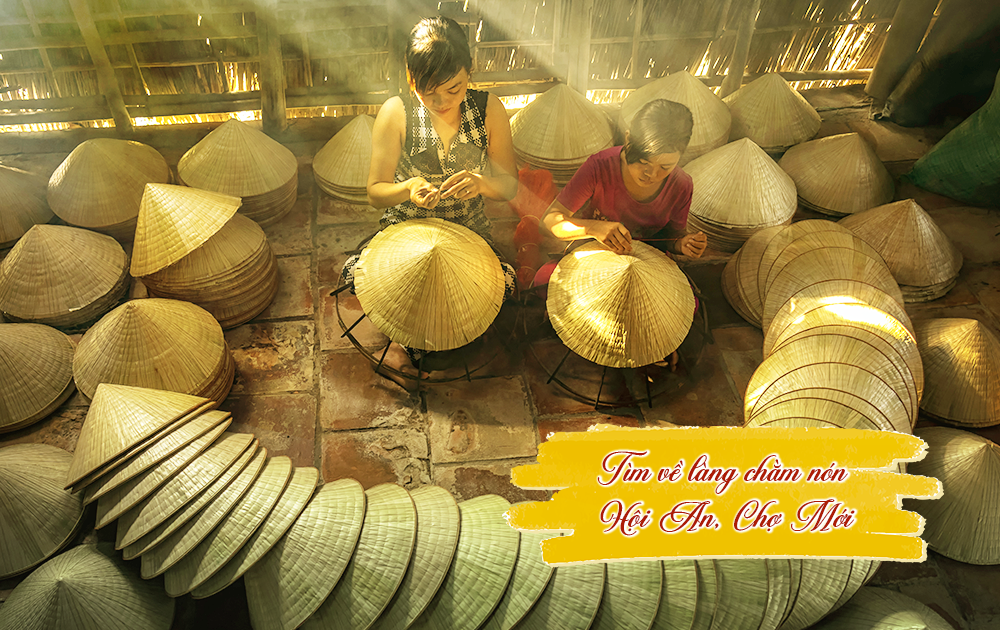
In Hoi An commune, Cho Moi district (An Giang), local people still diligently sew each conical leaf hat under simple roofs beside bamboo groves and canals. Neither noisy nor ostentatious, An Giang’s craft villages persist through the endurance of hands and memories. Each hat is the result of many stages and many households, crafted with...
Thuận Hưng rice paper craft village (Thốt Nốt – Cần Thơ) has more than 300 kilns producing rice paper day and night, yet still cannot meet the orders placed by traders. Thuận Hưng rice paper is no longer confined to the Mekong Delta provinces but has also reached and become popular in the Cambodian market....
Beyond the lush beauty bestowed by nature, Cần Thơ is also known for its rich diversity of traditional craft villages that have been passed down through many generations. One of these is the traditional conical hat–making village… The conical hat–making village in Thới Tân A Hamlet has no clear record of when it first appeared...
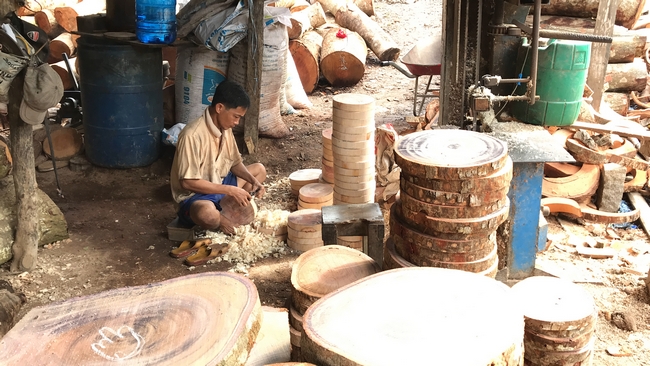
The chopping board plays an important role in creating delicious family meals, and to have such quality chopping boards, we must mention the village that produces them: Định An chopping board craft village in Đồng Tháp. The chopping board making profession in An Hòa Hamlet, Định An Commune, Lấp Vò District operates year-round. For over...
Mats have always been closely associated with the lives of Vietnamese people, and Vietnam has many famous mat-weaving craft villages, with Cà Mau being one of the provinces that is home to many representative mat-weaving villages. Not only is Cà Mau the homeland of rice fields, orchards, and prosperous rural villages, it is also well...