Long Xuyen broken rice is one of the culinary highlights of An Giang, familiar to the people of the Mekong Delta yet intriguing to tourists for its meticulous attention to detail. More than just fragrant broken rice grains, this dish carries the story of rural life in the Mekong Delta across generations. This article will help you explore Long Xuyen broken rice, from its history and the meaning of its name to its preparation and interesting lesser-known details.
The Origins of Long Xuyen Broken Rice
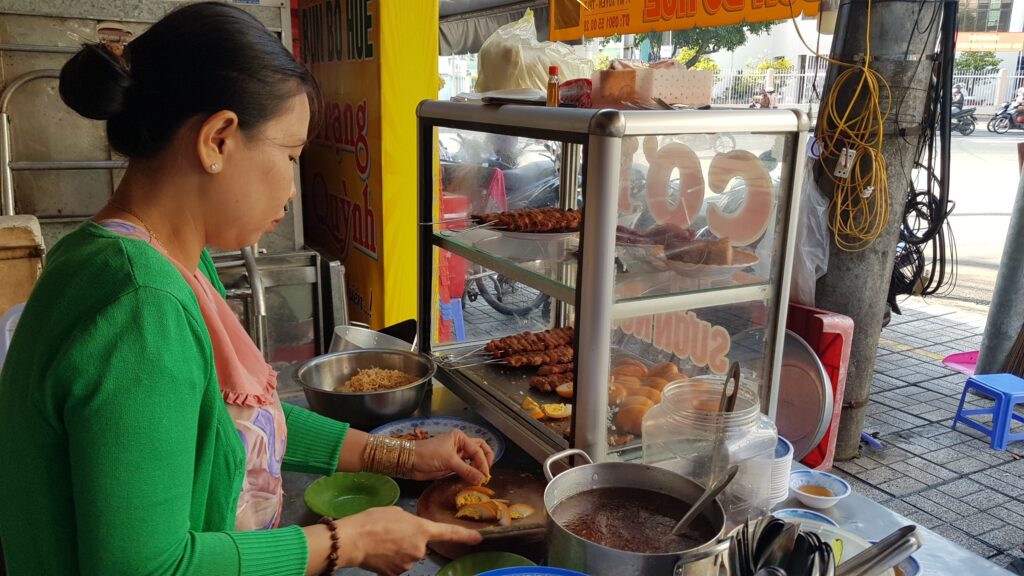
The origins of Long Xuyen broken rice (Source: Internet)
Long Xuyen broken rice was born from the simple life of the riverine people of the Mekong Delta. In the early 20th century, as rice cultivation flourished in An Giang, farmers utilized broken rice grains (grains that were no longer whole) to cook their meals. Initially, broken rice was just a rustic, quick meal for manual laborers like masons, brick kiln workers, or poor families. Later, Long Xuyen broken rice became a familiar favorite and an indispensable part of Western Vietnamese cuisine.
Long Xuyen broken rice is not merely rice and a few side dishes. Every grain of rice, every strip of shredded meat, or braised duck egg (khìa) is meticulously prepared to satisfy hunger while offering a rich, harmonious flavor. Over time, this simple laborer’s meal has woven itself into the daily lives of many families and become a signature culinary symbol of Long Xuyen—both strange and familiar to anyone who has ever tasted it.
An interesting point is that Long Xuyen broken rice not only preserves traditional cooking methods but also reflects the daily culture, ingenuity, and creative spirit of the Mekong Delta people. By making the most of available ingredients, they transform the simplest things into a dish full of flavor and story.
Meaning of the Name and the Story Behind the Dish
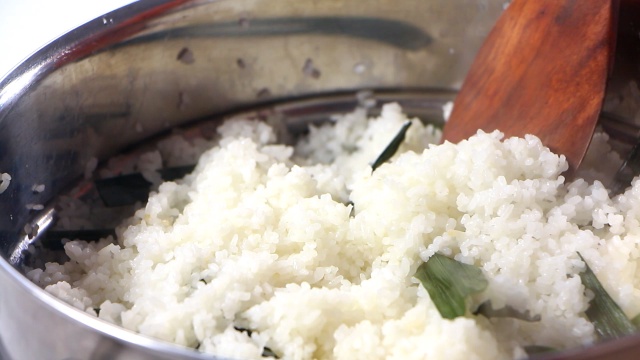
Finely broken rice grains (Source: Internet)
The name “cơm tấm” originates from the main ingredient, “tấm”—the rice grains that are broken during the milling process, which were once considered “surplus” in rural life. With a resourceful and creative lifestyle, the people of the Mekong Delta did not let these grains go to waste but transformed them into a meal that is filling, delicious, and nutritious. This simple name not only recalls its roots but also embodies the spirit of “resourcefulness and creativity” of the people of Long Xuyen.
Furthermore, Long Xuyen broken rice carries the story of the life and people of the Mekong Delta. Every plate of rice, from the arrangement of shredded pork ribs and braised eggs (khìa) to the pickles and scallion oil, bears the mark of care and skillful hands. Some eateries have passed down their broken rice recipes through many generations, keeping the original formulas from their grandparents as a way of preserving the culture and memories of the river region. It is this combination of simple ingredients and sophisticated preparation that makes Long Xuyen broken rice a “strange yet familiar” dish: familiar in daily life, yet offering a distinct, unmistakable flavor every time it is enjoyed.
Ingredients, Preparation, and the Reason for Shredded Toppings
Long Xuyen broken rice makes its own mark through sophistication in every detail. Unlike Saigon broken rice, this dish is prepared in a distinctive way: ribs, steamed egg meatloaf, and braised eggs (khìa)—even fatty meat—are thinly sliced or shredded into bite-sized pieces. This method not only allows the spices to absorb evenly but also provides a softer, easier-to-enjoy texture.
Each plate of rice is a synthesis of many small but perfect components: finely broken rice grains, tender shredded meat, chewy and crispy pork skin, fragrant scallion oil, and crunchy, delicious pickles. All blend together to create a rich flavor that is not greasy, making diners always feel “lighter” compared to broken rice from other regions.
This is the culinary philosophy of Long Xuyen: even with a rustic dish, meticulous care is needed to honor every sense of the diner.
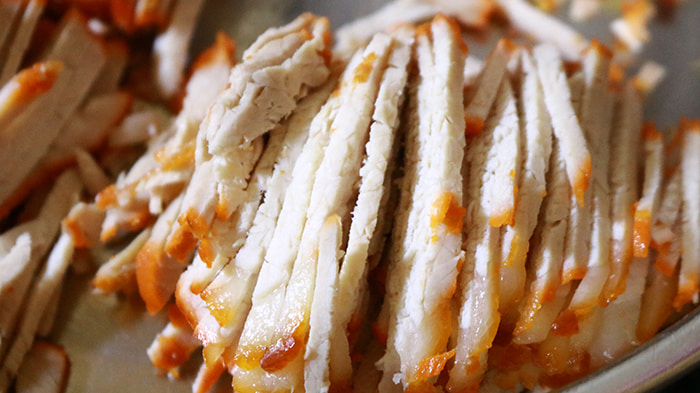
Shredded braised meat (Source: Internet)
Every Long Xuyen broken rice shop keeps its own secret in marinating ribs, mixing fish sauce, and grilling meatloaf, creating subtle variations on a traditional foundation. This meticulousness in every stage is what makes Long Xuyen broken rice both familiar and surprising—no matter how many times they enjoy it, diners always find something new in a flavor they already know by heart.
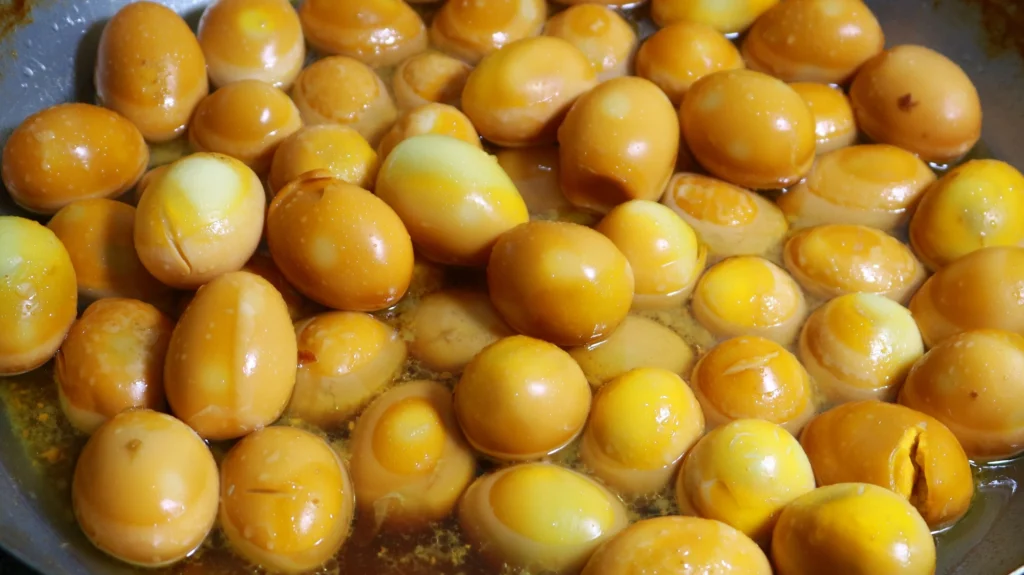
Braised eggs – Trứng khìa (Source: Internet)
The Difference Between Long Xuyen Broken Rice and Other Provinces
While Southern broken rice is popular, each region has its own identity. Long Xuyen creates an unmistakable impression thanks to the perfect balance between ingredients, spices, and preparation techniques.
Unlike Saigon broken rice, which leans towards a strong sweet taste, Long Xuyen pursues harmony: moderately grilled ribs, soft shredded braised meat, balanced sweet and salty fish sauce, and fragrant scallion oil. The crisp, fresh pickles ensure the dish remains light even after eating plenty.
The most unique point of Long Xuyen lies in the art of “shredding” – every component is meticulously processed so that the spices penetrate evenly and create a sophisticated sensation on the palate. The simple yet thoughtful presentation carries a homely feel, making Long Xuyen broken rice both approachable and elegant.
Tips for Experiencing Long Xuyen Broken Rice in Saigon
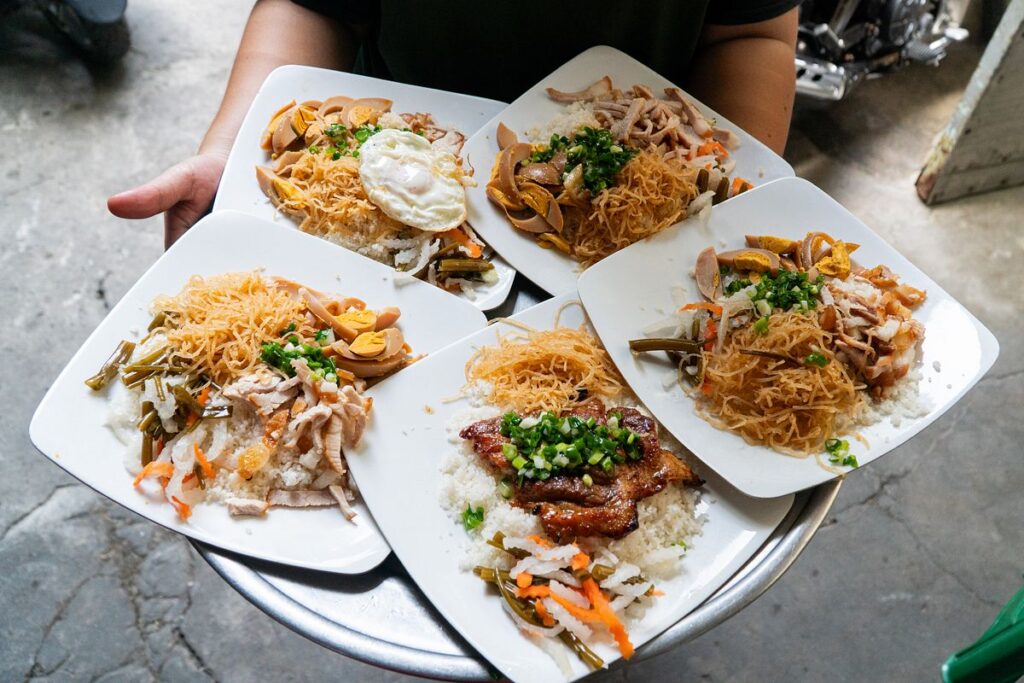
Long Xuyen broken rice in Saigon (Source: Internet)
Although the dish originates from An Giang, you can still enjoy Long Xuyen broken rice right in Saigon. Many eateries and restaurants in the city serve a version that is nearly identical to the original, maintaining the way the ribs are grilled, the toppings are shredded, and the signature rich fish sauce is mixed.
You can still find Long Xuyen broken rice in areas with a high concentration of the Mekong Delta community. Specifically, in District 5, District 6, Tan Phu District, and Binh Tan District—where many traditional family-run eateries still preserve the Western Vietnamese flavor. Some culinary spots around Ben Thanh Market in District 1 also serve this dish, making it convenient for tourists who want to taste Long Xuyen right in the heart of the city. Although not directly in Long Xuyen, the way the ribs are grilled, the toppings are shredded, and the fish sauce is prepared remains true to the spirit of the dish, helping you fully experience the signature flavor of An Giang.