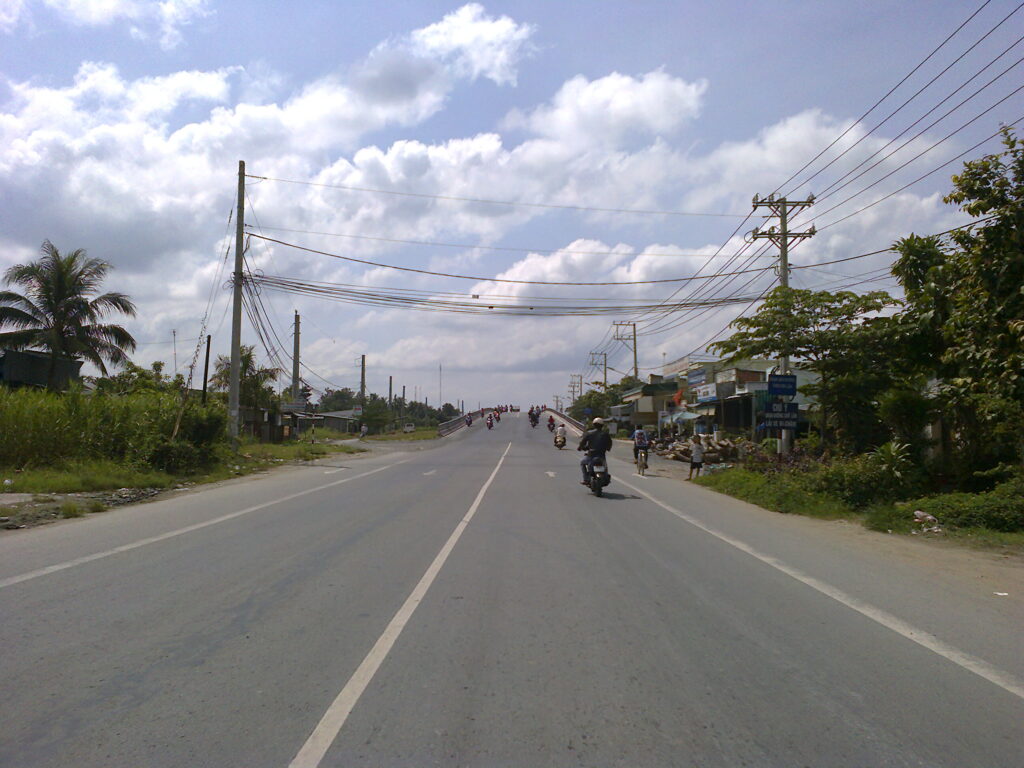
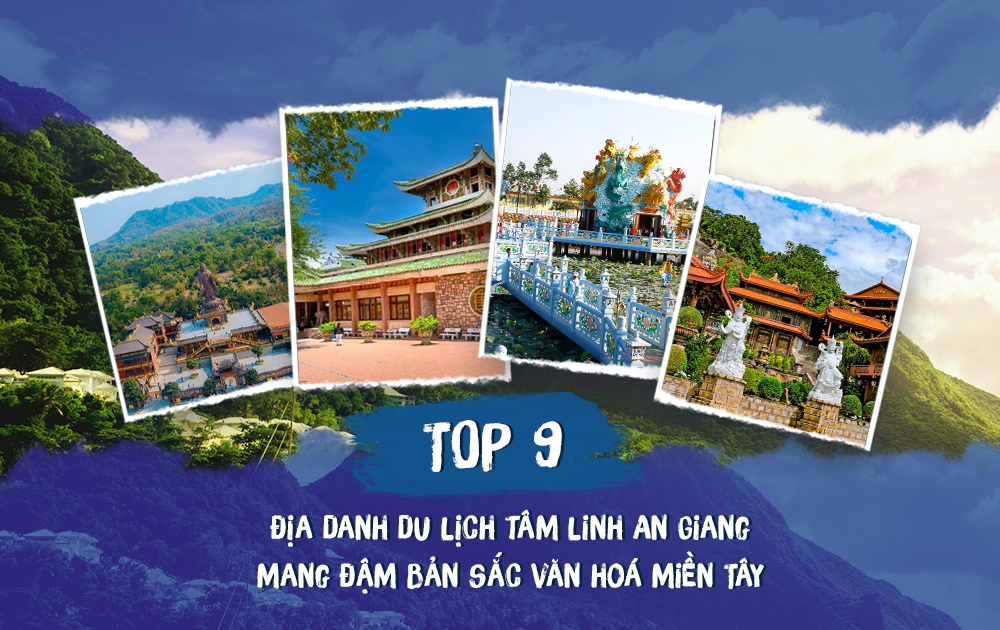
Tri Ton – a unique semi-mountainous region of An Giang – offers a very different image of the Mekong Delta. While not having many rivers and canals, it boasts mountains, rocks, sunshine, wind, and people deeply connected to the land. The terrain and climate here have shaped a unique way of life: simple, robust, imbued with Khmer culture and the influence of the Oc Eo civilization. Seemingly ordinary things like meals, ceremonies, or children’s laughter… help us understand more about the simple yet memorable people of Tri Ton, An Giang.
Tri Ton – a unique semi-mountainous region of An Giang
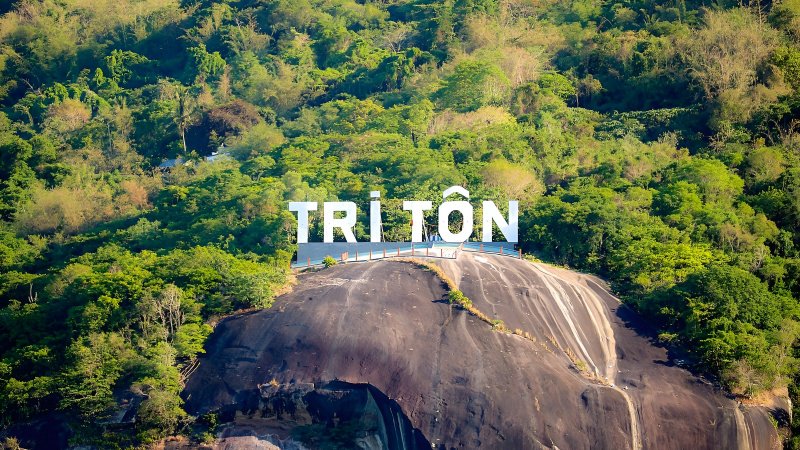
Tri Ton – An Giang region
When mentioning Tri Ton, An Giang , people easily picture a land unlike the rest of the Mekong Delta. Here, there are not only plains but also mountains, hills, valleys, and gentle slopes – a rare landscape in an area known for its rivers and waterways.
This semi-mountainous terrain has shaped the unique lifestyle of the local people. They are accustomed to climbing slopes and walking along rough paths to reach their fields, markets, and festivals. Houses are usually built along the foothills or amidst wide grasslands. The towering palm groves are not only a scenic symbol but also a vital source of livelihood.
The climate in this region is also somewhat harsher: the sun is more intense, the wind is stronger during the dry season, and the rain is often persistent during the flood season. But the people of Tri Ton, An Giang, are very familiar with the sun to dry the palm fruit, and with the rain to cool the sandy soil before planting.
Despite being far from the city, Tri Ton, An Giang, retains its peaceful charm and close connection between people and nature. It’s a place where you can hear roosters crowing from the mountainside, see herds of cows leisurely crossing the meadows, and feel a slow, genuine pace of life.
Traditional and authentic local cuisine.
The cuisine in Tri Ton, An Giang, embodies a blend of mountain specialties and the unique characteristics of the riverine region. Without elaborate preparation methods, the dishes here often utilize readily available ingredients from the forests, mountains, and fields, resulting in dishes that are both rustic and unique.
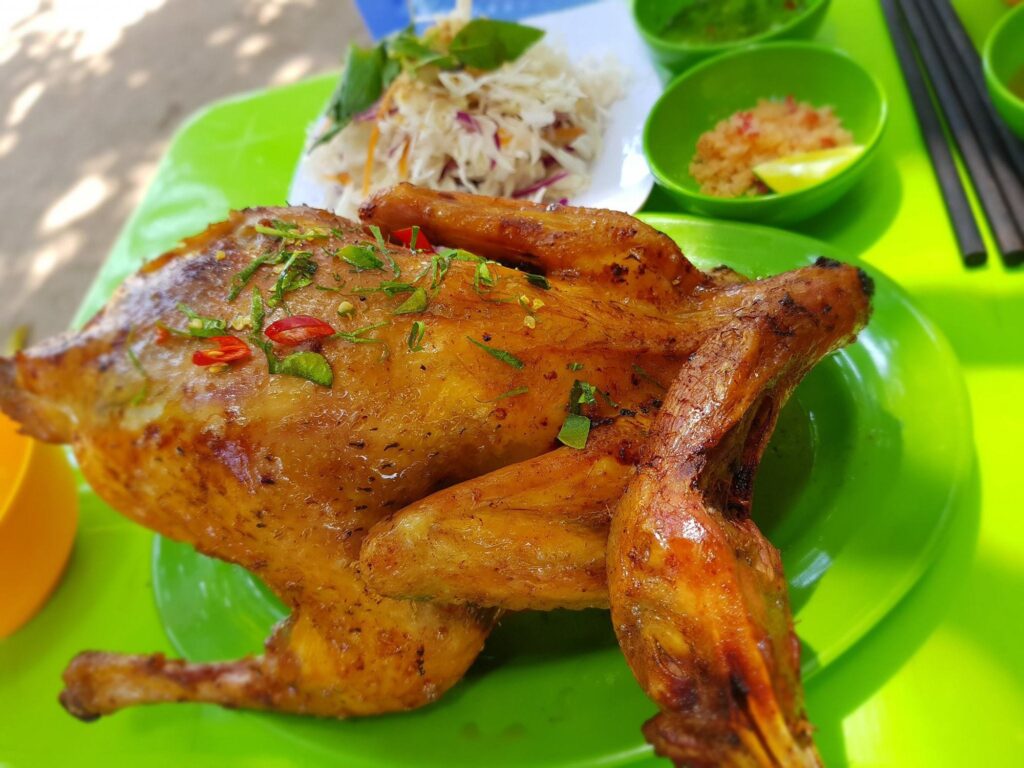
One of the must-try dishes is grilled chicken wrapped in “lá chúc” leaves – a famous specialty of the Tri Tôn region. “Lá chúc” leaves grow wild in the Cấm mountain and Tri Tôn hills, possessing a distinctive aroma that enhances the flavor and aroma of the grilled chicken.
During the flood season, people in Tri Ton, An Giang province, take advantage of snakehead fish, water hyacinth flowers, and field mice to prepare many delicious dishes. Snakehead fish stewed with sugarcane, snakehead fish sour hot pot, or snakehead fish noodle soup all have a unique sweet and slightly sour taste characteristic of this border region.
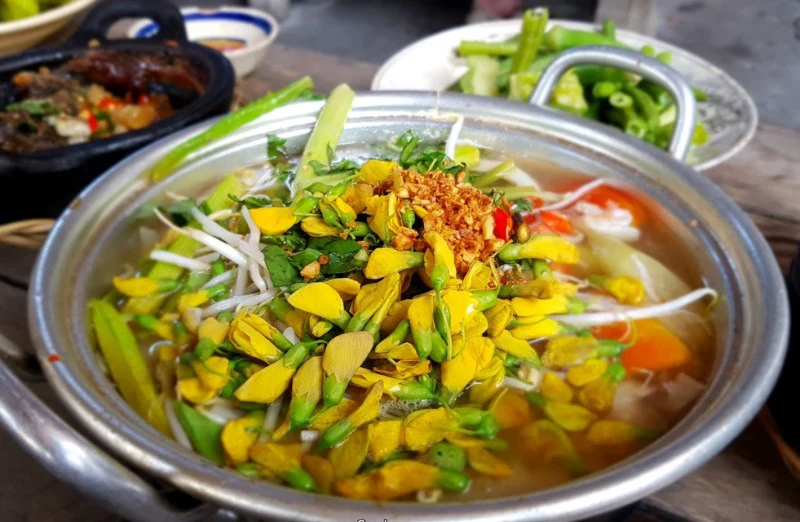
Sour fish soup with water spinach
The meals of the people of Tri Ton are not overly elaborate, but they are always full of warmth and affection. These are heartwarming family meals after a day of working in the fields, featuring braised freshwater fish, sour soup, steamed fermented fish paste, and a bowl of hand-ground chili salt – a simple condiment that evokes memories of a peaceful countryside.
In particular, Ka Tum cake is a traditional Khmer cake from Tri Ton, An Giang. It often appears during festivals, especially the Ok Om Bok or Chol Chnam Thmay festivals. This cake is made from glutinous rice, ripe bananas, grated coconut, palm sugar, and a little roasted sesame seeds.
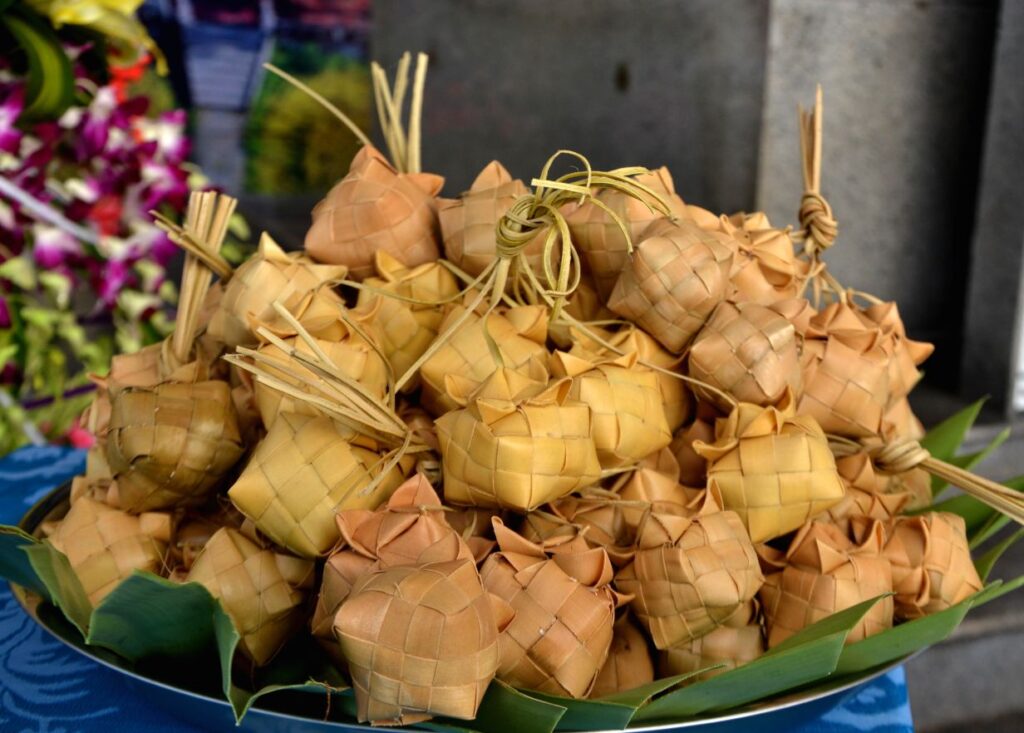
Ka Tum cake of the Khmer people of Tri Ton
The cake is long in shape, wrapped in banana leaves, and steamed. When the leaves are opened, the delicate aroma of sticky rice and bananas blends with a subtle coconut scent, creating a familiar feeling. Its sweet, chewy, and slightly rich flavor, without being cloying, makes Kà Tum cake not just a dish, but also a part of the memories and unforgettable cultural aspect of the Khmer people of Tri Tôn.
A deep connection with Khmer culture and festivals.
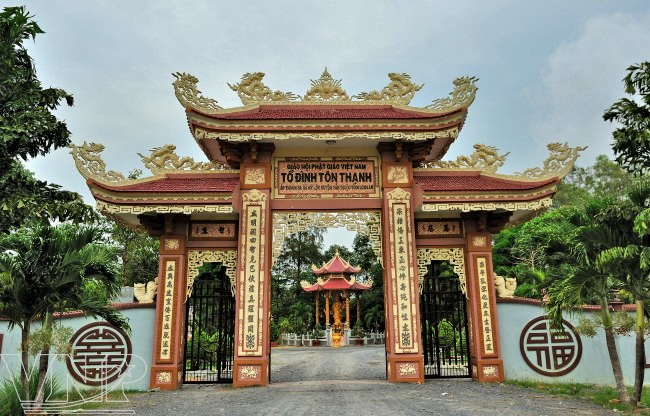
Tri Ton is one of the areas with the largest Khmer population in An Giang province. In Tri Ton, An Giang, Khmer culture is not only present in the magnificent architecture of its temples, but also deeply ingrained in daily life: from language, clothing, and cuisine to festival rituals.
During major festivals like the Chol Chnam Thmay Tet, Sene Dolta Festival, or Ok Om Bok Festival, the villages in Tri Ton become more vibrant than ever. People wear traditional costumes, go to temples to offer incense, perform the Lam Thol dance, and participate in community activities such as releasing lanterns and racing traditional boats. These festivals are not only occasions for fun but also a time for community bonding and preserving ethnic identity.
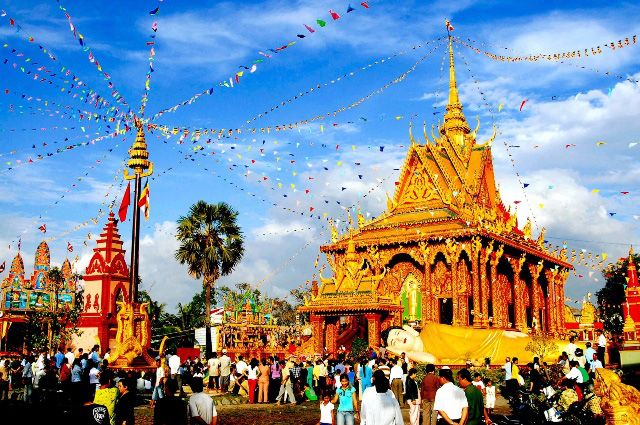
The Chôl Chnăm Thmây festival celebrates the Khmer New Year.
Besides Khmer temples, many families still maintain their own rituals and ceremonies, educating their children to preserve customs through daily life. Young children are taught to greet adults with clasped hands, to be polite in their speech, and to preserve their language and ethnic traditions.
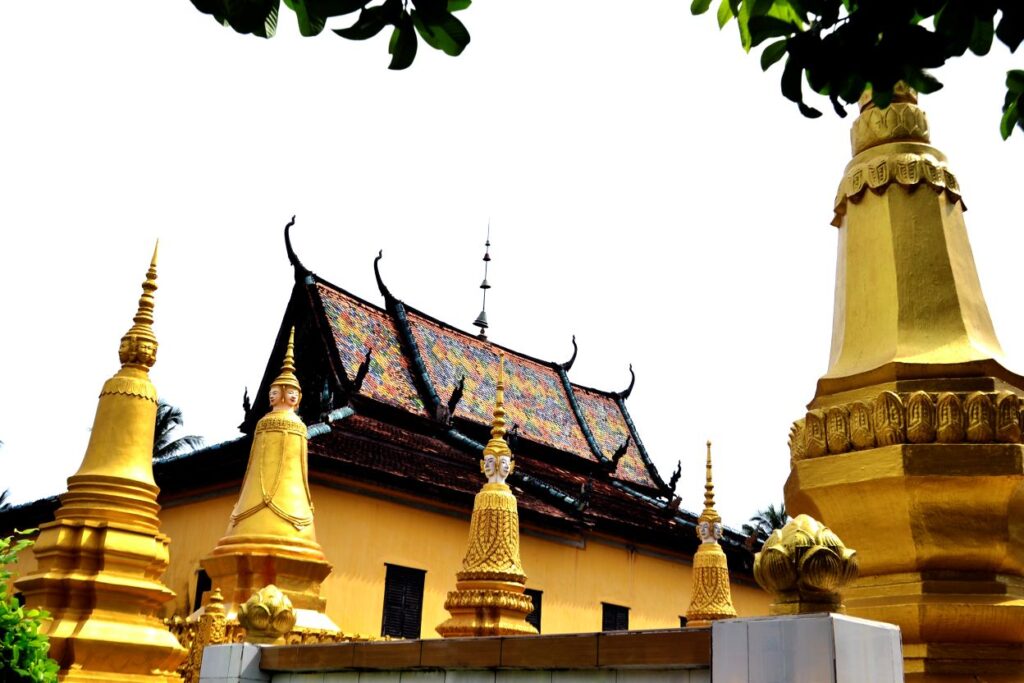
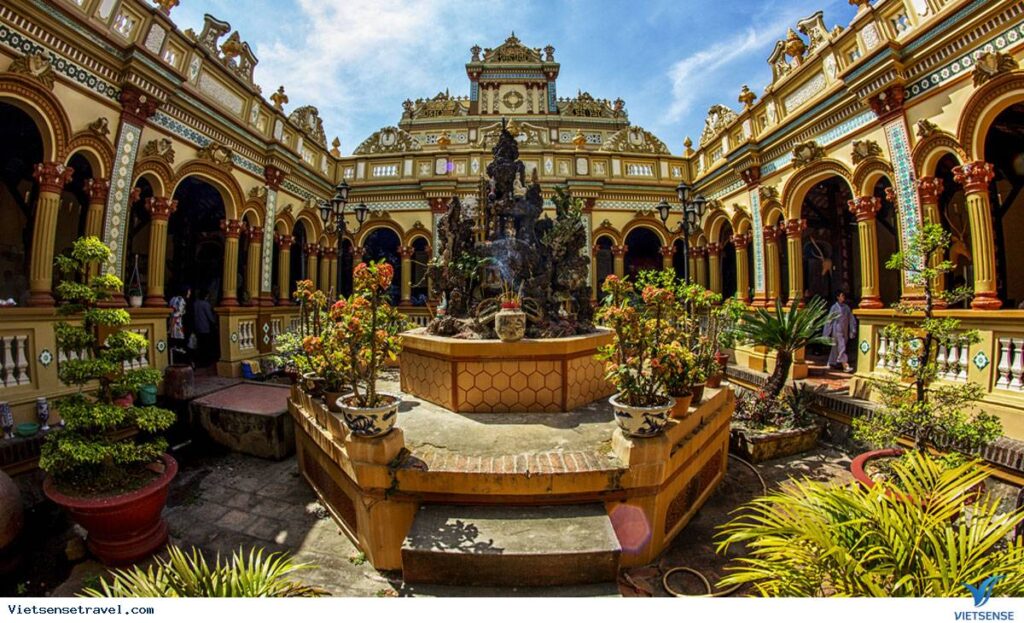
The architecture of Theravada Buddhist temples of the Khmer people in Tri Ton.
It is this persistent preservation of culture that has given the Tri Ton region of An Giang a unique cultural character, both simple and profound. This allows visitors to feel the festive atmosphere and the beauty of the community even on ordinary days.
Memorable everyday moments
Everyday moments in Tri Ton, An Giang, evoke a special sense of nostalgia for visitors. One early morning, Khmer people sweep the temple grounds and light fires to cook fragrant sticky rice; at noon, elderly people sit under the shade of palm trees, chewing betel nut and recounting old stories. Children play around the well or wade in the fields to catch fish after the rainy season. All these familiar images are hard to forget for anyone who has lived there or visited.
The rural market opens early, with only a few stalls but full of traditional dishes: sticky rice cakes wrapped in banana leaves, fermented fish paste, dried snakehead fish… People meet each other, laughing and chatting lively in both Vietnamese and Khmer. Every sound, every gesture carries a rare sense of community bonding.
There are afternoons in Tri Ton when you just need to stand still by the rice paddies, watching the sun set behind the Thất Sơn mountain range, listening to the wind whistling through the palm trees – that’s enough to understand why people love this land so much. Life here doesn’t offer many modern entertainment options, but it’s rich in emotions stemming from the close connection between people, the land, and nature.
It is these seemingly small things that contribute to the unique identity of Tri Ton, An Giang – a place where every everyday moment can become a beautiful memory.
The cultural imprint of Oc Eo is passed down through generations.
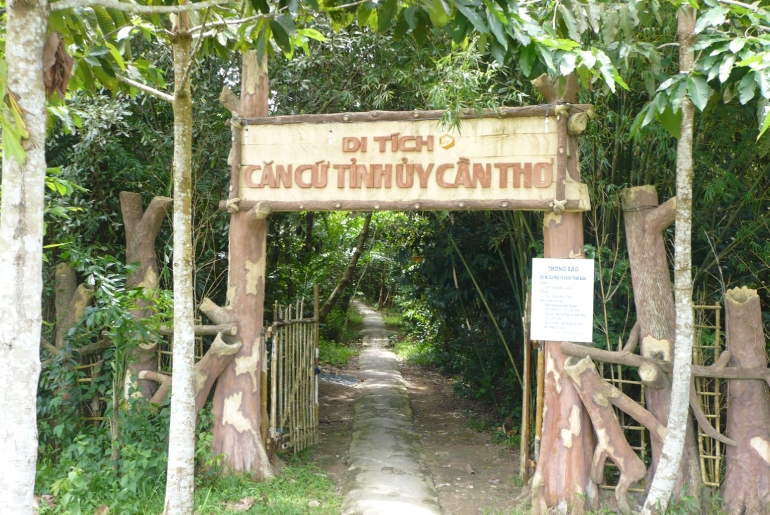
Tri Ton, An Giang, is unique not only for its semi-mountainous terrain and diverse communities, but also for preserving many important relics of the Oc Eo culture . This is considered an ancient civilization that flourished from the 1st to the 7th centuries AD.
Traces of the Oc Eo culture at Tri Ton have been found through archaeological excavations: ancient brick foundations, pottery, Hindu statues, production tools, etc. All reflect a period of flourishing development, where the ancient people traded with India, China, and other Southeast Asian countries via the river and sea systems.
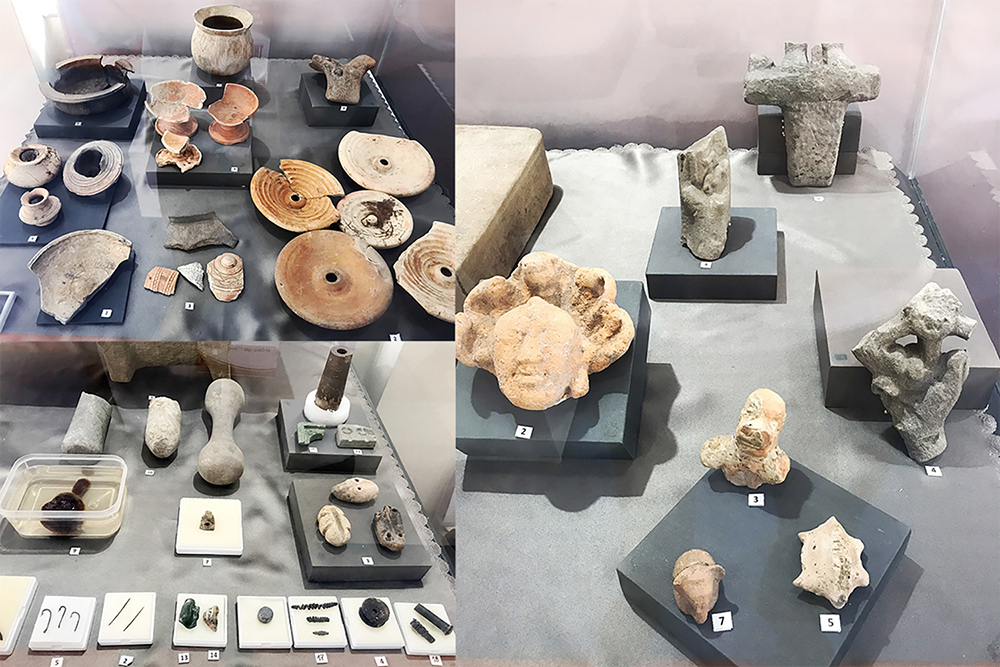
Remnants of the Oc Eo culture at Tri Ton
It is noteworthy that these influences are not only found in museums or historical records, but are still present in the lives of the people of Tri Ton today. The architecture of some temples, folk beliefs, worship customs, and even agricultural practices all subtly reflect the legacy of a once flourishing culture.
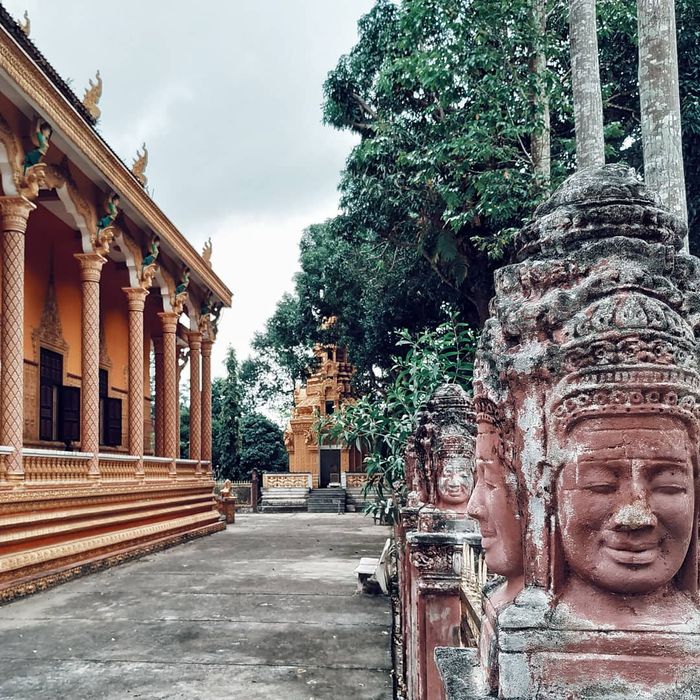
Cultural heritage
Even after thousands of years, the imprint of Oc Eo remains present in the lives of the people of Tri Ton and the surrounding areas. This is evident not only in archaeological relics but also in the way they preserve customs, beliefs, and lifestyles closely connected to nature. For the people here, Oc Eo is not just a chapter of history, but a part of their identity that lives on, breathing in every home, market, field, and story told through generations.
Concluding our exploration, it’s clear that Tri Ton, An Giang, is not only a land boasting majestic natural landscapes and unique Khmer culture, but also preserves many valuable historical treasures. Every mountain, every road, and every dish here carries its own story. If you’re looking for a destination that’s both peaceful and unique, Tri Ton is a worthy choice to experience and create unforgettable memories.