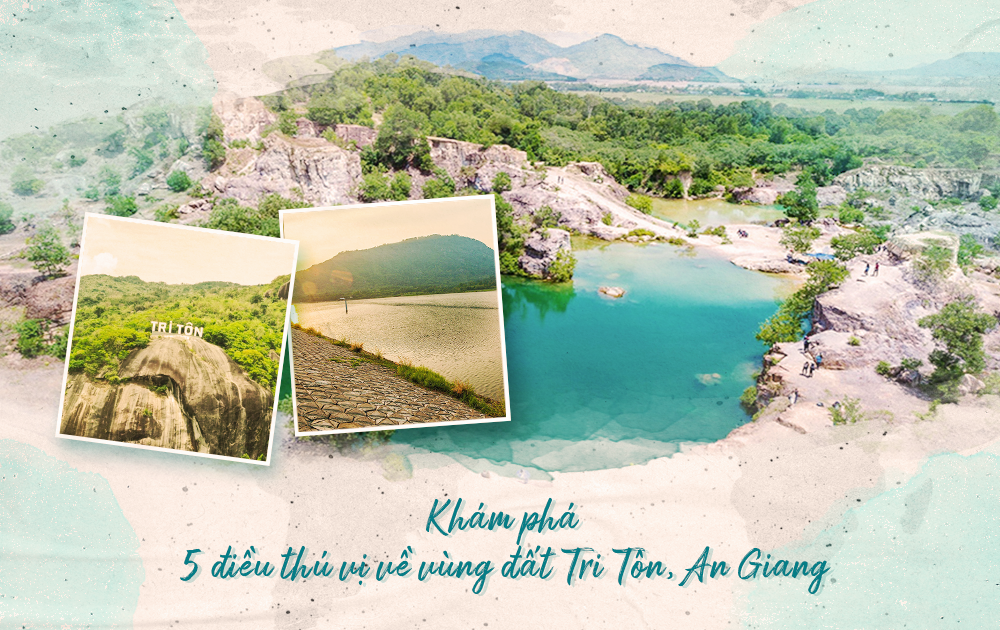
An Giang does not need to be different to be memorable.
As the upstream province of the Mekong Delta, An Giang tourism offers a unique experience with mountains, rivers, and flooded cajuput forests, alongside a rare cultural intersection. People remember An Giang in travel tours not only for its famous landmarks or bustling festivals but also for its simple rhythm of life, the warm heart of its people, and the natural bond between the many communities living there.
An Giang Tourism Today
From June 2025, according to Resolution 202/2025/QH15, the administrative map of Vietnam officially underwent several changes. Among them, An Giang expanded its boundaries, receiving an additional portion of border land from Kien Giang province. With an area of over 9,800 km², An Giang is now among the largest provinces in the country and is the largest province in the Southwestern region.
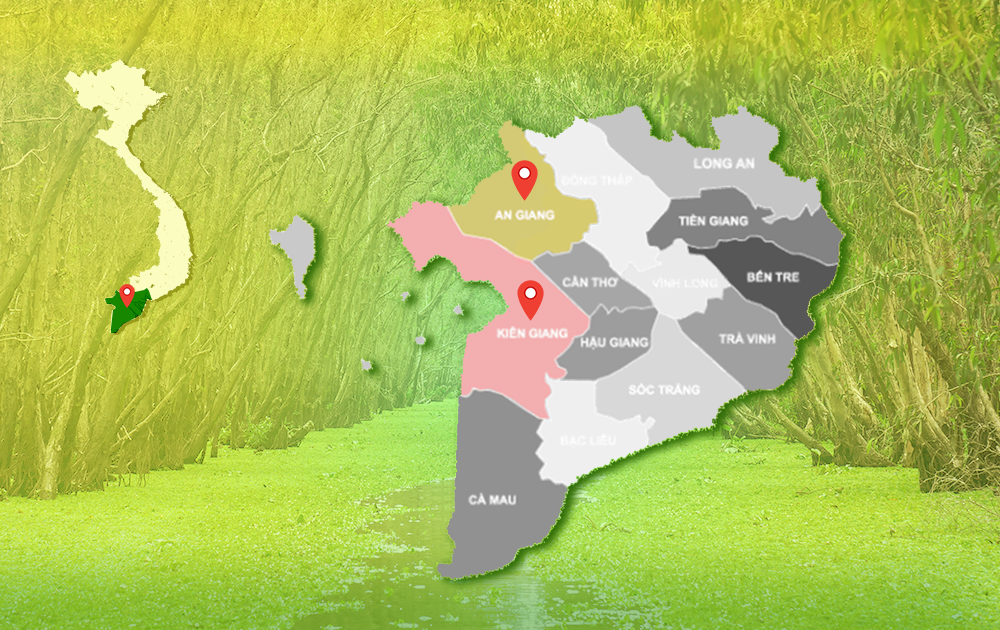
The merger of Kien Giang & An Giang
If you ask how An Giang today differs from the past, the answer does not lie in numbers.
The people here still greet each other with smiles, still sit for morning coffee before heading to the fields, and still go to the early market to buy a handful of herbs or a few snakehead fish still flopping in the basket. The new communes integrated from the riverside areas of Giang Thanh and Hon Dat are no strangers to the accent, the way of life, and the human affection that has long been familiar. Boundaries may change, but the climate, soil, lifestyle, and culture have long flowed in the same vein.
The “deep affection” of An Giang lies not only in its people but also in the natural harmony between the new and old lands. This expansion also brings the province a wider development corridor: more production land and convenient transport connections from the forests to the plains. An Giang today is larger, but its unique essence remains in its sincerity and simplicity.
Amidst the Plains, An Giang Bears a Distinct Mountain and River Landscape
Situated in the heart of the Mekong Delta, An Giang is not as “flat” as many might imagine. On this land, mountains, rivers, and forests coexist, contributing to a rare landscape in a region primarily dominated by rice fields and canals.
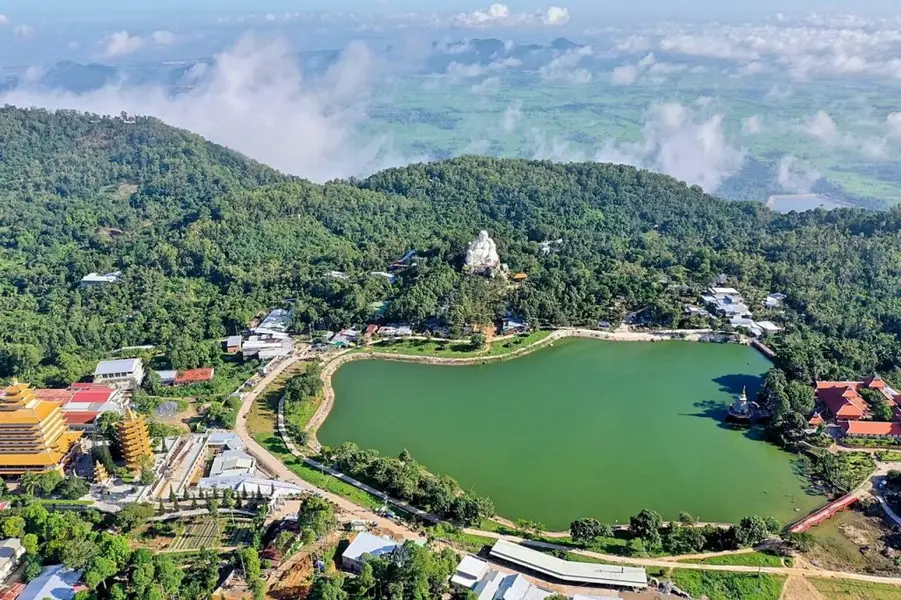
The That Son Mountain Range (Source: Internet)
The That Son range, also known as the Seven Mountains, is the most distinct topographical highlight. From Tinh Bien to Tri Ton, names like Nui Cam (Forbidden Mountain), Nui Dai (Long Mountain), and Nui Sam (Sam Mountain) are not just geographical entities but are deeply etched into the spiritual life of the locals. The mountains cast long shadows over the fields every afternoon and serve as sacred sites in the religious life of the community.
Many who grew up in An Giang vividly remember every small slope and trail around the mountains—paths that serve as wood-hauling routes on weekdays and turn into pilgrimage trails to pagodas on weekends. Visitors from elsewhere are often surprised to see mountains rising suddenly yet naturally amidst rice paddies and sugar palm gardens, without any sense of imposition.
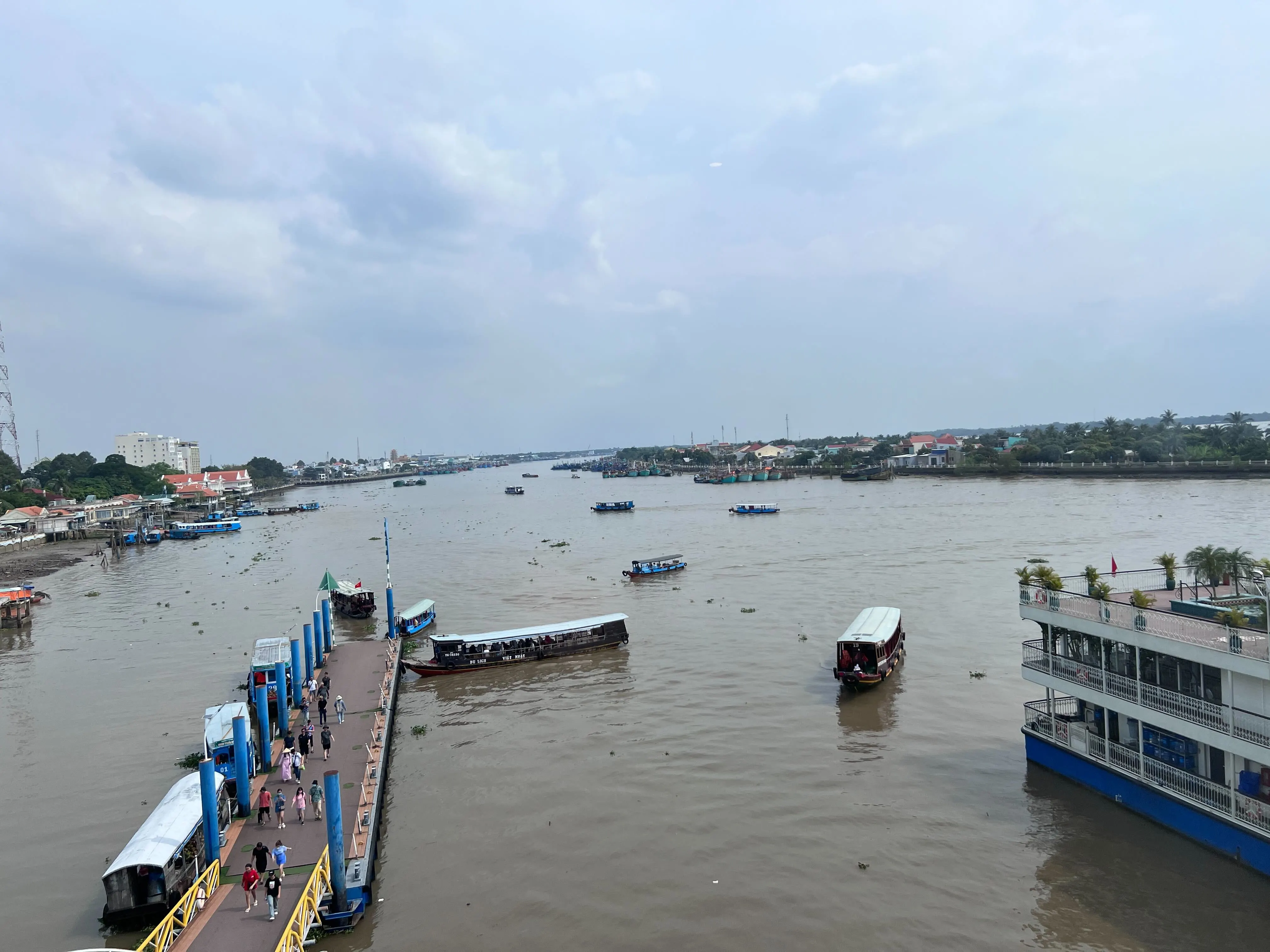
Beyond the mountains, An Giang is where the Hau River branches out, creating numerous large and small tributaries. Canals dug since the early reclamation era still play a vital role today. They are not just waterways but lifelines. Along the rivers, villages take shape according to the flow of the water, trees grow densely by the banks, and boats navigate as familiarly as motorbikes on the road.
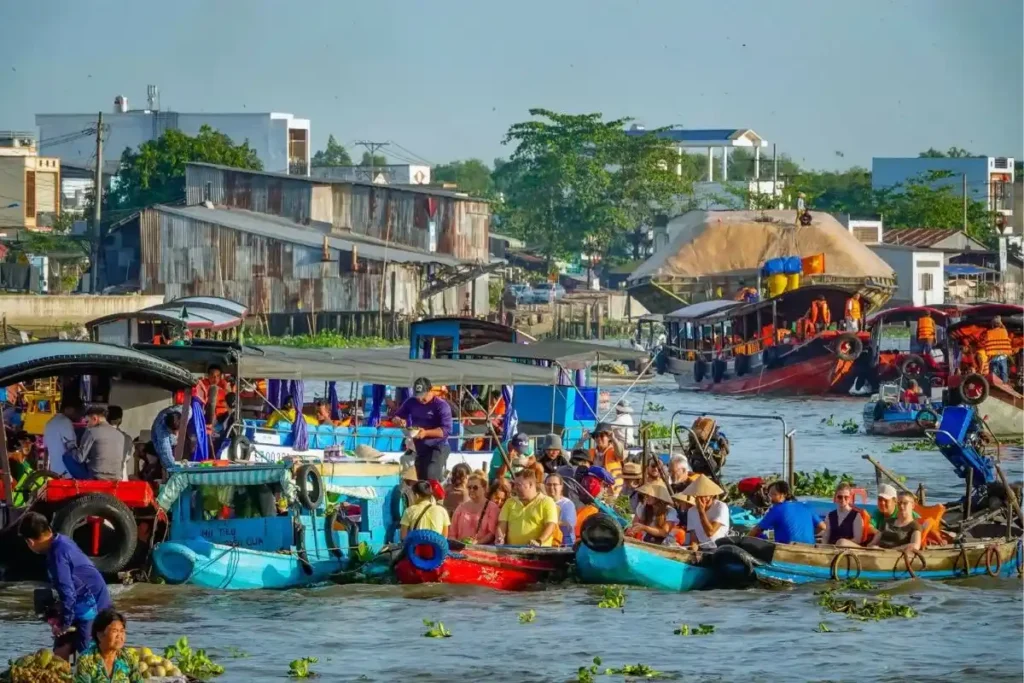
Chau Doc Floating Market – An Giang (Source: Internet)
During the annual flooded season (mùa nước nổi), the fields are submerged in white, yet they are far from deserted. This is the livelihood season for thousands who cast nets, set traps, and harvest sesbania flowers (bông điên điển). In the dry season, the water recedes, leaving behind silt for new rice crops to turn lush green again, while small fish return through the ditches. It all creates a cycle that the people live in harmony with.
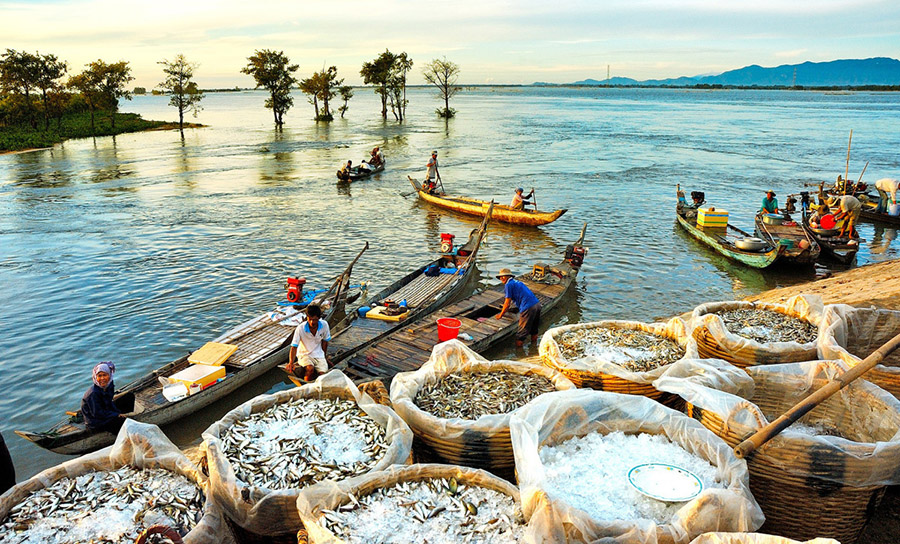
The Flooded Season (Source: Internet)
This land has rivers, mountains, and plains, but what makes it special is that all these elements are inseparable. The way sugar palms grow beside the paddies, or how a mountain appears in the middle of a vegetable plot, shows that in An Giang, the landscape is not just something to look at, but something people live with. Nature and humanity have been bonded for a long time without needing explanation.
An Giang Tourism: A Cultural Crossroads of Lifestyles
An Giang is a gathering place for many different communities, a fact well-known to those who have traveled through this land. From the plains to the border, traces of harmony are everywhere: Khmer pagoda roofs, the Islamic mosques of the Cham, Chinese eateries, and the folk festivals of the Kinh.
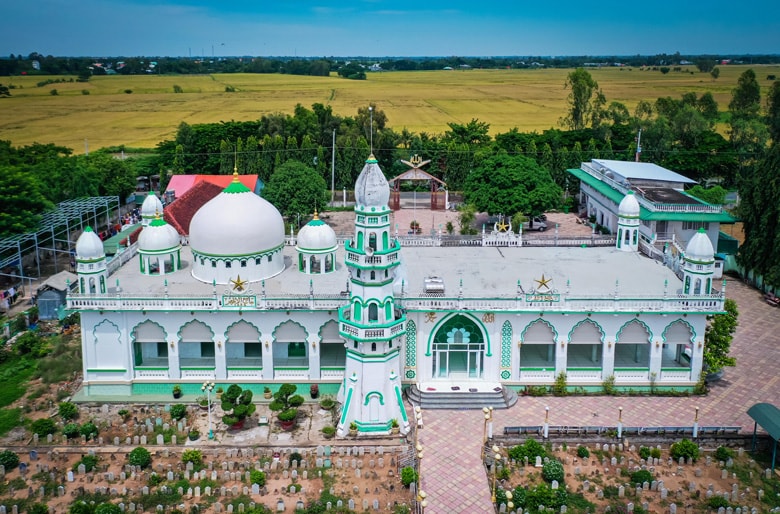
Islamic Mosque of the Cham people (Source: Internet)
In the border regions of Tinh Bien and Tri Ton, the Khmer build pagodas with vibrant yellow roofs. On the canal banks in Chau Phong, the Cham people still wear headscarves, speak their mother tongue, practice Islam, and weave fabric by hand. The Kinh people visit temples, attend the Lady of the Realm festival, cook with fish sauce, and celebrate the full moon of the first lunar month. The Chinese brought with them trading traditions, traditional medicine shops, and foreign fish noodle stalls that have now become a familiar taste.
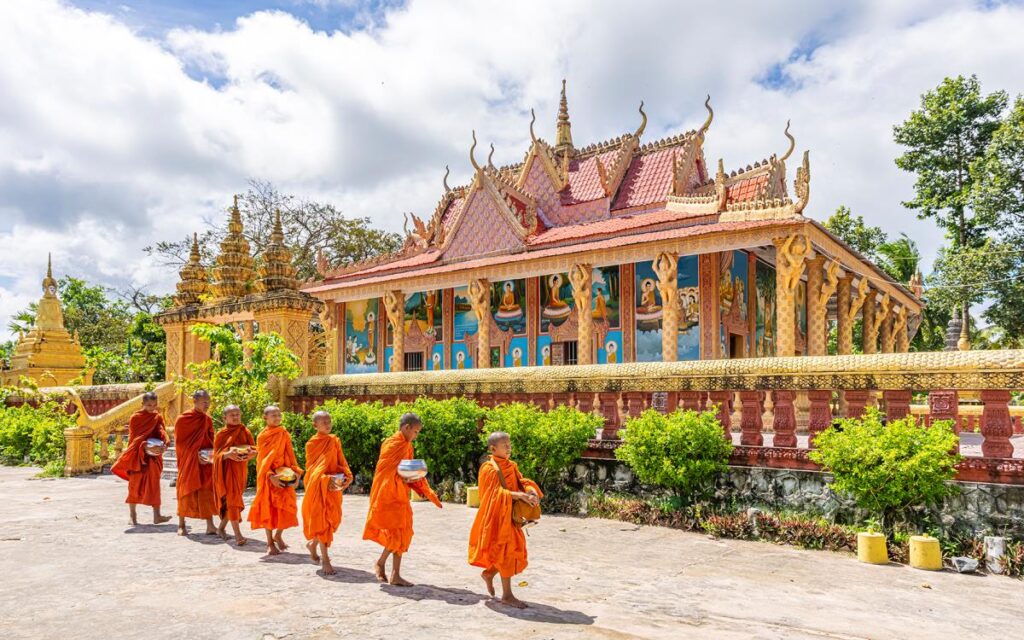
Khmer Pagoda in An Giang (Source: Internet)
Each community keeps its own customs, yet there are no barriers. Children play together, grow up studying together, and upon reaching adulthood, they share market stalls, cultivated land, and even meals on death anniversaries.
There are no slogans about “cultural diversity,” and no need for calls for “integration”; the intersection in An Giang happens naturally and quietly. What keeps everything in harmony is not regulations, but respect and the habit of living kindly with one another.
In places where cultures are often placed side-by-side for comparison, in An Giang, they simply exist simultaneously—like many voices calling out in a single market, not drowning each other out, but complementing one another.
An Giang Tourism: Cuisine that Captivates Travelers
The cuisine here is not “flashy,” but it has a unique way of touching the diner’s memory. It’s not just because of the bold flavors, but because each dish is tied to a specific area. When mentioning fermented fish (mắm), one must speak of Chau Doc; fish noodle soup (bún cá) must include Tri Ton field water mimosa; sugar palm sponge cake (bánh bò thốt nốt); and Long Xuyen broken rice is nowhere else but the mountain region.
An Giang people eat according to the season and the market. The flooded season is the time for linh fish, sesbania flowers, wild vegetables, and field mice. In the dry season, people return to braised dishes, grilled items, and homemade snacks in the small hamlets. There’s no need for formal recipes; every meal is full of fish, vegetables, and fermented fish, usually accompanied by a “self-mixed” dipping sauce that is unique to every household, yet delicious for everyone.
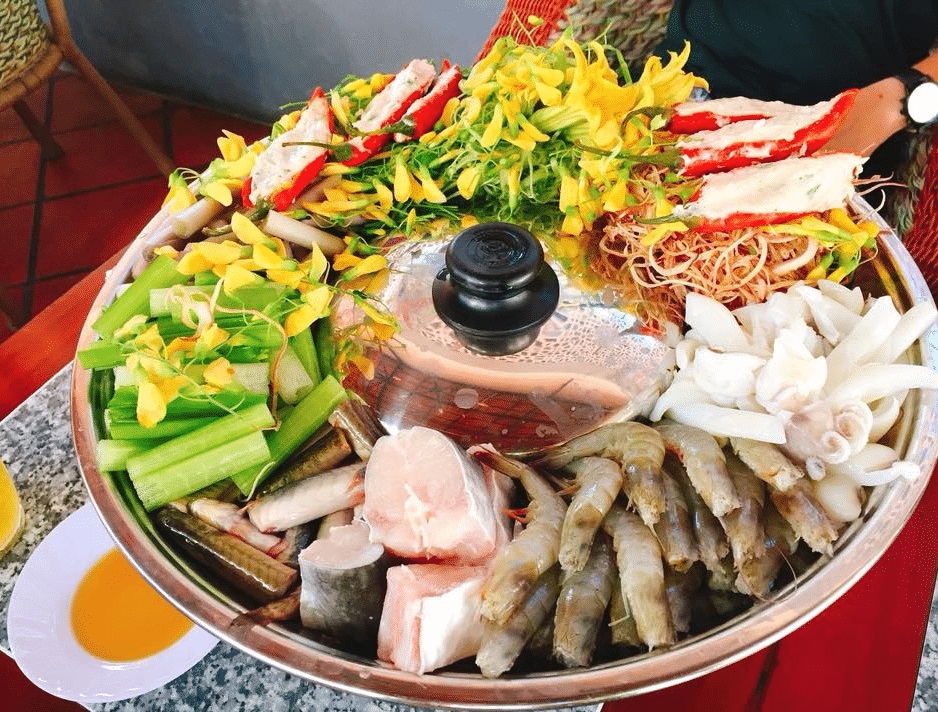
An Giang Fermented Fish Hotpot – Lẩu mắm (Source: Internet)
What makes it special is that the food here carries not just flavor, but character: honest, uncomplicated, but enough to satisfy the soul. You can eat a bowl of fermented fish noodle soup in Chau Doc—it’s just a simple bowl of noodles, but the fragrant fermented fish, fresh raw vegetables, and delicious broth make you remember the sincere spirit of An Giang.
An Giang Tourism: Landmarks that Touch the Heart
If you have heard of Sam Mountain, Chau Doc, Tra Su Cajuput Forest, or Ta Pa Lake, these are all landmarks associated with the image of An Giang. Some are famous for their beauty, some are pilgrimage sites, and some are childhood memories for those living far from home. Even if the names are familiar, every return makes people feel close and moved as if it were the first time.
Chau Doc is the clearest example. Once an important border town since the French colonial period, it is now not only the Western economic hub of the province but also a major pilgrimage site. The festival of the Lady of the Realm (Vía Bà Chúa Xứ) at Sam Mountain attracts millions of visitors every year. But Chau Doc is more than just festivals. The morning mist lightly covering the Hau River and the boats selling fish noodle soup and steamed fermented fish moving slowly mid-stream are what hold people back longer.
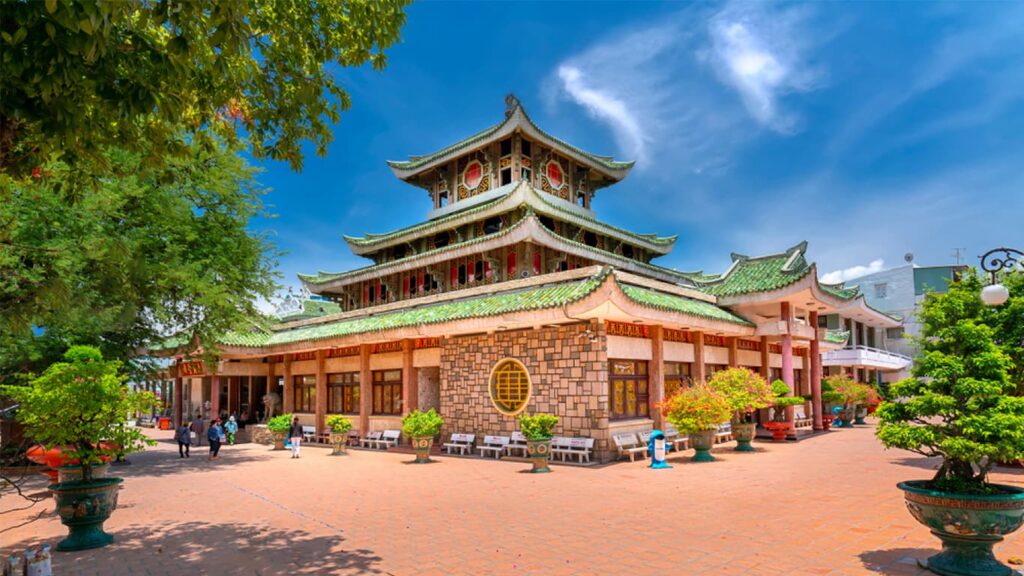
Chau Doc Temple (Source: Internet)
In Tri Ton, Ta Pa Lake is nestled between hills and sugar palm fields, with water so clear it reflects the clouds. No services are needed, and no loud advertising—this place remains a natural destination for those seeking a quiet space where nature has not been altered too much.
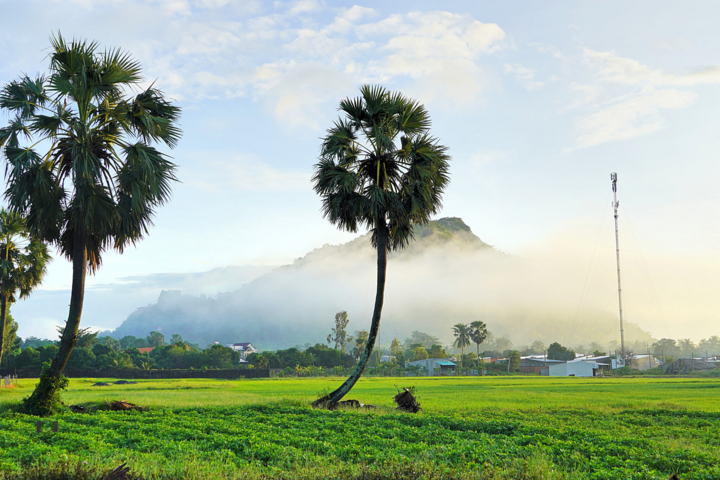
Sugar palm trees (Source: Internet)
Or take Tra Su Cajuput Forest during the flooded season; the water rises to the roots of the trees, creating a scene like something out of a painting. But if you go with a local, they will show you more: where the birds build their nests, which plants grow in which month, and which path the water snakes take. The scenery is not just for viewing; it is a part of the real life of the people living around it.
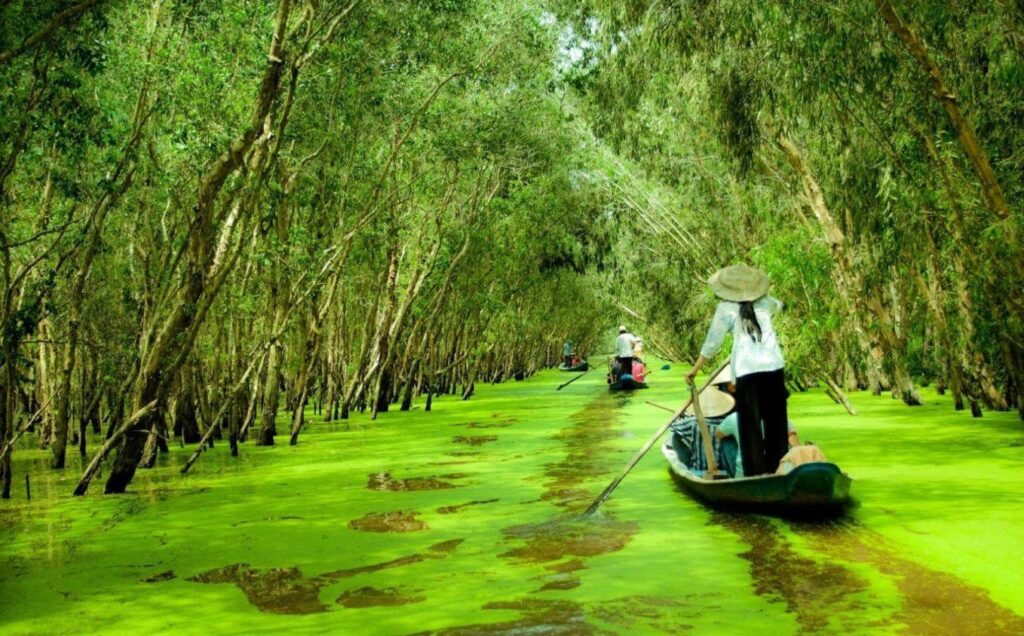
Tra Su Cajuput Forest (Source: Internet)
Even in very familiar names like Long Xuyen, Tan Chau, and Cho Moi, each landmark is a layer of time stacked upon another. An Giang is a region worth experiencing, feeling, and remembering. If you visit in the right season, you can attend traditional festivals and see the vibrant rhythm of life and culture. An Giang does not need to be different to be remembered; just being itself is enough to make people want to return.