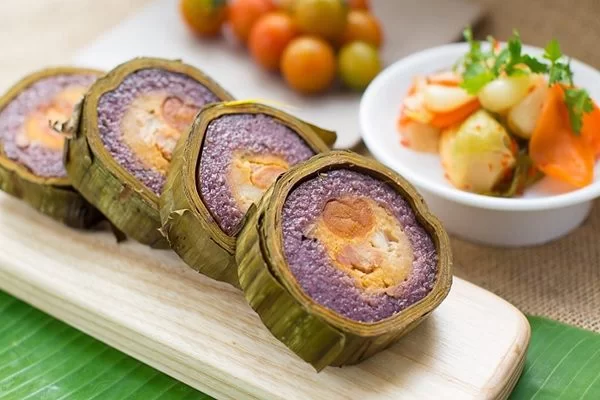
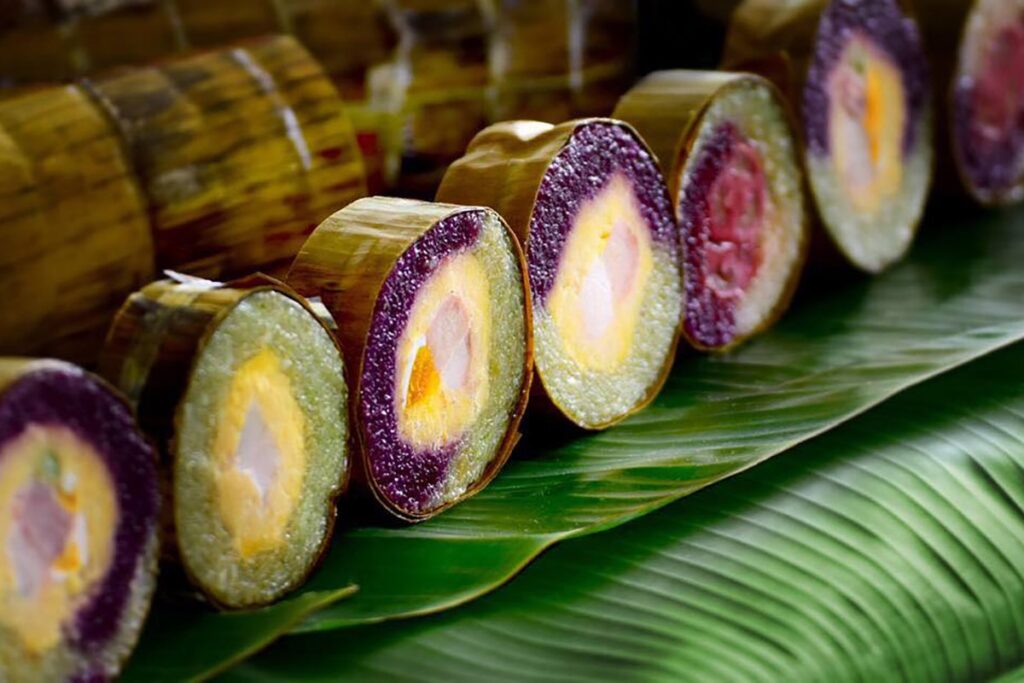
Can ThoBánh tét lá cẩm is a traditional cake of Southern Vietnam, commonly prepared for festivals, Lunar New Year celebrations, or ancestral death anniversaries. The cake is loved not only for its striking purple color but also for its distinctive flavor.Bánh Tét Lá Cẩm
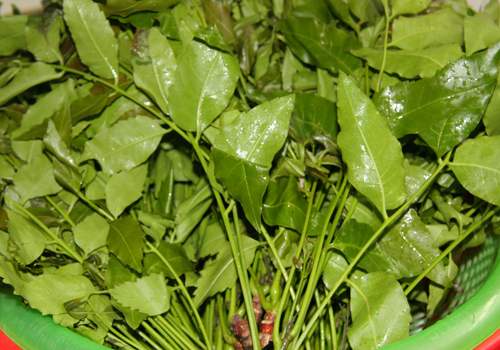
The cake is prepared by extracting purple juice from magenta plant leaves (lá cẩm), which is then stir-fried with glutinous rice and coconut milk. The filling consists of pork and salted duck eggs.
To make perfect rolls of bánh tét, every step is important. First comes the rice: only high-quality glutinous rice is used, soaked in magenta leaf water to achieve an attractive pinkish-purple hue. Fresh magenta leaves are boiled with a small amount of water, then steeped for about eight hours to produce a deep, beautiful color.
Good-quality glutinous rice can be tested by biting a grain between the teeth. If it feels sticky, chewy, slightly crunchy, and breaks cleanly, it is the right kind. Inferior rice, when cooked, results in a cake with hard, dry grains that ruin the eating experience.
The filling of bánh tét lá cẩm includes mung beans and pork, with the most distinctive addition being salted duck egg yolks. After wrapping and boiling for about four to five hours, the cooked cake is sliced to reveal its fragrant aroma and vibrant colors, beautifully adorning festive holiday trays.
Bánh tét lá cẩm Cần Thơ
The banana leaves used for wrapping should be neither too young nor too old. They are wiped clean and do not need to be oiled, as the coconut milk released from the rice during cooking prevents sticking. Stir-frying the rice is also a crucial step—too much liquid will make the cake soft and mushy, compromising its texture.
Bánh tét lá cẩm in Cần Thơ is tightly wrapped and slices neatly into firm rounds. The pinkish-purple glutinous rice beautifully highlights the dense mung bean filling, translucent fatty pork, and golden salted egg yolk. When enjoyed, the fragrant, rich rice blends harmoniously with the tender pork, creamy mung beans, and savory, nutty salted egg yolk—an irresistible combination for anyone who tastes it.
Bánh tét lá cẩm Cần Thơ has left a lasting and distinctive mark on the culinary heritage of the Mekong Delta in particular, and Southern Vietnamese cuisine in general.
In the Mekong Delta region, when the flood season recedes, young clams appear beneath the riverbeds and canals. By around February, the clams grow larger, and this is also the time when hardworking people of the Western region enter the clam-harvesting season.Mention clams, and people often think of Central Vietnam clams—tiny ones no bigger than...
Romantic cafés such as Country House, Story M, and Sorrento are ideal choices for a surprise date with your loved one. If you ever find yourself on Phan Van Tri Street (Go Vap District, Ho Chi Minh City), it is hard to miss Country House, a café featuring Western-style architecture. Stepping through the small gate...
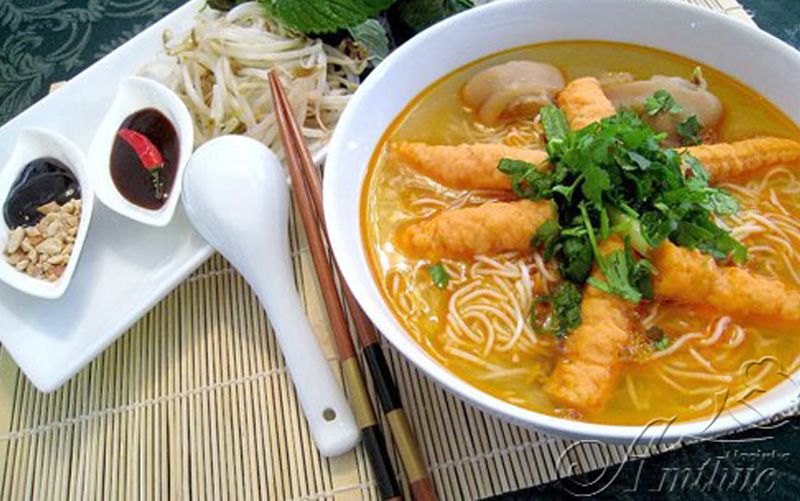
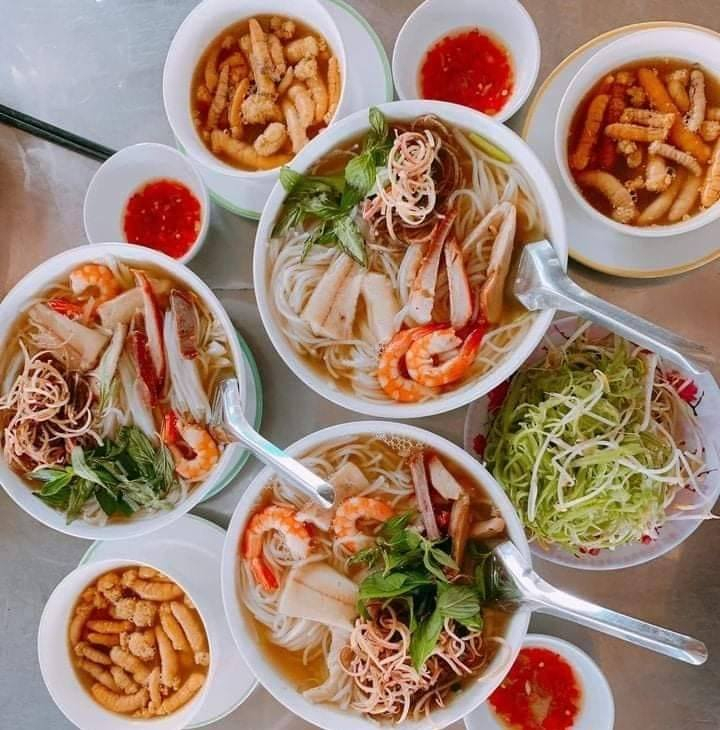
Anyone visiting Tra Vinh will have the chance to enjoy a rustic noodle dish – Bun Suong, one of Vietnam’s 10 famous specialty dishes that achieved Asian culinary value. Bun Suong is also known as Bun Duong; this noodle soup originates from Tra Vinh. “Suong” is a type of shrimp sausage (called shrimp suong); some...
The distinctive slightly pungent taste of radish blended with the rich flavor of shrimp and pork filling brings a unique and delicious sensation to radish cakes. Radish cakes may still sound unfamiliar to many people in Saigon, but for those from Bạc Liêu — the land famous for the story of the wealthy young man...
“Mấy cây Sầu Đâu Ngoại thường ra hái lá, Trộn gỏi đắng mà Nghe ngọt lạ bờ môi Giờ ngoại của tôi Chân run run tóc bạc lưng còng, Mấy cây Sầu Đâu đã già xơ xác lá, Ngoại vẫn kiếm tìm Xin cho được Sầu Đâu.” The image of neem leaves has become deeply...
Perhaps because the rice flour strands are hand-rolled and boiled until they resemble silkworms, and eaten together with shredded pork skin, the dish is called bánh tằm bì. Those who try this dish for the first time are often surprised because it is both savory and sweet at the same time—sweet from the coconut milk...
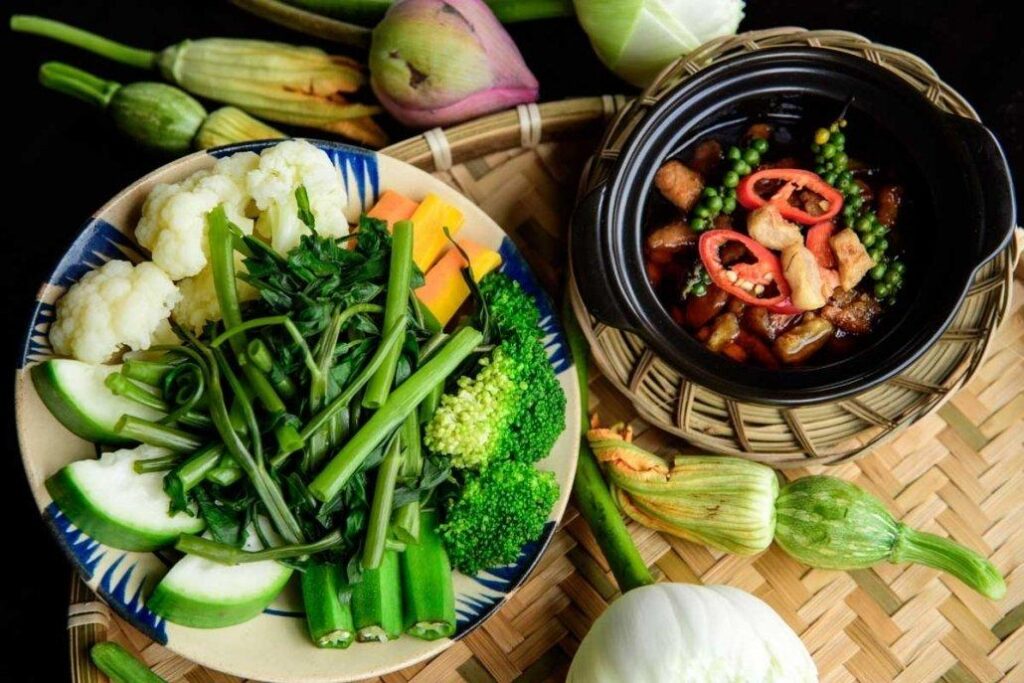
Some rustic dishes, once thought to be found only in the countryside and rice paddies, have now appeared on restaurant tables and become attractive dishes that entice many people to enjoy. Boiled vegetables with braised pork belly is one such dish.
Braised pork belly can be eaten with many things such as white rice, pickled onions, pickled bean sprouts, but perhaps most commonly it’s served with pickled mustard greens. The salty, sweet, and rich flavors of the braised pork belly combine with the sour and slightly spicy taste of the pickled mustard greens, creating an unexpectedly...
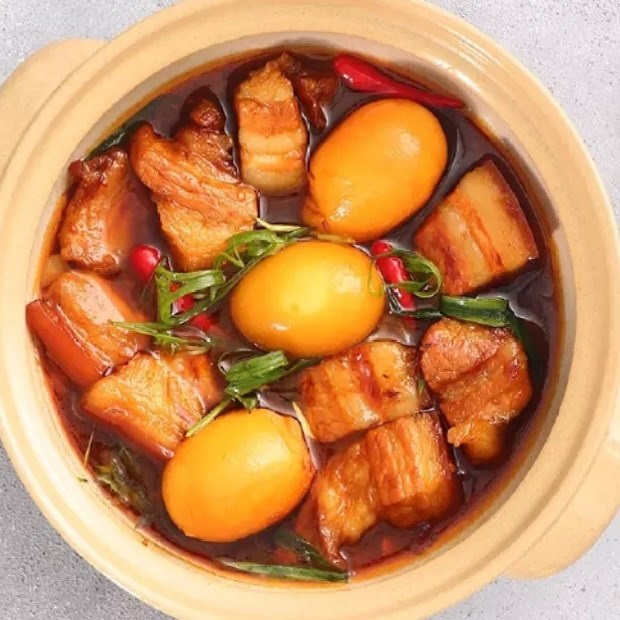
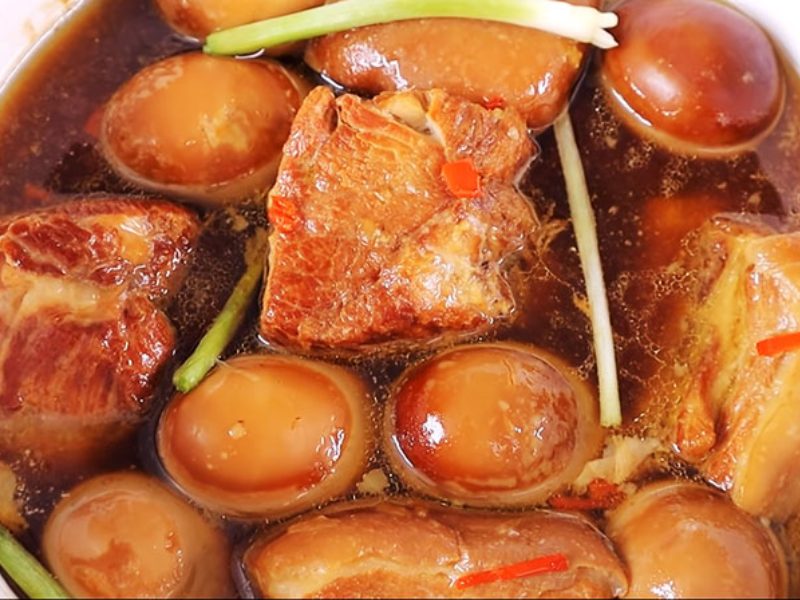
Thit kho tau (Caramelized Pork and Eggs) has become one of the indispensable dishes in the Lunar New Year meals of people in the Mekong Delta in particular and the Southern region in general. It seems to have become a tradition that as Tet approaches, Southerners prepare thit kho tau for the holiday as an...
The special feature of Soc Trang’s “nước lèo” (broth) is that it is not cloudy but crystal clear, thanks to a rather unique recipe. The method for cooking this noodle soup is not difficult; its deliciousness comes from the salty and fragrant aroma of “mắm bồ hóc” (prohok), the sweet and firm texture of fresh...
If you ever have a chance to visit Trà Vinh, especially Ba Động — a coastal area blessed with abundant natural beauty — don’t forget to enjoy dishes made from a local crustacean known in folk language as “chù ụ.” The name “chù ụ” likely comes from its somewhat clumsy appearance, with a grumpy-looking face....